





Last Watched

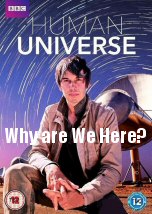
Why are We Here

   2014    Science
In episode two, Professor Brian Cox is off to India, where he assesses arguably the first evidence of rational thought in literature, the poetry of the Vedic monks. They pondered mankind's origins, realising there must have been a day with no yesterday - a day of creation - prompting the age-old question of where did the universe come from? Brian marvels that the universe seems to follow a set of rules, the laws of physics, allowing space to be considered on the grandest scale, travelling to the most distant, farthest reaches of the cosmos just by using our minds. Brian also visits Japan, and offers viewers the idea that man lives in just one of an infinite number of universes that are being made all the time.
Series: Human Universe
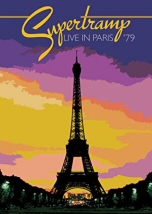
Supertramp: Live In Paris

       Art
Supertramp's 'Breakfast in America' was the biggest selling album in the world in 1979. Following the album's release Supertramp embarked on a 10 month world tour which arrived in Paris at the end of November. Now, transferred and restored from the original 16mm film, this footage is available to Supertramp's legion of fans worldwide.
In July 2006, the original master tapes of the album 'Supertramp: Live In Paris' were rediscovered in the Northern California barn of the band's drummer Bob Siebenberg, along with video footage. The tapes were sent to Cups 'N Strings Studios in Woodland Hills, California, for digital remastering. The tapes were initially in bad technical shape, but were successfully transferred to a digital format.
The original idea was to feature heavily footage of Paris, adding a story in The Song Remains the Same. The sound was remixed by Peter Henderson and Supertramp's original sound engineer Russel Pope from the original multi-tracks.

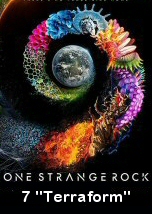
Terraform

   2018    Science
We sure lucked out with Planet Earth. Blue skies, rolling hills, water everywhere. But our home didn't come like this out of the box. Earth was a real fixer-upper, and it took some seriously hard work to build this paradise. Nearly four billion years of renovation. Some tiny, some huge, to make this house a home. Creatures on Earth don't just live and die. They actually change the world around them.
The story of how for nearly 4 billion years, microbes, plants and animals have emerged and sculpted the planet's surface and atmosphere in the strangest of ways.
Series: One Strange Rock

The Age of Invention

   2014    Science
Just under 200 years ago scientists discovered something profound, that electricity is connected to another of nature's most fundamental forces - magnetism. In the second episode, Jim discovers how harnessing the link between magnetism and electricity would completely transform the world, allowing us to generate a seemingly limitless amount of electric power which we could utilise to drive machines, communicate across continents and light our homes. This is the story of how scientists and engineers unlocked the nature of electricity in an extraordinary century of innovation and invention.
Series: Shock and Awe: The Story of Electricity

unReal

   2015    Culture
Mountain biking requires endurance, core strength and balance, bike handling skills, and self-reliance. Advanced riders pursue both steep technical descents and high incline climbs. In the case of freeriding, down hilling, and dirt jumping, aerial manoeuvres are performed off both natural features and specially constructed jumps and ramps. Follows several individuals breaking out of their mundane lives and entering into the adventurous thrill-seeking world of this sport.

The Universe Season 7 Stonehenge

   2014    Science
Perhaps the most mysterious structure on Earth, Stonehenge has stood on a plain in Southern England for 5000 years. Its foundations predate the Great Pyramids. It is one of mankind's most ancient mysteries. Why is it here? Is it a temple? A burial ground? A place for sacrifice? Or could the mystery of Stonehenge be revealed in its builders' desire to explore the unknown heavens and touch the universe? Using the cutting-edge computer-generated imagery that takes us into deep space, we'll also go inside a virtual Stonehenge to see what the ancients saw and push this prehistoric marvel to give up its age-old secrets.
In this episode we explore the possibility that this was a prehistoric astronomical observatory. Here ancient astronomer priests may have divined the complex movements of the Sun and Moon, recognizing patterns that would not be discovered elsewhere for thousands of years. The primitive Shamans may have also been the first astronomers to predict eclipses.
Series: The Universe Season 7