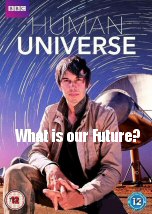
Professor Brian Cox concludes his exploration of our place in the universe by asking what next for the ape that went to space. Our future is far from certain. In Florida, Brian joins the latest efforts to protect Earth from potential catastrophic events. He joins a team of Nasa astronauts who are training for a future mission to an asteroid - should we ever discover one coming our way - under 30 feet of water in a submerged laboratory that simulates space. It is just one example of how, for our long-term survival, space exploration may well be vital. It is a view shared by Apollo 16 astronaut Charlie Duke, who tells Brian what it was like to escape the confines of the planet. It is a dream that both Nasa and now commercial companies share as they race to get humans back into deep space. But space travel, like every leap our civilisation has ever made, requires energy. Here too, scientists are hard at work attempting to safeguard our future. At the National Ignition Facility in California, Brian witnesses the world's most successful fusion experiment in action. He believes that if their mission succeeds, our civilisation will have unlocked a way to the stars that will not destroy the planet in the process. Brian concludes by returning to the top of the world in Svalbard, where he gains access to our civilisation's greatest treasure, locked away in a vault buried deep in the permafrost.
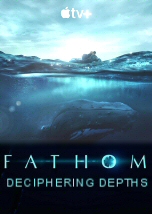
Fathom is a visual and aural wonder of a documentary that follows researchers working to finally decode the communication of humpback whales. Dr. Ellen Garland and Dr. Michelle Fournet embark on parallel journeys on opposite sides of the world, as they seek to better understand whale culture and communication. The film uniquely reveals a deep commitment and reverence to the scientific process and the universal human need to seek answers about the world around us. From hypothesis to groundbreaking experiences in the field, 'Fathom' showcases the passion, curiosity, collaboration, perseverance and work it takes for leading scientists to make scientific discoveries.
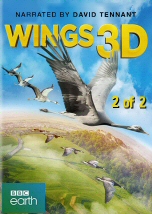
It's a universal dream To soar on wings into the heavens. But it's nothing compared to the reality. Experience our planet as never before: Through the eyes of birds. This is a journey that will embrace the world. A flight across the earth on feathered wings. It's a fantastic voyage following the changing seasons and taking in some of the greatest events on Earth. Experience a year in the life of our planet from the lush tropics to the frozen North and catch a glimpse of our world as never before: From a bird's-eye view.
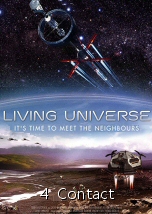
Minerva B is a small rocky planet just like earth, where spacecraft Artemis has found water, organic molecules, and complex creatures. Is there something more to find? 'I am the mind of the spaceship, alone among the stars. 50 years ago, from a planet far away, the planet you call home, I launched. A journey of 28 trillion miles across the yawning time of space to the exoplanet, Minerva B: a small, rocky planet, much like Earth, but orbiting another sun. Here, I have found water, organic molecules, and microorganisms. When the news of my discovery reaches Earth years from now, some of you will be amazed. But others will remain unsatisfied, and you will ask, have I not found animals or birds? Have I not met intelligent life like us? And so, my search continues. I will find life of marvellous complexity, and the traces of a devastating loss.'
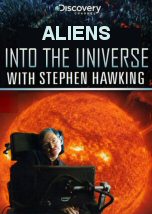
Stephen Hawking, the world's most famous living scientist explores the greatest mysteries of the cosmos. In three landmark instalments he reveals the wonders of the universe as never seen before. Definitive, provocative, surprising, and beautiful, Into the Universe with Stephen Hawking is a fascinating look through the mind's eye of one of the finest brains on the planet. In 'Aliens' Hawking considers one of the most important mysteries facing humankind - the possibility of alien, intelligent life. He leads us on a journey rendered in eye-popping detail, from the moons of Jupiter to a galaxy maybe not so far, far away. We will meet possible aliens and wonder at their form, we will delve into the very principles of what it is to call something alive, and we will calculate the likelihood of 'contact' being made.
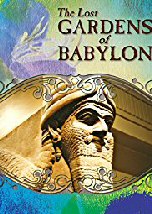
Of the Seven Wonders of the Ancient World, the Hanging Garden of Babylon is the most elusive of these constructions of classical antiquity. While traces have been found of the Great Pyramid of Gaza, the Temple of Artemis at Ephesus, the Statue of Zeus at Olympia, the Mausoleum of Halicarnassus, the Colossus of Rhodes and the Lighthouse of Alexandria, centuries of digging have turned up nothing about the lost gardens of Babylon – until now. Why, in the nearly 3,000 years since the gardens were presumably built, has no archeological evidence ever been found to support their existence? Is the Hanging Garden of Babylon a myth or a mystery to be solved? Travel with Dr. Stephanie Dalley of Oxford University’s Oriental Institute and author of The Mystery of the Hanging Garden of Babylon, to one of the most dangerous places on earth, as she sets out to answer these questions and prove not only that the gardens did exist, but also identify where they most likely were located, describe what they looked like and explain how they were constructed.












But space travel, like every leap our civilisation has ever made, requires energy. Here too, scientists are hard at work attempting to safeguard our future. At the National Ignition Facility in California, Brian witnesses the world's most successful fusion experiment in action. He believes that if their mission succeeds, our civilisation will have unlocked a way to the stars that will not destroy the planet in the process. Brian concludes by returning to the top of the world in Svalbard, where he gains access to our civilisation's greatest treasure, locked away in a vault buried deep in the permafrost.