
Last Watched

"Evolution"  Sort by

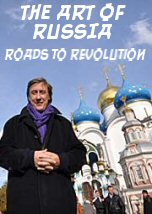
Roads to Revolution

   2009    Art
Andrew Graham-Dixon explores how Russia changed from a feudal nation of aristocratic excess to a hotbed of revolution at the beginning of the 20th century and how art moved from being a servant of the state to an agent of its destruction. From monuments that celebrate the absolutism of the tsars to the epic Russian landscape as inspiration; from the design and construction of gold and glittering palaces to the minutiae of diamond-encrusted Faberge eggs; and eventually to the stark and radical paintings of the avant-garde, the journey through Russian art history is one of extraordinary beauty and surprise.
Series: The Art of Russia
Energy Revolutions

   2020    Technology
Over the last years, the world has experienced an energy revolution, driven by an urgent need to green the grid and save life on Earth as we know it. 50 years ago, a devastating oil crisis kicked off an energy revolution. The world set course to cut the costly habit of burning fossil fuels. With the urgent new threat of a changing climate, the drive to unleash the power of the sun, earth and wind has accelerated into a race for humanity's survival. Change is taken place but, is it happening fast enough to secure our future? Technologies are right here, right now, and they will enable the transition to 100% renewables, because winning the energy race means a win for the entire world.
Series: The Great Acceleration

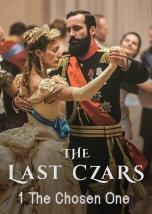
The Chosen One

   2019    History
This acclaimed docudrama is a chronicled look at the fall of the Romanov dynasty in Russia. When social upheaval sweeps Russia in the early 20th century, Czar Nicholas II resists change, sparking a revolution and ending his reign.
In the first episode, Czar Nicholas II takes the Russian throne in 1894 and rejects modern ideas to embrace a pure autocracy. Tragedy marks his coronation day.
Series: The Last Czars

The 80s with Dylan Jones

   2021    Art
Dylan Jones is in the driving seat for this authoritative four-part look back. No stone remains unturned, as he revisits the New Romantics, rap, modern dance music, hip-hop, indie jingle, synth-pop, house music and club culture. He makes the case that the 1980s was the most radical, innovative and creative decade in the history of pop because, unlike other decades, unleashed a myriad of new musical genres in just 10 years.
In the first part, Dylan Jones explores how in this decade the world-conquering genres of rap, hip-hop and modern dance music were launched, while guitar-driven indie flourished in a constellation of scenes spread out across the world. And a technological revolution was changing how music was made, filling the charts with a starburst of innovative records. Meanwhile, the launch of MTV turned pop into a visual medium, allowing artists as varied as U2 and Eurythmics to take charge of how they presented themselves. Featuring interviews with Nile Rodgers, Bananarama, Primal Scream's Bobby Gillespie, Mark Ronson, Trevor Horn and Soul II Soul's Jazzie B.
Series: The 80s: Greatest Music Decade

Still a Revolutionary: Albert Einstein

   2020    History
Albert Einstein, the most famous scientist of all time, was a world-renowned celebrity, greeted like a rock star when he appeared in public. An anti-war firebrand, Einstein also spoke out on issues ranging from women's rights and racism to immigration and nuclear arms control. But today, his image has been neutered into that of a charmingly absent-minded genius. He was, in fact, a powerful force for social change and a model for political activism.
Using a wealth of rarely-seen archival footage, correspondence, and new and illuminating interviews, filmmaker Julia Newman makes the case that Albert Einstein's example of social and political activism is as important today as are his brilliant, groundbreaking theories.

God in the Dock

   2011    Culture
Diarmaid MacCulloch's own life story makes him a symbol of a distinctive feature about Western Christianity - scepticism, a tendency to doubt which has transformed both Western culture and Christianity. In the final programme in the series, he asks where that change came from. He challenges the simplistic notion that faith in Christianity has steadily ebbed away before the relentless advance of science, reason and progress, and shows instead how the tide of faith perversely flows back in. Despite the attacks of Newton, Voltaire, the French Revolutionaries and Darwin, Christianity has shown a remarkable resilience. The greatest damage to Christianity was actually inflicted to its moral credibility by the two great wars of the 20th century and by its entanglement with Fascism and Nazism. And yet it is during crisis that the Church has rediscovered deep and enduring truths about itself, which may even be a clue to its future.
Series: A History of Christianity