







Last Watched

"Lion"  Sort by

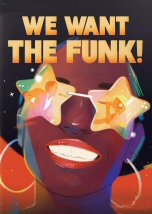
We Want The Funk

   2025    Art
Dive into a high-voltage odyssey through rhythm, rebellion, and raw groove — tracing the electrifying pulse that shaped decades of music. From deep African roots and the soul-drenched sounds of gospel and jazz, this vibrant exploration reveals how a powerful beat gave rise to a cultural revolution. Witness how icons like James Brown ignited the flame, how Parliament Funkadelic took it to the cosmos, how Labelle broke barriers, and how Fela Kuti turned rhythm into resistance. As the funk surged forward, it didn’t fade — it transformed, reshaping new wave and breathing life into hip-hop. Uncover the untold stories, the infectious energy, and the enduring legacy of a genre that refuses to sit still.
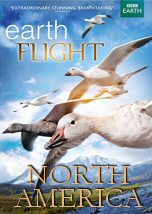
Earthflight North America

   2012    Nature
A bird's-eye view of some of the world's greatest natural spectacles. Amazing sights from five continents are revealed in a whole new light. Using cutting edge new filming techniques to show everything in exquisite detail, viewers have a uniquely privileged perspective. The first episode takes flight across North America, as a flock of millions of snow geese discover what it is like to be on the hit list of America's national bird: the bald eagle. In California, pelicans reveal devil rays that perform astonishing somersaults and find bizarre grunion fish that wriggle ashore to spawn. In Alaska, bald eagles swoop among brown bears fishing for salmon. And on the Great Plains, cowbirds duck and dive under the feet of fighting bison.
Series: Earthflight

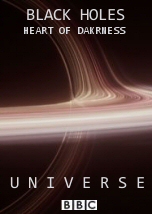
Black Holes: Heart of Darkness

   2021    Science
The centre of our galaxy is home to an invisible monster of unimaginable power – a supermassive black hole named Sagittarius A star, with four million times the mass of the Sun. Recent astronomical breakthroughs have confirmed not only that black holes like Sagittarius A star exist, but that these bizarre invisible objects may be the ultimate galactic protagonists.
Stunning CGI takes us back to witness the fiery origins of our galaxy’s black hole 13.6 billion years ago, when the early universe was home to colossal blue stars, and when they ran out of fuel, they collapsed under their own enormous mass, crushing down into an object so small and so dense it punched a hole in the fabric of the universe. Over billions of years, Sagittarius A star feasted on nearby gas, stars, and through cataclysmic mergers with other black holes. A breakthrough discovery by Nasa’s Fermi gamma-ray telescope has shown that our black hole had the power to sculpt the entire galaxy, creating vast bubbles of gas above and below our galaxy and even protecting stars systems as ours.
In a mind-bending conclusion, Brian Cox reveals how our modern understanding of black holes is challenging our concepts of reality to the breaking point. In trying to understand the fate of objects that fall into Sagittarius A star, scientists have come to a stunning conclusion: space and time, concepts so foundational to how we experience the world around us, are not as fundamental as we once thought.
Series: Universe

Beatles 64

   2024    Art
Step into the Beatlemania Era: Beatles '64 takes you back to February 1964, when four young musicians from Liverpool turned the United States upside down. Relive the frenzy of their iconic debut on The Ed Sullivan Show, watched by over 73 million viewers, and feel the pulse of their groundbreaking performance at the Washington Coliseum. Featuring rare, never-before-seen footage captured by acclaimed filmmakers Albert and David Maysles, digitally restored, this documentary unearths the Beatles’ meteoric rise to superstardom and the cultural revolution they ignited.
Experience History Reimagined: With fresh insights from Paul McCartney and Ringo Starr, and audio remixed using cutting-edge technology by Giles Martin, Beatles '64 brings the spirit of the era to life like never before. Explore the personal dynamics of the Fab Four as they navigate a whirlwind of fame, fan hysteria, and musical innovation. Accompanied by a vibrant soundtrack featuring their timeless hits, this film immerses you in an extraordinary moment when music and culture collided, changing the world forever.

The Immortals

   2014    Science
This episode covers the nature of how life may have developed on Earth and the possibility of life on other planets. Tyson begins by explaining how the human development of writing systems enabled the transfer of information through generations, describing how Princess Enheduanna ca. 2280 BCE would be one of the first to sign her name to her works, and how Gilgamesh collected stories, including that of Utnapishtim documenting a great flood comparable to the story of Noah's Ark. Tyson explains how DNA similarly records information to propagate life, and postulates theories of how DNA originated on Earth, including evolution from a shallow tide pool, or from the ejecta of meteor collisions from other planets. In the latter case, Tyson explains how comparing the composition of the Nakhla meteorite in 1911 to results collected by the Viking program demonstrated that material from Mars could transit to Earth, and the ability of some microbes to survive the harsh conditions of space. With the motions of solar systems through the galaxy over billions of years, life could conceivably propagate from planet to planet in the same manner. Tyson then moves on to consider if life on other planets could exist. He explains how Project Diana performed in the 1960s showed that radio waves are able to travel in space, and that all of humanity's broadcast signals continue to radiate into space from our planet. Tyson notes that projects have since looked for similar signals potentially emanating from other solar systems. Tyson then explains that the development and lifespan of extraterrestrial civilizations must be considered for such detection to be realized. He notes that civilizations can be wiped out by cosmic events like supernovae, natural disasters such as the Toba disaster, or even self-destruct through war or other means, making probability estimates difficult. Tyson describes how elliptical galaxies, in which some of the oldest red dwarf stars exist, would offer the best chance of finding established civilizations. Tyson concludes that human intelligence properly applied should allow our species to avoid such disasters and enable us to migrate beyond the Earth before the Sun's eventual transformation into a red giant.
Series: Cosmos: A Spacetime Odyssey

Last Human Standing

   2010    History
xamines the fate of the Neanderthals, our European cousins who died out as modern humans spread from Africa into Europe during the Ice Age. Did modern humans interbreed with Neanderthals or exterminate them? The program explores crucial evidence from the recent decoding of the Neanderthal genome. How did modern humans take over the world? New evidence suggests that they left Africa and colonized the rest of the globe far earlier, and for different reasons, than previously thought. As for Homo sapiens, we have planet Earth to ourselves today, but that's a very recent and unusual situation. For millions of years, many kinds of hominids co-existed. At one time Homo sapiens shared the planet with Neanderthals, Homo erectus, and the mysterious "Hobbits"–three-foot-high humans who thrived on the Indonesian island of Flores until as recently as 12,000 years ago. "Last Human Standing" examines why "we" survived while those other ancestral cousins died out. And it explores the provocative question: In what ways are we still evolving today?
Series: Becoming Human
Space Deepest Secrets

Space Deepest Secrets

2020  Science
Natural World

Natural World

2009  Nature
Animal

Animal

2021  Nature
Leaving Neverland

Leaving Neverland

2019  Culture
Top Gear

Top Gear

2012  Technology