
Last Watched

Zeitgeist Moving Forward

   2011    Culture
A feature length documentary work which presents a case for a needed transition out of the current socioeconomic monetary paradigm which governs the entire world society. This subject matter will transcend the issues of cultural relativism and traditional ideology and move to relate the core, empirical 'life ground' attributes of human and social survival, extrapolating those immutable natural laws into a new sustainable social paradigm called a 'Resource-Based Economy'.
Series: Zeitgeist
To the Bitter End

   2007    History
The determination of the German forces to keep on fighting in the face of defeat had disastrous consequences. After the Allied landings in the summer of 1944, the Wehrmacht was on the defensive on all fronts. It was clear to the German generals interned at Trent Park that Germany would soon lose the war. In mid-1944, Gerhard Graf von Schwerin chose to use common sense instead of blindly obeying Hitler's orders. He decided to surrender the city of Aachen to the US army to avoid bloodshed. Other commanders such as Field Marshal Ferdinand Schorner kept on pushing their soldiers to give their all. Despite being outnumbered by the Soviet forces, Schorner forced his soldiers to hold out in Sworbe, a 200 square kilometre peninsula on the coast of Estonia. Thousands of soldiers died. Yet Schorner's attitude and the urging by Hitler and Goebbels to hold out were accepted by a large number of young soldiers. By April 1944, the Ruhr pocket was completely surrounded, yet Field Marshal Model refused to surrender, so that 1.2 million German soldiers and a large number of Allied soldiers died between January and May 1945.
Series: The Wehrmacht

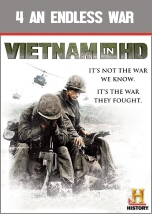
An Endless War

   2011    History
The turmoil of 1968 helps Nixon win the presidency. Troop strength in Vietnam peaks and the draft accelerates. Karl Marlantes endures bitter jungle fighting on Hill 484, and draftee Arthur Wiknik gets a grim introduction to combat on 'Hamburger Hill'. But shortly after winning both hills, US troops abandon them.
Series: Vietnam in HD

Fightback

       Nature
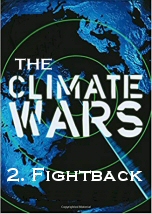
Dr Iain Stewart investigates the counter-attack that was launched by the global warming sceptics in the 1990s. At the start of the 1990s it seemed the world was united. At the Rio Earth summit the world signed up to a programme of action to start tackling climate change. Even George Bush was there. But the consensus didn't last.
Iain examines the scientific arguments that developed as the global warming sceptics took on the climate change consensus. The sceptics attacked almost everything that scientists held to be true. They argued that the planet wasn't warming up, that even if it was it was nothing unusual, and certainly whatever was happening to the climate was nothing to do with human emissions of greenhouse gases. Iain interviews some of the key global warming sceptics, and discovers how their positions have changed over time.
Series: The Climate Wars

Audrey Hepburn: The Fairest Lady

   1997    Art
Audrey Hepburn was a film and fashion icon of the twentieth century and one of the most beloved actresses of all time. She enchanted the world with elegance and innocent charm, and portrayed some of the most memorable characters in film. Although she was one of the few actresses to win an Emmy, Tony, Grammy, and Academy Award, Audrey was modest about her talents, often claiming she had no acting technique. She redefined glamour with elfin features and a waif-like figure that inspired timeless designs by Hubert de Givenchy.Raised in the Netherlands during World War II, Audrey never forgot her own struggles during the German occupation and dedicated her later years to helping needy children around the world, becoming an International Goodwill Ambassador for UNICEF and traveling around the world to provide aid. Audrey Hepburn is remembered as a natural talent, a timeless beauty and a great humanitarian.

Total Eclipse

   2010    Science
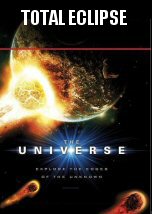
Once they were dreaded and thought to be dragons eating the sun--but modern science has dispelled mythology and we now look forward to total Solar Eclipses as one of the most spectacular phenomena in the heavens. Explore the complex movements of Earth, Moon and Sun that produce these unusual events and hear details why we may be the only intelligent beings in the known Universe to witness eclipses like we see on Earth. Man-made eclipses also figure into the science in the form of instruments called "coronagraphs." They blot out the sun and reveal its corona, uncovering secrets which, while enlightening, also warn of a disaster that could make our advanced technology crash and burn. Finally, travel into deep space, where the tiny eclipses caused by planets circling distant stars is now beginning to reveal hundreds more stars where "exoplanets" exist... perhaps even those in habitable zones like the Earth.
Series: The Universe