The 1950's - the iconic Scuderia Ferrari battle to stay on top in one of the deadliest decades in motor racing history. Cars and drivers were pushed to their limits, and the competition for the world championship meant racing on a knife edge where one mistake could take a life. At the centre of it all was Enzo Ferrari, a towering figure in motor racing who was driven to win at any cost. Amidst the stiff competition within his Ferrari team, two of its British stars, Peter Collins and Mike Hawthorn, put friendship first and the championship second. Ferrari: Race to Immortality tells the story of the loves and losses, triumphs and tragedy of Ferrari's most celebrated drivers in an era where they lived la dolce vita during the week and it was win or die on any given Sunday.
We see how the Germans they lived, fought and worshippped their gods. Intricate 3d animation shows how they built their settlements, buried their kings, vanquished their enemies.
It is one of the most baffling questions that scientists can ask: how big is the Universe that we live in? Follow the cosmologists who are creating the most ambitious map in history - a map of everything in existence. And it is stranger than anyone had imagined - a Universe without end that stretches far beyond what the eye can ever see. And, if the latest research proves true, our Universe may just be the start of something even bigger. Much bigger.
Orbits are the dynamics that drive the universe. From the smallest asteroid to the largest super-cluster, everything in the universe is in orbit. We owe our very existence to the stability of earth's orbit — it gave us life and keeps us safe. But we are the freaks. Everywhere else we look we find orbits are chaotic, unstable, and violent. Beyond our solar system we find planets that are blow-torched, stars that eat each other, and black holes that destroy everything in their path. Yet on the very largest scale, orbits are also a creative force. clashing galaxies give birth to new stars and new worlds. on the galactic scale orbits even construct the fabric of the universe itself.
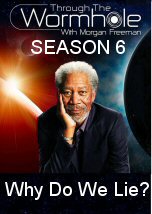
We all agree lying is shameful. Yet we still deliberately deceive each other constantly. Are our brains wired for lying from a young age? The brains of pathological liars may provide insights. Will technology make it easier for us to be dishonest, or could it someday instantly reveal someone is lying? Perhaps we are deceitful because our limited senses prevent us from seeing the real truth. Scientists say our own memories deceive us, and have managed to implant false memories. Other scientists look for ultimate truth in the subatomic world … only to end up turning reality on its head.
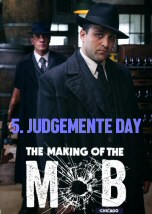
In 1927, Prohibition agent Eliot Ness narrowly escapes a hit ordered by Al Capone. Determined to prove to Capone that he's not intimidated, Ness and his team of Untouchables execute a series of high-profile raids on Capone's breweries. Over the course of a few months, they destroy more than 200,000 gallons of beer, worth a modern-day equivalent of $134 million - and the newspapers cover it all. Capone lashes out against Ness in the press. What Capone doesn't realize is that Ness and the Prohibition agents aren't the only ones trying to take him down. For the past four years, another government agency with more manpower and resources than Ness has been going after the infamous kingpin: the Internal Revenue Service.










Amidst the stiff competition within his Ferrari team, two of its British stars, Peter Collins and Mike Hawthorn, put friendship first and the championship second. Ferrari: Race to Immortality tells the story of the loves and losses, triumphs and tragedy of Ferrari's most celebrated drivers in an era where they lived la dolce vita during the week and it was win or die on any given Sunday.