Having explained the science behind global warming, and addressed the arguments of the climate change sceptics earlier in the series, Dr Iain Stewart concludes the series by looking at the biggest challenge now facing climate scientists - Just how can they predict exactly what changes global warming will bring? It's a journey that takes him from early attempts to model the climate system with dishpans, to supercomputers, and to the frontline of climate research today: Greenland. Most worryingly he discovers that scientists are becoming increasingly concerned that their models are actually underestimating the speed of changes already underway.
In 1927, Prohibition agent Eliot Ness narrowly escapes a hit ordered by Al Capone. Determined to prove to Capone that he's not intimidated, Ness and his team of Untouchables execute a series of high-profile raids on Capone's breweries. Over the course of a few months, they destroy more than 200,000 gallons of beer, worth a modern-day equivalent of $134 million - and the newspapers cover it all. Capone lashes out against Ness in the press. What Capone doesn't realize is that Ness and the Prohibition agents aren't the only ones trying to take him down. For the past four years, another government agency with more manpower and resources than Ness has been going after the infamous kingpin: the Internal Revenue Service.
As the drought drags on with the sun continuing to blaze down from a cloudless sky and harvest time gets closer, Jeremy Clarkson and his motley crew have a fearsome list of jobs to complete.
The documentary deals with the future of conservation. It begins by looking at previous efforts. The 'Save The Whales' campaign, which started in the 1960s, is seen to have had a limited effect, as whaling continues and fish stocks also decline. In the 1990s, as head of the Kenya Wildlife Service, Richard Leakey took on the poachers by employing armed units. Although it was successful in saving elephants, the policy was detrimental to the Maasai people, who were forced from their land. The need for "fortress" areas is questioned, and the recently highlighted Raja Ampat coral reef in Indonesia is an example. The more tourism it generates, the greater the potential for damage — and inevitable coastal construction. Sustainable development is viewed as controversial, and one contributor perceives it to currently be a "contradiction in terms". Trophy hunting is also contentious. Those that support it argue that it generates wealth for local economies, while its opponents point to the reducing numbers of species such as the markhor. Ecotourism is shown to be beneficial, as it is in the interests of its providers to protect their environments. However, in some areas, such as the Borneo rainforests, the great diversity of species is being replaced by monocultures. The role of both religion and the media in conservation is argued to be extremely important. Contributors to the programme admit a degree of worry about the future, but also optimism.
In the last episode of the series, lavish imperial games at the Colosseum are highlighted by the emperor's bloody victories, but his paranoid abuses of power lead to a final betrayal.
In 1982, the best of friends and still teenagers George Michael and Andrew Ridgeley as Wham! set out to conquer the world. By June of 1986, they played their very last gig at Wembley Stadium having done exactly that. Now, for the very first time, told in their own words, comes the amazing story of how in four years they dominated the charts around the world with timeless and classic pop songs. Hit after hit ‘Club Tropicana,’ ‘Wake Me Up Before You Go Go,’ ‘Freedom,’ ‘I'm Your Man’ and of course ‘Last Christmas.’ Their time in the spotlight was white-hot, and they became the very first Western pop act to play in China. It was a time that both encapsulated and epitomized not just their youth but also that of the many millions of fans that adored them.














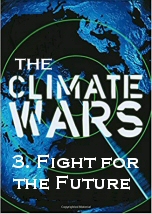










It's a journey that takes him from early attempts to model the climate system with dishpans, to supercomputers, and to the frontline of climate research today: Greenland. Most worryingly he discovers that scientists are becoming increasingly concerned that their models are actually underestimating the speed of changes already underway.