

Last Watched

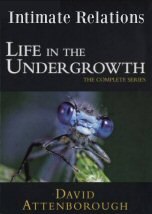
Intimate Relations

   2005    Nature
The world of invertebrates exists in a web of relationships with plants and other animals. Unique footage of the world's smallest insect (a fairy wasp only quarter of a millimetre long) shows it flying underwater to find the eggs of water beetles in which to lay its own brood. Some ants 'farm' the trees that give them shelter, creating areas known as 'Devil's gardens'. To make sure these grow without competition, they kill off other seedlings in the surrounding vegetation. The blister beetle's larvae huddle together on the end of a piece of grass and mimic a female bee. When a male bee tries to mate with the 'female', the larvae grab on to his belly. Confused, he flies away and searches for a real female. When he eventually finds her and mates with her, the beetle larvae hurriedly swap from his front on to her back, and hence get carried back to her nest where they eat her pollen supplies.
Series: Life in the Undergrowth
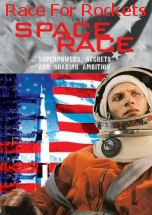
Race For Rockets

   2005    Technology
Space Race is a docu-drama chronicling the major events and characters in the American/Soviet space race. It focusses on Sergei Korolev, the Soviets' chief rocket designer, and Wernher von Braun, his American counterpart. The series was a joint effort between British, German, American and Russian production teams." In the first episode, 1944-1949, we see Wernher von Braun's work on the V-2 for the Nazis during the last years of the Second World War, his surrender to American troops and his move to the USA. We see Sergei Korolev's release from the Gulag, and how he is set to work on Soviet rockets, first attempting to copy the V-2, then building a more efficient rocket of his own.
Series: Space Race

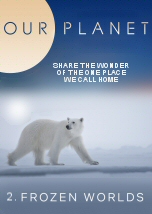
Frozen Worlds

   2019    Nature    HD
The polar regions of our planet may seem beyond the reach of most of us, but they are not beyond our influence. We, unintentionally, are changing these frozen worlds, and these changes will not just affect the poles but the whole planet. On the unforgiving frontier of climate change, polar bears, walruses, seals and penguins find their icy Edens in peril.
Series: Our Planet

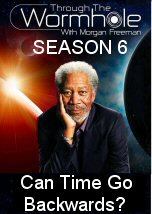
Can Time Go Backwards

   2015    Science
We move around in space, but we are stuck in a prison of time moving ever forwards. Einstein said, 'The distinction between past, present and future is only a stubbornly persistent illusion.' Is our experience of the ticking clock merely a trick of the mind? Could science ever make the clock move backwards? Experiments in quantum physics are showing that the future influences the present: what happens later limits the choices we think we have now. The laws of physics say visiting or talking to ourselves in the past is possible – but changing history once we get there is not.
Series: Through the Wormhole Season 6

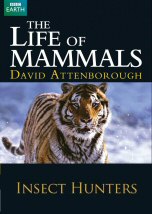
Insect Hunters

   2002    Nature
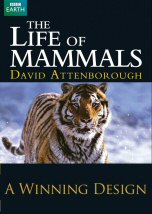
Mammals from tiny shrews, giant anteaters, armoured armadillo to bats have specialised in eating insects. Some have evolved into complex and effective hunters, even pursued their prey into the skies
Series: The Life of Mammals

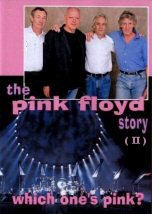
The Pink Floyd Story Which One is Pink II

   2007    Art
A band that has spanned 40 years pioneering everything from underground rock to the stadium extravaganza, a band that has survived tragedy and shunned celebrity and wrestled publicly with both it's success and it's audience. There have been five members of the band three of which have lead the band in different decades and that's why the question still remains, which one is pink? This film examines the band and it's history in order to discover how they became so successful.
Series: The Pink Floyd Story Which One is Pink