The Coronavirus disease 2019 (COVID-19) has spread globally since 2019, resulting in a pandemic. While the majority of cases result in mild symptoms, some progress to pneumonia and multi-organ failure. The deaths per number of diagnosed cases is estimated at between 1% and 5% but varies by age and other health conditions. In this special on the coronavirus, we're with health staff working on the front-line of the Covid-19 crisis - as well as the scientists, economists and virology experts who can answer the question... Coronavirus: Are We Doing Enough?
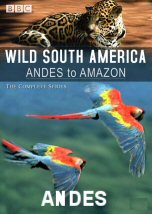
This edition features a spectacular journey along the Andes, the world's longest mountain range, stretching from the equator almost to Antarctica. In this harsh and unforgiving landscape, wildlife such as bears, pumas, condors and flamingos fight for survival in the numbing cold, ferocious winds and thin air.
Diarmaid MacCulloch traces the growth of an exuberant expression of faith that has spread across the globe - Evangelical Protestantism. Today, it is associated with conservative politics, but the whole story is distinctly more unexpected. It is easily forgotten that the evangelical explosion has been driven by a concern for social justice and the claim that one could stand in a direct emotional relationship with God. It allowed the Protestant faith to burst its boundaries from its homeland in Europe. In America, its preachers marketed Christianity with all the flair and swashbuckling enterprise of American commerce. In Africa, it converted much of the continent by adapting to local traditions, and now it is expanding into Asia. But is Korean Pentecostalism and its message of prosperity in the here and now an adaptation too far?
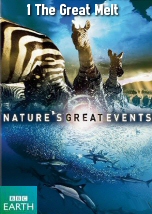
Every year, around the world, seasonal changes transform entire landscapes and draw in millions of creatures as these great events unfold. This fantastic series combines the epic scale of Planet Earth and the intimate, emotional stories of charismatic animals as they struggle to survive. Using state of the art technology, these programmes capture the Earth's most dramatic and epic wildlife spectacles and the intimate stories of the animals caught up in them. The Great Melt: The summer melt of Arctic ice, opening up nearly three million square miles of ocean and land, provides opportunities for millions of animals, including beluga whales, families of Arctic foxes, vast colonies of seabirds, and the fabled Arctic unicorn, the narwhal. For polar bears, however, it is the toughest time of year. Why? How will they survive? A mother polar bear and her cub make their first journey together onto the sea ice. They are looking for ringed seals, their favourite prey. It is a serious business but the cub just wants to play. The melting ice makes it harder for them to hunt and threatens their survival. In a unique aerial sequence, the migration of narwhal with their distinctive unicorn-like tusks is filmed for the first time. The whales' journey is risky as they travel along giant cracks in the ice. If the ice were to close above them, they would drown. Hundreds of beluga whales gather in the river shallows. They rub themselves on smooth pebbles in one of the most bizarre summer spectacles. Guillemot chicks take their first flights from precipitous sea cliff nests to the sea 300 metres below. They attempt to glide to safety but many miss their target. Their loss is a bonus for the hungry Arctic fox family waiting below. As the melt comes to an end the bears gather, waiting for the sea to freeze again. Two 400kg males square up to each other to spar.
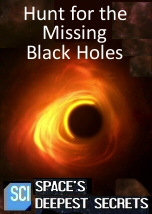
Recently, the Event Horizon Telescope project captured the first image ever of a black hole. Now, new discoveries might finally reveal how supermassive black holes are made, and using the latest technology, experts are on the verge of understanding how these monsters grow and how they affect life on our planet. Supermassive black holes: Gargantuan monsters that lurk at the center of galaxies. Right now you are travelling at half a million miles an hour around a giant black hole four million times the mass of the sun. But there's a mystery about these colossal beasts. We have no idea where they came from. How did they get so big so quickly?
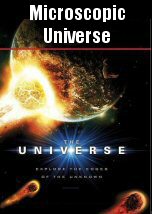
The key to understanding the universe seems to be understanding its smallest components. But the quantum realm bears little resemblance to the universe we know. Image a particle that can be many places at the same time and communicate changes instantly across vast distances, even to the other side of the Universe. Shrinking down billions of times, into the realm of atoms and sub-atomic particles, takes us into a bizarre world of paradoxes and multiverses. Explore with us quantum physics and the potential applications in computer science.










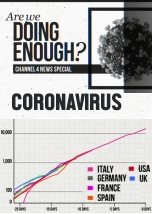





In this special on the coronavirus, we're with health staff working on the front-line of the Covid-19 crisis - as well as the scientists, economists and virology experts who can answer the question... Coronavirus: Are We Doing Enough?