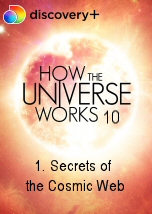
Various eminent scientists explain the current knowledge of Black Holes and try to answer the question, do they really exist? New discoveries are challenging everything we know about black holes -- astronomers are beginning to question if they even exist. The latest science tries to explain how they work & what they look like, despite the fact we've never actually seen one. The two great theories of Einstein's General Relativity and Quantum Mechanics don't work together to explain Black Holes which is a big problem. Other theoretical constructs such as Gravastars and Planck stars have been postulated but proving their existence is just as difficult as that of Black Holes. So where next?
The key to understanding the universe seems to be understanding its smallest components. But the quantum realm bears little resemblance to the universe we know. Image a particle that can be many places at the same time and communicate changes instantly across vast distances, even to the other side of the Universe. Shrinking down billions of times, into the realm of atoms and sub-atomic particles, takes us into a bizarre world of paradoxes and multiverses. Explore with us quantum physics and the potential applications in computer science.
Deep in the Bolivian Andes at the height of 13,000ft stands Tiwanaku, the awe-inspiring ruins of a monolithic temple city. Built by a civilisation who dominated a vast swathe of South America, it was abandoned 1,000 years ago. For centuries it has been a mystery - how did a civilisation flourish at such an altitude and why did it vanish? Jago Cooper journeys through Bolivia's spectacular landscape to investigate the origins of Tiwanaku and finds evidence of an ancient people with amazing understanding of their environment, whose religion was based on collective effort and ritual beer drinking.
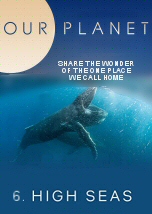
Far from land, where few of us ever venture, is the ocean beyond the boundary of any country. Largely ungoverned, wild, and lawless. Venture into the deep, dark and desolate oceans that are home to an abundance of beautiful - and downright strange - creatures.
In 1982, the best of friends and still teenagers George Michael and Andrew Ridgeley as Wham! set out to conquer the world. By June of 1986, they played their very last gig at Wembley Stadium having done exactly that. Now, for the very first time, told in their own words, comes the amazing story of how in four years they dominated the charts around the world with timeless and classic pop songs. Hit after hit ‘Club Tropicana,’ ‘Wake Me Up Before You Go Go,’ ‘Freedom,’ ‘I'm Your Man’ and of course ‘Last Christmas.’ Their time in the spotlight was white-hot, and they became the very first Western pop act to play in China. It was a time that both encapsulated and epitomized not just their youth but also that of the many millions of fans that adored them.
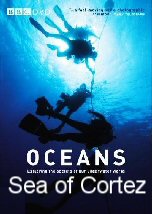
The Sea of Cortez, also known as the Gulf of California, is a unique corner of the Pacific Ocean. This remarkable young sea is thought to be around five million years old and home to nearly 900 species of fish and the widest variety of whales and dolphins found anywhere on Earth. Some of the greatest changes threatening the world's oceans today can be seen in this stretch of water.














The two great theories of Einstein's General Relativity and Quantum Mechanics don't work together to explain Black Holes which is a big problem. Other theoretical constructs such as Gravastars and Planck stars have been postulated but proving their existence is just as difficult as that of Black Holes. So where next?