




Last Watched

"Evolution"  Sort by

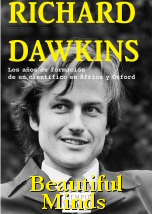
Beautiful Minds: Richard Dawkins

   2012    History
Professor Richard Dawkins explain how his unique scientific perspectives have redefined how we think about the world around us and describe his big moment or discovery. Dawkins reveals how he came to write The Selfish Gene in 1976, an explosive book which divided the scientific community and made him the most influential evolutionary biologist of his generation, and how this made him an outspoken spokesman for atheism.
iHuman

   2020    Technology
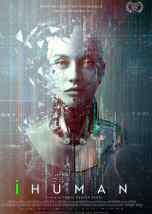
The documentary delves into the captivating world of Artificial Intelligence, exploring its rapid advancements, societal impact, and ethical dilemmas. Through interviews with experts, it highlights the potential for AI to learn like humans, revolutionizing our work and creations. It also raises critical questions about its regulation, the dangers of military applications, and the need for international cooperation. This thought-provoking documentary offers a deep dive into the AI revolution and the profound implications it holds for our future, making it a must-watch for anyone intrigued by the intersection of technology, ethics, and society.
iHUMAN is a political thriller about artificial intelligence, power and social control. With unparalleled access to the inside of the booming AI industry, this film shows how the most powerful and far-reaching technology of our time is changing our lives, our society and our future.

Who Will We Be

   2015    Medicine
In ‘Who will we be?’ Dr. David Eagleman journeys into the future, and asks what’s next for the human brain, and for our species. We stand at a major turning point, one where we might take control of our own development. We face a future of uncharted possibilities in which our relationship with our own body, our relationship with the world, the very basic nature of who we are is set to be transformed. For thousands of generations, humans have lived the same life cycle over and over. We are born, we control a fragile body, we experience a limited reality, and we die. But science and technology are giving us tools to transcend that evolutionary story. Our brains don't have to remain as we have inherited them. We are capable of extending our reality, of inhabiting new bodies, and possibly shedding our physical forms altogether. And we are discovering the tools to shape our own destiny. Who we become is up to us.
Series: The Brain with David Eagleman

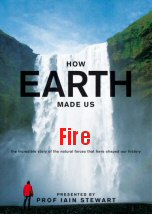
Fire

   2010    Culture
Iain explores man's relationship with fire. He begins by embarking on an extraordinary encounter with this terrifying force of nature - a walk right through the heart of a raging fire. Fire has long been our main source of energy and Iain shows how this meant that the planet played a crucial role in Britain's industrial revolution, whilst holding China's development back. Along the way he dives in a mysterious lake in Oregon, climbs a glacier of salt, crawls through an extraordinary cave in Iran and takes a therapeutic bath in crude oil.
Series: How Earth Made Us

Exploring The Universe

   2020    Science
This remarkable science-history series investigates the blistering pace of human endeavour in space exploration, computing, energy, resources, Earth science and our understanding of the evolution of life itself. Across the last 50 years, humans have set a blistering pace and scientific discovery. We've crossed the boundaries of our solar system, made machines that can learn harnessed the power of the sun and built life from scratch. It's a period like no other in history, where human endeavour is changing everything: this is The Great Acceleration. As we race toward the future, we must examine the journey.
In the first episode, Dr Shalin Naik explores the ambitious space shuttle mission that began in the '70s plus the future colonization of Mars. Over the past 50 years, space has become central to everything, from communications to entertainment to climate modelling. And as private enterprise enters space exploration, our understanding of the universe will only continue to expand. We will know if we can survive on other objects - the moon, maybe Mars, maybe even some of the moons of Jupiter and Saturn. Deep space is the last and infinite frontier. That's what we do as human beings. We explore, we learn, we make discoveries, from the moment we're born to the moment we die.
Series: The Great Acceleration

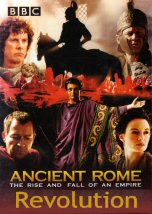
Ancient Rome: Revolution

   2006    History
Rome was once a largely democratic society, with regular elections. This Republic lasted for 500 years, but then came Tiberius Gracchus. He believed in the ideals of the Republic - fairness, decency and justice for everyone -but was appalled by Rome's aristocrats' treatment of the poor. So he unleashed the power of the mob upon the streets of Rome, with devastating consequences.
Series: Ancient Rome