





Last Watched

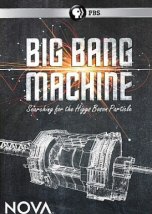
Big Bang Machine

   2015    Technology
On July 4, 2012, scientists at the giant atom smashing facility at CERN announced the discovery of a subatomic particle that seems like a tantalizingly close match to the elusive Higgs Boson, thought to be responsible for giving all the stuff in the universe its mass. Since it was first proposed nearly fifty years ago, the Higgs has been the holy grail of particle physicists: finding it completes the 'standard model" that underlies all of modern particle physics. Now CERN's scientists are preparing for the Large Hadron Collider's second act, when they restart the history-making collider, running at higher energy--hoping to find the next great discovery that will change what we know about the particles and forces that make up our universe.

The Southwest Islands

   2017    Nature
In the far south west of Japan, there is a chain of islands stretching towards the tropics - a place where all life is influenced by the power of the sea, and where volcanoes and typhoons are forces to be reckoned with. The journey begins at an island at the top of the chain and travels south, revealing unexpected stories of isolation, unique wildlife and unsolved mysteries.
Series: Japan Earth Enchanted Islands

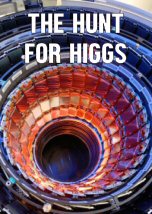
The Hunt For Higgs

   2012    Science
Go with us behind the scenes at CERN to follow one of the most epic and expensive scientific quests of all time: the search for the Higgs particle, believed to give mass to everything in our universe. However, the hunt for Higgs is part of a much grander search for how the universe works. It promises to help answer questions like why we exist and is a vital part of a Grand Unified Theory of nature". At the heart of the pursuit of the elusive particle is the same feature that makes snowflakes beautiful and human faces attractive: the simple and enchanting idea of symmetry. Presenter Jim Al-Khalil

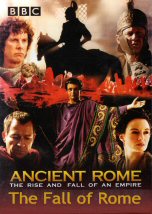
Ancient Rome: The Fall of Rome

   2006    History
In AD 410, the Goth hordes sacked the city. This event symbolised Rome's collapse. Within 70 years, the western empire - what we think of as Ancient Rome - was abandoned. But it should never have happened at all.
Series: Ancient Rome

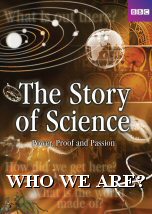
Who are We

   2010    Medicine
We now know that the brain - the organ that more than any other makes us human - is one of the wonders of the universe, and yet until the 17th century it was barely studied. The twin sciences of brain anatomy and psychology have offered different visions of who we are. Now these sciences are coming together and in the process have revealed some surprising and uncomfortable truths about what really shapes our thoughts, feelings and desires. And the search to understand how our brains work has also revealed that we are all - whether we realise it or not - carrying out science from the moment we are born.
Series: The Story of Science

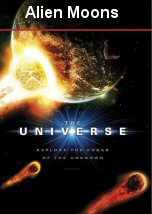
Alien Moons

   2007    Science
Travel from the inner solar system to the Kuiper Belt and explore the moons surrounding the planets of the solar system. Many of these moons that were once unknown are now on the cutting edge of astronomical study. Some burst with volcanic fury another spews icy geysers and others offer the possibility of alien life. Are these strange worlds simply hostile environments unfit for humans or do other possibilities exist? Cutting-edge computer graphics are used to bring the universe down to earth and to imagine what kind of life forms might evolve in alien atmospheres.
Series: The Universe