(Click CC for Subtitles) Deep in the forests of Northern Italy resides the prized white Alba truffle. Desired by the wealthiest patrons in the world, it remains a pungent but rarified mystery. It cannot be cultivated or found: the only souls on Earth who know how to dig it up are a tiny circle of canines and their silver-haired human companions-Italian elders with walking sticks and devilish senses of humor-who only scour for the truffle at night so as not to leave any clues for others. Still, this small enclave of hunters induces a feverish buying market that spans the globe. With unprecedented access to the elusive truffle hunters, filmmakers Michael Dweck and Gregory Kershaw follow this maddening cycle from the forest floor to the pristine restaurant plate. With a wily and absurdist flare, The Truffle Hunters captures a precarious ritual constantly threatened by greed and outside influences but still somehow protected by those clever, tight-lipped few who know how to unearth the magic within nature.
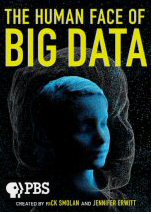
With the rapid emergence of digital devices, an unstoppable, invisible force is changing human lives: Big Data, a word that was barely used a few years ago but now governs the day for many of us. The real time visualization of data streaming in from satellites, billions of sensors and GPS enabled cameras and smart phones is beginning to enable us to sense, measure and understand aspects of our existence in ways never possible before". This massive gathering and analysing of data in real time is also allowing us to address to some of humanity biggest challenges, including pollution, world hunger and illness, and it is also helping create a new kind of planetary nervous system. But as Edward Snowden and the release of the NSA documents have shown, the accessibility of all this data comes at a steep price. The Human Face of Big Data captures the promise and peril of this extraordinary knowledge revolution.
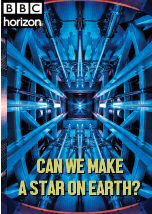
Could nuclear fusion hold the answers to the energy crisis? It is the process that has forged all matter in the universe. It lights the stars and it is what transformed the lighter atoms that formed in the Big Bang into heavier atoms. In Can We Make a Star on Earth?, Brian Cox peers beyond the glare of our Sun to reveal the hidden forces that provide its power. He discovers how this fusion energy has kept our closest star burning for five billion years. Brian believes humanity must build a star on Earth to ensure survival. Will scientists be able to harness fusion power and achieve abundant, cheap, clean energy?
In the second stop in his exploration of the wonders of the universe, Professor Brian Cox goes in search of humanity's very essence to answer the biggest questions of all: what are we? And where do we come from? This film is the story of matter - the stuff of which we are all made. Brian reveals how our origins are entwined with the life cycle of the stars. But he begins his journey here on Earth. In Nepal, he observes a Hindu cremation. Hindu philosophy is based on an eternal cycle of creation and destruction, where the physical elements of the body are recycled on to the next stage. Brian draws a parallel with the life cycle of the stars that led to our own creation. Next, he explains how the Earth's resources have been recycled through the ages. How every atom that makes up everything we see, was at some time a part of something else. Our world is made up of just 92 elements, and these same 92 elements are found throughout the entire universe. We are part of the universe because we are made of the same stuff as the universe.
The film explores how and why mankind's most feared and controversial technological discovery is now passionately embraced by many of those who once led the charge against it. PANDORA'S PROMISE aims to inspire a serious and realistic debate over what is without question the most important question of our time: how do we continue to power modern civilization without destroying it?
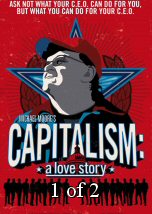
Michael Moore returns to controversial territory with this documentary examining the events that led to the last global financial crisis, while putting forward an indictment of the current economic order in the United States and unfettered capitalism in general. Topics covered include Wall Street's "casino mentality", for-profit prisons, Goldman Sachs' influence in Washington, D.C., the poverty-level wages of many workers, the large wave of home foreclosures, corporate-owned life insurance, and the consequences of "runaway greed".
























With unprecedented access to the elusive truffle hunters, filmmakers Michael Dweck and Gregory Kershaw follow this maddening cycle from the forest floor to the pristine restaurant plate. With a wily and absurdist flare, The Truffle Hunters captures a precarious ritual constantly threatened by greed and outside influences but still somehow protected by those clever, tight-lipped few who know how to unearth the magic within nature.