









Last Watched

"Wildlife"  Sort by

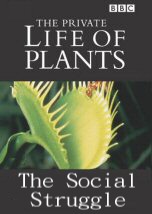
The Social Struggle

   1995    Nature
Fourth episode examines how plants either share environments harmoniously or compete for dominance within them. Attenborough highlights the 1987 hurricane and the devastation it caused. However, for some species, it was that opportunity for which they had lain dormant for many years. The space left by uprooted trees is soon filled by others who move relatively swiftly towards the light. The oak is one of the strongest and longest-lived, and other, lesser plants nearby must wait until the spring to flourish before the light above is extinguished by leaves. Tropical forests are green throughout the year, so brute force is needed for a successful climb to the top of the canopy: the rattan is an example that has the longest stem of any plant. As its name suggests, the strangler fig 'throttles' its host by growing around it and cutting off essential water and light. Some can take advantage of a fallen tree by setting down roots on the now horizontal trunk and getting nutriment from the surrounding moss and the fungi on the dead bark. The mountain ash (eucalyptus regnans) grows so tall, that regeneration becomes a considerable problem. It is easily flammable, so its solution is to shed its seeds during a forest fire and sacrifice itself. It therefore relies on the periodic near-destruction of its surroundings in order to survive. Attenborough observes that catastrophes such as fire and drought, while initially detrimental to wildlife, eventually allow for deserted habitats to be reborn.
Series: The Private Life of Plants
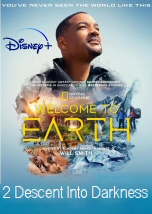
Descent Into Darkness

   2021    Nature
In the second episode, Will Smith descends 3,300 feet to the bottom of the ocean in a deep-water submersible, where even fewer people have gone than outer space. Along the way down, Will and explorer Diva Amon investigate how colour is used in the natural world and the role of bioluminescence. In the oceans, nearly 80 percent of animals use bioluminescence in some way, possibly the most common form of communication on the planet.
Series: Welcome to Earth

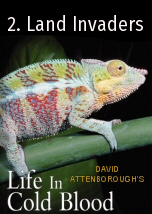
Land Invaders

   2008    Nature
From steamy jungles to dry deserts, amphibians have taken their first footsteps onto land using their bizarre life histories to break their ties with the water and invade the earth.
This episode delves into the extraordinary and intimate lives of the soft skinned amphibians. This includes the marsupial frogs, a peculiar species where the father carries his young in pouches and then gives birth. It also features warring giant salamanders over a metre long and show-off newts that offer displays just like underwater birds of paradise.
Series: Life In Cold Blood

Wings 2of2

   2014    Nature
It's a universal dream To soar on wings into the heavens. But it's nothing compared to the reality. Experience our planet as never before: Through the eyes of birds. This is a journey that will embrace the world. A flight across the earth on feathered wings. It's a fantastic voyage following the changing seasons and taking in some of the greatest events on Earth.
Experience a year in the life of our planet from the lush tropics to the frozen North and catch a glimpse of our world as never before: From a bird's-eye view.
Series: Wings

Fathom

   2021    Nature
Fathom is a visual and aural wonder of a documentary that follows researchers working to finally decode the communication of humpback whales. Dr. Ellen Garland and Dr. Michelle Fournet embark on parallel journeys on opposite sides of the world, as they seek to better understand whale culture and communication. The film uniquely reveals a deep commitment and reverence to the scientific process and the universal human need to seek answers about the world around us.
From hypothesis to groundbreaking experiences in the field, 'Fathom' showcases the passion, curiosity, collaboration, perseverance and work it takes for leading scientists to make scientific discoveries.

Living Together

   2006    Nature
The documentary deals with the future of conservation. It begins by looking at previous efforts. The 'Save The Whales' campaign, which started in the 1960s, is seen to have had a limited effect, as whaling continues and fish stocks also decline. In the 1990s, as head of the Kenya Wildlife Service, Richard Leakey took on the poachers by employing armed units. Although it was successful in saving elephants, the policy was detrimental to the Maasai people, who were forced from their land. The need for "fortress" areas is questioned, and the recently highlighted Raja Ampat coral reef in Indonesia is an example. The more tourism it generates, the greater the potential for damage — and inevitable coastal construction. Sustainable development is viewed as controversial, and one contributor perceives it to currently be a "contradiction in terms". Trophy hunting is also contentious. Those that support it argue that it generates wealth for local economies, while its opponents point to the reducing numbers of species such as the markhor. Ecotourism is shown to be beneficial, as it is in the interests of its providers to protect their environments. However, in some areas, such as the Borneo rainforests, the great diversity of species is being replaced by monocultures. The role of both religion and the media in conservation is argued to be extremely important. Contributors to the programme admit a degree of worry about the future, but also optimism.
The Sky at Night

The Sky at Night

2015  Culture
Secrets of the Dead

Secrets of the Dead

2017  History
Leaving Neverland

Leaving Neverland

2019  Culture
Fierce Queens

Fierce Queens

2020  Nature
The Story of the Jews

The Story of the Jews

2013  History
Dangerous knowledge

Dangerous knowledge

2007  Science
Walking with Dinosaurs

Walking with Dinosaurs

2025  Science
Human

Human

2025  History