Love on the Spectrum returns with a powerful Season 3, diving even deeper into the real-life experiences of young adults on the autism spectrum as they navigate the unpredictable world of romance. This season introduces a bold new narrative twist — the impact of Social Media, Fame, and Online Expectations on neurodiverse relationships. Set against the backdrop of viral attention and digital pressure, the new cast members are more open, more vulnerable, and more relatable than ever. Their journeys are as heartwarming as they are eye-opening, making Season 3 an unmissable chapter in this groundbreaking series. Authenticity, Vulnerability, and Unexpected Connection take center stage like never before. In the first three episodes, we follow Connor on his very first date after receiving a message from a fan, while Madison, a cheerful artist who loves Disney and Christmas, dives into blind dating for the first time. Returning favorite James tries speed dating with his trademark humor and vulnerability. Meanwhile, Dani and Adan celebrate one year together, Pari dreams of finding love on her own terms, and Tanner continues searching for a real connection. With honesty, emotion, and expert guidance, these episodes capture the beauty, the challenges, and the hope in every step of the journey to love.
In just over 100 days, a new coronavirus has taken an unprepared world by storm, infiltrating every corner of the globe, sending entire nations into lockdown, killing thousands and infecting countless more. Across the world, governments are scrambling to react, hospitals are struggling to cope and an increasingly anxious public are starting to panic. The world's media is awash with data, information and misinformation. But what are the facts? What is COVID-19 and why is this strain of coronavirus so dangerous? What happens in our bodies when the virus attacks? How does this compare to previous pandemics? What do all the the numbers really mean, and how can data modelling help us look for an exit strategy? This programme investigates the scientific facts and figures behind the biggest public health crisis in living memory, and explores the latest research from the frontline of the medical and scientific fightback.
A majestic presence, towering over Paris for more than 130 years, the Eiffel Tower is an iconic symbol of 19th-century progress and grandeur. When it was built for the 1889 Paris world’s fair, its creator, Gustave Eiffel, was at the height of his fame and ready to take on the dream of every engineer and architect - to build the world’s tallest man-made structure. He had just two years, two months and five days to erect his 300-metre iron colossus. Drawing on three decades of civil engineering innovation and works across the globe, Eiffel, a magician of iron building, was perfectly poised for this extraordinary feat.
Professor Jim Al-Khalili looks at how we have created machines that can simulate, augment, and even outperform the human mind - and why we shouldn't let this spook us. He reveals the story of the pursuit of AI, the emergence of machine learning and the recent breakthroughs brought about by artificial neural networks. He shows how AI is not only changing our world but also challenging our very ideas of intelligence and consciousness.
Along the way, we'll investigate spam filters, meet a cutting-edge chatbot, look at why a few altered pixels makes a computer think it's looking at a trombone rather than a dog and talk to Demis Hassabis, who heads DeepMind and whose stated mission is to 'solve intelligence, and then use that to solve everything else'. Stephen Hawking remarked 'AI could be the biggest event in the history of our civilisation. Or the worst'. Jim argues that AI is a potent new tool that should enhance our lives, not replace us.
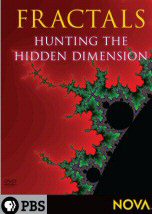
The ultimate adventure in scientific inquiry, this fascinating program follows the exploits of a small group of pioneering mathematicians who discovered a whole area of study that is revolutionizing all branches of understanding in the world: fractal geometry. Fractals are most recognized as a series of circular shapes with a border surrounded by jagged "tail-like" objects. The program, aimed at the average viewer does a fine job of explaining the background of fractals, first by beginning with the story of Pixar co-founder, Loren Carpenter's work at Boeing, developing 3D terrain from scratch using fractals. From there the program starts at the beginning with an introduction to Benoit Mandelbrot and his revolutionary work. The explanations are full of solid factual information but never talk above the level of a viewer who has some understanding of basic mathematical principles. Once the concept is presented the program spends the rest of the time showing how prevalent the fractal is in life. For a program about a mathematical concept, "Fractals" is very engaging, showing how the process was applied to special effects as far back as the Genesis planet from "Star Trek II" all the way to the spectacular finale on Mustafar in "Star Wars: Episode III." I found myself astonished at how fractals were the source of the lava in constant motion and action during the Obi-Wan/Anakin fight. What is more amazing is when the program delves into practical applications such as cell phone antennas, and eventually the human body. For the average person who enjoys watching science related programs, even on a sporadic basis, "Fractals" will prove to be a very worthwhile experience. The program is well produced, integrating talking head interviews (including some with Mandelbrot himself) with standard "in the field" footage. The structure of the program is very logical and never finds itself jumping around without direction. In simplest terms, this is a program as elegant as the designs it focuses on.
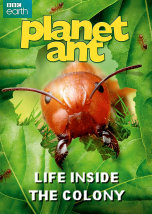
Ant colonies are one of the wonders of nature - complex, organised and mysterious. This programme reveals the secret, underground world of the ant colony in a way that's never been seen before. At its heart is a massive, full-scale ant nest, specially designed and built to allow cameras to see its inner workings. The nest is a new home for a million-strong colony of leafcutter ants from Trinidad. For a month, entomologist Dr George McGavin and leafcutter expert Professor Adam Hart capture every aspect of the life of the colony, using time-lapse cameras, microscopes, microphones and radio tracking technology.












In the first three episodes, we follow Connor on his very first date after receiving a message from a fan, while Madison, a cheerful artist who loves Disney and Christmas, dives into blind dating for the first time. Returning favorite James tries speed dating with his trademark humor and vulnerability. Meanwhile, Dani and Adan celebrate one year together, Pari dreams of finding love on her own terms, and Tanner continues searching for a real connection. With honesty, emotion, and expert guidance, these episodes capture the beauty, the challenges, and the hope in every step of the journey to love.