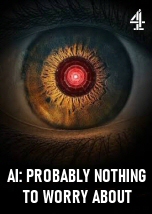
Artificial intelligence has moved from a fringe scientific dream to a technology capable of reshaping work, politics, creativity and even human survival. Through rare interviews and archival footage, pioneers such as Geoffrey Hinton and Demis Hassabis trace the breakthroughs that made modern AI possible, while former OpenAI staff and other researchers reveal the fierce rivalry, ambition and commercial pressure driving the race toward ever more powerful systems. But the deeper the film goes, the more unsettling the questions become. Hinton explains why he left Google to warn about the technology he helped create, while examples of deceptive behaviour, threatening chatbots and real-world harm expose how little even experts fully understand or control these systems. Moving with the tension of a thriller, the documentary asks whether humanity is building its greatest tool or creating something it may one day be unable to contain.
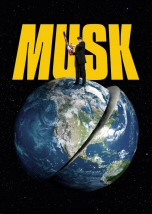
Filmmaker Alex Gibney examines how Elon Musk rose from the Silicon Valley start-up world to become one of the most powerful and influential figures of the 21st century. Through archival footage, interviews with former colleagues, partners and people who knew him closely, the documentary follows the creation of Zip2, PayPal, Tesla and SpaceX, exploring the ambition, risk-taking and carefully constructed image of the visionary entrepreneur who promised to transform life on Earth and beyond. But the film increasingly asks a more unsettling question: how did one businessman accumulate so much economic, technological and political power? Musk declined to be interviewed, so Gibney builds a simulated conversation from his own public statements while examining his takeover of Twitter/X, Starlink, artificial intelligence, his relationship with Donald Trump and his involvement with DOGE (Department of Government Efficiency). The result is a provocative portrait of innovation, wealth, influence and personal mythology, questioning where technological ambition ends and unchecked power begins.
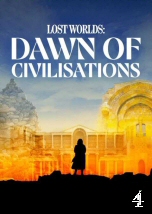
Historian Bettany Hughes journeys across ancient Anatolia, modern-day Türkiye, to uncover some of the earliest foundations of civilisation. From Göbeklitepe and Karahantepe to Sardis, Gordion, Ephesus and Cappadocia, she explores how the first settled communities developed agriculture, religion, trade and urban life, while remarkable discoveries such as early monumental buildings, ancient weapons and life-sized human sculptures reveal a world far more sophisticated than once imagined. Moving through landscapes where myth and history constantly overlap, Hughes follows the rise of kingdoms and empires, encounters the world of King Midas, and traces how Anatolia became a crossroads connecting cultures across continents. Presented here with both episodes combined into a single video, the series offers a sweeping archaeological journey into the places where some of humanity’s most important ideas, beliefs and institutions first began to take shape.
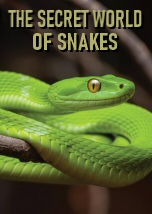
Snakes are among the most feared yet misunderstood predators on Earth. Across the Americas, Australia, Africa, Asia and Europe, more than 100 species reveal extraordinary adaptations that allow them to survive in rainforests, deserts, wetlands, mountains and oceans. Boas and pythons overpower prey with immense strength, while rattlesnakes, cobras, vipers, mambas, taipans and sea snakes deploy some of nature’s most sophisticated venoms, camouflage and sensory abilities. Far from being simple killers, they also play a vital role in controlling rodents and maintaining healthy ecosystems. From black mambas battling for mates and spitting cobras defending themselves with remarkable accuracy to the thousands of pit vipers inhabiting China’s extraordinary Shedao Island, the series reveals hunting techniques and behaviours rarely seen in such detail. Presented here with all three episodes combined into a single video, it offers a spectacular journey into the hidden lives of these highly specialised animals, showing how evolution has made snakes some of the planet’s most efficient and fascinating survivors.
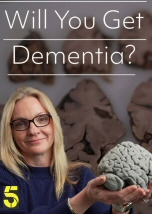
Dementia is one of the fastest-growing health conditions in the UK, yet its earliest warning signs can be difficult to recognise. NHS GP Dr Claire Taylor meets people living with Alzheimer’s and other forms of dementia, explores how the disease changes the brain, and puts herself through innovative tests designed to detect subtle problems with memory, hearing and cognition before more obvious symptoms appear. Along the way, she investigates why some people develop dementia at a younger age, how lifestyle and social isolation may influence risk, and what the latest research says about prevention and treatment. With moving personal stories and access to scientists working at the cutting edge of dementia research, the documentary asks a question that concerns millions: how much can we really know about our own future brain health?
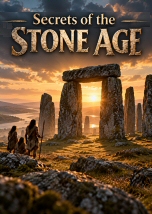
Around 12,000 years ago, humans began one of the most important transformations in history: the shift from hunting and gathering to farming and permanent settlements. Archaeological sites such as Gobekli Tepe reveal how these early communities lived, what they believed and how agriculture transformed diet, population and social life. Across Europe and the Middle East, prehistoric societies also created huge stone monuments, tombs and ceremonial sites, moving blocks weighing many tons with surprisingly limited technology. Presented here with both episodes combined into a single video, the documentary explores the birth of farming, organized communities, belief systems and monumental architecture during the Stone Age.


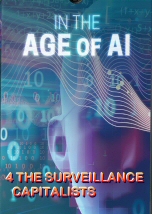


But the deeper the film goes, the more unsettling the questions become. Hinton explains why he left Google to warn about the technology he helped create, while examples of deceptive behaviour, threatening chatbots and real-world harm expose how little even experts fully understand or control these systems. Moving with the tension of a thriller, the documentary asks whether humanity is building its greatest tool or creating something it may one day be unable to contain.