In the last episode we are taken on a gripping journey into the lives of a magnificent family of tigers in Bandhavgarh, India. This family, led by a tigress named Raj Bera, faces numerous challenges and triumphs. As we delve into their world, we witness the extraordinary bonds, fierce determination, and the will to survive against all odds. Raj Bera is the matriarch who must teach her cubs the essential skills they need to thrive in the wild. Her cubs are not only the heirs to her dynasty but also the future of the tiger species itself. In a land with increasing human encroachment and threats of poaching, the family's story is not only an intimate portrayal of their lives but also a glimpse into the larger conservation efforts to save these magnificent creatures from extinction. Throughout the documentary, you'll see breathtaking scenes of tiger family dynamics, from nurturing to hunting, as they navigate their way through the challenging Indian landscape. The captivating narrative underscores the urgent need for protecting these remarkable animals and the critical importance of providing them with the space to preserve their ancient heritage. The film is a moving and eye-opening exploration of these majestic creatures and the dedicated conservationists working tirelessly to ensure their survival. It is a must-watch for anyone interested in the natural world and the future of one of the most iconic and endangered species on our planet.
On the second part of his journey through the dark ages Richard Rudgley continues into the age of the wandering peoples, the Volkerwanderung. These Northern people enjoyed a golden age unaffected by Rome and just 30 years after the Romans relinquished Britain, the 'Anglo-Saxons' made their move. The bedraggled legions are in retreat. Walls are pulled down. Mosaics shattered. And yet there never was a people called Anglo-Saxon. We look at the lasting influence of Saxon leaders like Alfred the Great, and his blue print for social justice.
The jeweled-encrusted pectoral of King Tut is a hieroglyphic artefact of stunning craftsmanship and one of the greatest treasures of the pharaohs. Was this ancient glass scarab in Tutankhamun's tomb created by forces from beyond our world? Using new research and the latest tech, experts confront the ancient mystery of its flawless glass scarab. Is a 4,000 year old clay tablet the original instruction manual for Noah's ark? And how can a bizarre red moon rock contain signs of life?
An unassuming 80-year-old device that has the appearance of a typewriter could actually be one of the greatest secret weapons in history. Using cutting-edge digital technology, experts investigate the secrets of a revolutionary encryption machine. How could there be a carving of a modern helicopter on an ancient Egyptian inscription? can this 800-year-old device covered in strange sayings really predict the future?
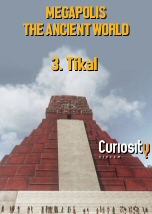
Located in Central America, Tikal is one of the largest of the ancient cities of the Mayan civilization. Occupied for more than a millennium, Tikal, founded in the 8th century BC and nestled in the jungle of Guatemala, will have up to 12,000 structures and reach over 2 million inhabitants. This episode shows its extraordinary pyramid-temples, designed with human power alone. Thanks to new technologies, the ancient Mayan city is revealed there, entirely reconstituted in 3D synthetic images.
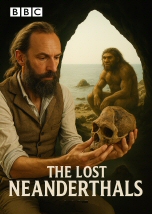
In the heart of southern France, the Mandrin Cave has drawn archaeologists for over three decades, its soils preserving an extraordinary archive of human life stretching back tens of thousands of years. Within its layers lie traces of fire, tools, and bones that tell the story of survival in a harsh prehistoric world. In 2015, the remarkable discovery of a Neanderthal individual—nicknamed Thorin—revealed that these ancient humans once lived side by side with the first Homo sapiens to arrive in the region. Following an international team of scientists, the investigation uncovers fragile relics of the Palaeolithic era that are rewriting our understanding of how two human species encountered one another. With every excavation, new details emerge about resilience, adaptation, and coexistence, offering a powerful re-examination of what it meant to be human 50,000 years ago. This is not only the story of the Neanderthals’ fate, but also of the deep roots of our own identity.



























Throughout the documentary, you'll see breathtaking scenes of tiger family dynamics, from nurturing to hunting, as they navigate their way through the challenging Indian landscape. The captivating narrative underscores the urgent need for protecting these remarkable animals and the critical importance of providing them with the space to preserve their ancient heritage. The film is a moving and eye-opening exploration of these majestic creatures and the dedicated conservationists working tirelessly to ensure their survival. It is a must-watch for anyone interested in the natural world and the future of one of the most iconic and endangered species on our planet.