Professor Brian Cox joins Chris Lintott and the team to investigate one of the most intriguing new mysteries in modern astronomy. Observations from the James Webb Space Telescope have revealed hundreds of compact, extraordinarily bright objects known as “little red dots”, appearing less than a billion years after the Big Bang. Many may hide rapidly growing supermassive black holes, raising a profound question: how could such enormous objects have formed so early in cosmic history? The journey begins with the strange physics of black holes themselves, from event horizons and singularities to the supermassive black hole at the centre of the Milky Way and the gigantic black hole in the galaxy M87. With cosmologist Emma Chapman and Professor Sadegh Khochfar, the programme explores radical explanations for these ancient monsters, including primordial black holes born soon after the Big Bang and massive black holes formed directly from collapsing clouds of gas, bypassing stars altogether. Cutting-edge computer simulations recreate the first billion years of the universe and reveal how the earliest galaxies and black holes may have emerged within the cosmic web. These discoveries are forcing astronomers to reconsider not only how supermassive black holes grow, but how galaxies and the early universe itself evolved.
Click CC for subtitles. In the final three episodes of Season 1, Ari fully embraces his identity as Arminius and begins the dangerous task of turning divided Germanic tribes into a force capable of challenging Rome. While Varus believes he has placed a loyal Roman-trained leader at the head of the Cherusci, Arminius secretly works against him. Thusnelda and Folkwin seek support from the Bructeri, and Arminius realizes that defeating three Roman legions will require something almost impossible: convincing rival tribes to put aside their feuds and fight as one people. A political marriage between Arminius and Thusnelda strengthens their cause, while Folkwin, thought dead, is actually alive and enslaved in the Roman camp. Everything then moves toward the confrontation that will change history. Drawing on his intimate knowledge of Roman military tactics, Arminius persuades Varus to lead his legions through the forests and swamps of Germania, where their disciplined formations become a deadly weakness. As mistrust, betrayal and sacrifice threaten the fragile tribal alliance, Thusnelda takes an extreme step to preserve unity and Arminius prepares his ambush. The season culminates in the Battle of the Teutoburg Forest, where three Roman legions are drawn into a trap that will become one of the most devastating defeats in the history of the Roman Empire.
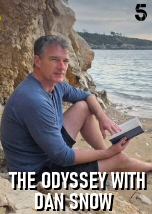
Dan Snow follows the route of Odysseus across the Mediterranean, beginning with the world of Troy and the Bronze Age warriors who inspired Homer’s epic. Sailing through Greece and the Ionian islands, he explores places traditionally associated with the Cyclops, Circe, the Sirens and other episodes of the hero’s long journey home, while examining the archaeology and historical evidence behind the legends. Along the way, Dan asks how much of the story may preserve memories of real places, peoples and events from the ancient Greek world. His voyage ends at Ithaca, where Odysseus’s struggle to return to his family reaches its climax. Combining myth, history, archaeology and travel, this documentary reveals how one ancient story became one of the most influential adventures ever told.
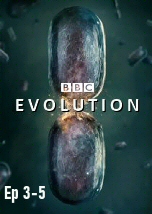
In the final three episodes of the series, Chris Packham follows three extraordinary evolutionary journeys to discover how the relentless demands of survival transformed simple early animals into some of the most remarkable creatures alive today. In Borneo, the voracious appetite of the bat leads back more than half a billion years to the origins of the through-gut, the first anus, heads and jaws, revealing how the need to find and consume food helped reshape animal life and ultimately produced the bat’s extraordinary powers of hearing. In the Bahamas, the intelligence of dolphins opens an even deeper story: from ancient cells able to sense light to the evolution of eyes, complex brains, sophisticated senses and the remarkable minds of modern dolphins. The journey culminates with one of nature’s supreme athletes. Tracing the horse’s ancestry through hundreds of millions of years, Packham reveals how primitive muscle cells evolved into increasingly powerful systems for movement, how beating hearts supplied those muscles with oxygen, and how limbs became ever more effective tools for locomotion. Slithering, swimming, walking and running eventually converge in an animal built for extraordinary speed and endurance. Together, these final episodes reveal a breathtaking truth: hunger, perception and movement were not merely necessities of survival—they were powerful evolutionary forces that helped create the astonishing complexity of animal life.
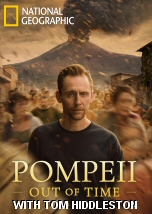
Tom Hiddleston returns to the ancient city that first awakened his fascination with the Roman world, determined to uncover a story far more human than the familiar tale of sudden destruction. Drawing on new archaeological evidence, expert analysis and vivid dramatic reconstruction, he follows three real Romans through the final hours before and during the eruption of Mount Vesuvius: Avianius, a headstrong young apprentice searching for his mother; Julia Felix, a wealthy and independent businesswoman responsible for an entire household; and a veteran soldier who risks everything to help others escape. As earthquakes intensify, ash begins to fall and burning avalanches race towards Pompeii and Herculaneum, every decision becomes a struggle between fear, loyalty and survival. Who understood the warning signs? Who fled, who stayed behind—and whose courage gave others a chance to live? Presented here as one uninterrupted feature containing all three episodes, this extraordinary journey allows viewers to experience the complete disaster from its first tremors to its devastating final surge, revealing Pompeii not simply as a city of death, but as an unforgettable story of ordinary people facing the end of their world.
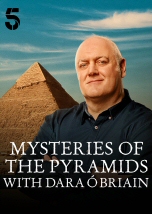
Against the awe-inspiring backdrop of Egypt’s royal pyramids, a journey unfolds that challenges everything we think we know about these ancient giants. Blending rigorous scientific investigation with a sharp sense of curiosity, the exploration dives deep into how these monumental structures were truly built—and why they continue to captivate both scholars and alternative theorists alike. As each layer of myth is peeled back, new questions emerge, revealing a story far more complex and fascinating than the legends suggest. Guided by expert insights and surprising discoveries, the narrative moves between evidence and speculation, confronting controversial ideas while uncovering the remarkable ingenuity of ancient civilizations. What begins as a search for answers quickly becomes a gripping intellectual adventure—one that keeps you questioning, rethinking, and wanting to uncover the next hidden truth behind one of humanity’s greatest mysteries.









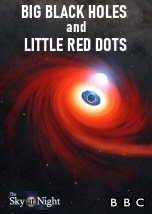



With cosmologist Emma Chapman and Professor Sadegh Khochfar, the programme explores radical explanations for these ancient monsters, including primordial black holes born soon after the Big Bang and massive black holes formed directly from collapsing clouds of gas, bypassing stars altogether. Cutting-edge computer simulations recreate the first billion years of the universe and reveal how the earliest galaxies and black holes may have emerged within the cosmic web. These discoveries are forcing astronomers to reconsider not only how supermassive black holes grow, but how galaxies and the early universe itself evolved.