The last episode examines the fragile interdependence that exists between forests' wide variety of residents, including bald eagles, hunting dogs and Siberian tigers. Over half of all the world's trees, evergreen and deciduous, stand in great assemblies. For many of us, they are places of mystery and darkness. They are key to our climate, and home to countless unique species. The boreal forest contains 750 billion trees, and it stores over 40 percent of the world's carbon, making it a vital element in the fight against climate change. In the past, we have destroyed them without hesitation. Yet, forests do have an astonishing ability to recover. If we choose to give forests time and space, they could reclothe the earth with much of the rich and varied communities of animals and plants of which we have, so recently, robbed it. A future with more forests is key to the resilience of our planet.
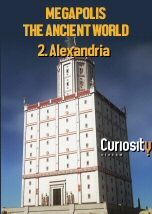
Feast your eyes on a reconstruction of the mega-city and its amazing buildings. Alexandria, built in the middle of rancid marshland, had become in less than a century, the greatest city of the Mediterranean. An ideal position at the crossroads of east and west, and one that brought her great riches. Huge, modern, gleaming white and cosmopolitan, like no other in antiquity, it created its own identity. While the beauty of its planning, its great arteries, its temples and its ports would be equalled only by its openness to the rest of the world. And the monumental achievements of its sovereigns, still shrouded in mystery, we'll never cease to fire our imagination for millennia to come.
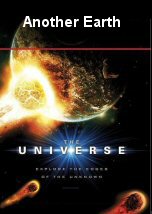
Could we be unique in the universe or is there another planet similar to earth somewhere in the cosmos? Is it possible that Alpha Centauri, our nearest star, is home to another earth-like planet? Earth sized planets have been hard to find, but indirect methods are coming on line to give scientists a good survey of how many such bodies may be in the universe. How rare would it be to find life on another earth-like planet?
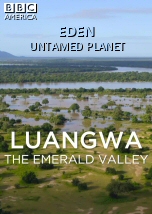
At the very end of East Africa's Great Rift Valley, there's a 'land that time forgot'--the rolling grasslands of the Luangwa Valley. Seemingly untouched plains teem with Africa's most iconic animals. Some are unique to this place, others are critically endangered elsewhere. Here, prey exist in remarkable balance, each taking advantage of the secret at the heart of this Eden, the mighty Luangwa River and its dramatic annual transformation from dusty inferno to emerald paradise.
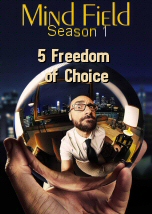
Everyone always wants to be able to choose - but who really makes these choices? And do we really want to have more choices? Michael Stevens finds out as he explores decision-making.
Cursed Films is a five part documentary series which explores the myths and legends behind some of Hollywood's notoriously cursed horror film productions. Filmmaker Jay Cheel explores the facts, myths and mysterious surrounding iconic films and franchises whose casts and crews have been struck by misfortune and tragedy. The release of The Exorcist was surrounded by controversy, as reports of fainting theatre-goers and mysterious on-set accidents raised questions as to whether or not the film itself was evil.



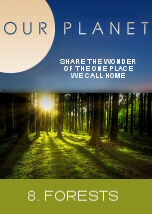




Over half of all the world's trees, evergreen and deciduous, stand in great assemblies. For many of us, they are places of mystery and darkness. They are key to our climate, and home to countless unique species. The boreal forest contains 750 billion trees, and it stores over 40 percent of the world's carbon, making it a vital element in the fight against climate change. In the past, we have destroyed them without hesitation. Yet, forests do have an astonishing ability to recover. If we choose to give forests time and space, they could reclothe the earth with much of the rich and varied communities of animals and plants of which we have, so recently, robbed it. A future with more forests is key to the resilience of our planet.