How do the five senses really work? In fact, there are many more than five, and they all work together to create our own version of reality. We dive into the stories of a pairs figure skating team, a perfumer, a cave explorer, and a musician to decipher how different ways of sensing the world all create their own vivid, and unique, picture. This episode explores the world of human sensation and how it defines reality.
Can we find a way to distribute power so that everyone has their say? A U.S. president explains the challenges of making decisions that affect hundreds of millions of lives, and Freeman learns about an African woman who has created a society without men. He explores how the rise of the internet may fundamentally change how democracy works.
Will Smith confronts his fear of nature on powerful white-water rapids in Iceland. "Over five expeditions, I've followed explorers into situations that were straight-up scary. It was worth it to discover the Earth's wonders. But your boy was tripping more than once. Because when I see wilderness, you know, nothing but nature, I get nervous because I don't understand it."
This rockumentary-style presidential portrait shows how Jimmy Carter reinvigorated a post-Watergate America-with the music of the counterculture, including the Allman Brothers, Bob Dylan, Willie Nelson, and Jimmy Buffett. Low on campaign funds and lacking in name recognition, Carter relied on support from these artists to give him a crucial boost in the Democratic primaries. Once Carter was elected, the musicians became frequent guests in the White House.
Supermassive black holes are the engines that power our universe and one of the major players in the evolution of galaxies. They're in fact the driving force at the heart of nearly every galaxy in the cosmos. Now, a new mystery has emerged about the oldest supermassive black holes. We see supermassive black holes in the very early universe. And we don't understand how they grew so large so quickly. We have clues about their formation but, can we solve the mystery of this supermassive growth spurt?
Our relationship with destruction is not a simple one. It can release endorphins and relax our minds. It can amp us up and make us even more aggressive. It can even help us regulate our emotional reactions. Can violently breaking things calm us down? Or does it simply anger us more? Find out as Michael Stevens takes a look into our urge to destroy.


















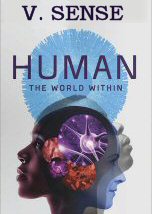






This episode explores the world of human sensation and how it defines reality.