In the third episode, during cleanup at the plant, insiders claim that cost-cutting measures and intimidation tactics create a danger war force than the accident itself. Several state and federal government agencies mounted investigations into the crisis, the most prominent of which was the President's Commission on the Accident at Three Mile Island, headed by chairman John G. Kemeny. The investigation strongly criticized Babcock & Wilcox, Met Ed, Graphics processing unit, and the Nuclear Regulatory Commission for lapses in quality assurance and maintenance, inadequate operator training, lack of communication of important safety information, poor management, and complacency. Kemeny said that the procedures and that the control room were greatly inadequate for managing an accident.
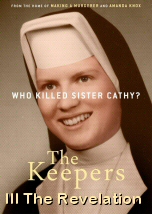
Jean Hargadon Wehner discusses how she came to remember years later the sexual abuse she suffered at Archbishop Keough High School. She also talks about what happened when she reported the abuse to Church officials and how she realized she was connected to the death of Sister Cathy Cesnik. As the can of worms is opened on the hidden world in the high school and the people begin to talk about what happened behind closed doors. With the Jean’s accusations, Abbie Schaub, Gemma Hoskins, and Tom Nugent learn about a story of a graveyard and a source nicknamed 'Deep Throat' who could hold the key.
Step into the world of 1980s cinema with 'Brats,' a riveting documentary that delves into the iconic films starring the legendary 'Brat Pack.' Discover how movies like 'St. Elmo's Fire,' 'The Breakfast Club,' and 'Pretty in Pink' captured the raw essence of teenage angst and resonated with a generation like never before. These films didn't just become cult classics; they defined an era and left an indelible mark on pop culture. Yet, behind the glitz and glamour, the 'Brat Pack' label brought unexpected challenges and lasting effects on the careers of its young stars. Explore the highs, the lows, and the enduring legacy of these unforgettable movies and the actors who brought them to life. This is a must-watch for any film enthusiast looking to understand the profound impact of the 1980s on Hollywood and beyond.
The film offers an unprecedented exploration into the life of Elizabeth Taylor, Hollywood's quintessential star. With extraordinary access to Taylor's personal archives and 40 hours of newly unearthed, intimate audio interviews with journalist Richard Meryman, audiences are invited to rediscover, not just a mega star of Hollywood's Golden Age, but a complex woman who navigated lifelong fame, personal identity, and public scrutiny on a global stage from early childhood. These candid conversations peel back the layers of one of cinema's most enduring icons, revealing a woman at odds with her public image, yearning for respect and agency. The film follows the life of an actress who defied the era's expectations by portraying strong-willed women on-screen, offering a nuanced portrait of the intersection of vulnerability and strength.
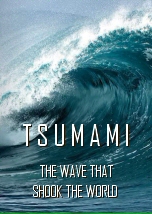
The film takes you on a gripping journey through one of history’s most devastating natural disasters—the 2004 Indian Ocean Boxing Day tsunami. With intimate, first-hand accounts from survivors around the globe, the documentary unveils the terrifying sequence of events on the morning of December 26th, 2004. Through raw and compelling personal narratives, viewers are transported to the chaotic moments when the colossal wave struck, forever altering lives and reshaping entire communities. Among these unforgettable stories is that of Rob, an Englishman whose harrowing account of trying to rescue his family from a serene Sri Lankan beach brings the human cost of the disaster into stark focus. The film not only chronicles the tragic loss of approximately 230,000 lives and the displacement of 1.4 million people but also examines the enduring impact of the tsunami on a generation defined by both profound loss and incredible resilience. This riveting portrayal promises to captivate audiences with its blend of human drama and historical significance, urging viewers to reflect on the power of nature and the strength of the human spirit.
Rasputin is gone, but Nicholas II continues his catastrophic policies in war and at home. When Nicholas goes back to military headquarters, he is in fact leaving control of government, exactly when Russia needed to be held together by its Czar. The war by this time is deeply unpopular. It's not only unpopular, it's also arguably the engine that's causing enormous economic crisis, that's causing general unrest. Deprivation pushes the population from unrest to revolution.















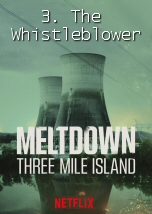





Several state and federal government agencies mounted investigations into the crisis, the most prominent of which was the President's Commission on the Accident at Three Mile Island, headed by chairman John G. Kemeny. The investigation strongly criticized Babcock & Wilcox, Met Ed, Graphics processing unit, and the Nuclear Regulatory Commission for lapses in quality assurance and maintenance, inadequate operator training, lack of communication of important safety information, poor management, and complacency.
Kemeny said that the procedures and that the control room were greatly inadequate for managing an accident.