In 1983 Hasbro bought the license of the Diaclone and Micro Change toys from Takara, then commissioned Marvel Comics to come up with a story-line and character names for the toys. The result: Transformers. Despite Tonka releasing the cheaper Gobots line six months earlier, Hasbro's Transformers took the toy market by storm in 1984, raking in US$150 million that year. At the peak of the toy line's popularity, The Transformers: The Movie hit theaters to further capitalize on its success, but the film polarized fans and collectors with the death of Optimus Prime and majority of the original characters. As Hasbro took full control of Transformers from Takara by the late 1980s, sales declined until the toy line was discontinued in 1991. After the failed Generation 2 reboot, Beast Wars rejuvenated the franchise in 1995. In 2007, the live-action Transformers film solidified Transformers' position as Hasbro's flagship toy line.
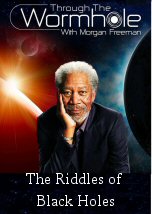
They are the most powerful objects in the universe. Nothing, not even light, can escape the gravitational pull of a black hole. Astronomers now think there are billions of them out in the cosmos, swallowing up planets, even entire stars in violent feeding frenzies. New theoretical research into the twisted reality of black holes suggests that three-dimensional space could be an illusion. That reality actually takes place on a two-dimensional hologram at the edge of the universe.
The final part reveals how our knowledge of cells has brought us to the brink of one of the most important moments in history. Scientists are close to repeating what has happened only once in four billion years - the creation of a new life form.
Four and a half billion years ago, the young Earth was a hellish place, a seething chaos of meteorite impacts, volcanoes belching noxious gases, and lightning flashing through a thin, torrid atmosphere. Then, in a process that has puzzled scientists for decades, life emerged. But how? Join mineralogist Robert Hazen as he journeys around the globe. From an ancient Moroccan market to the Australian Outback, he advances a startling and counterintuitive idea—that the rocks beneath our feet were not only essential to jump-starting life, but that microbial life helped give birth to hundreds of minerals we know and depend on today. It's a theory of the co-evolution of Earth and life that is reshaping the grand-narrative of our planet’s story.
The final episode explores dinosaurs' extraordinary ability to survive. Featured dinosaurs include the bizarre magyarosaurus, which lived in the shadow of the biggest flying animal - hatzegopteryx - and showed an amazing adaptation to island life; and the weird nothronychus, a carnivore that gave up meat eating. This astonishing capacity to evolve into ever more diverse and bizarre forms meant that dinosaurs not only spread throughout the world, but also dominated life upon it for more than 160 million years. It was only an unprecedented extraterrestrial event that finally saw the end of planet dinosaur.
A fifth of the land on our planet is covered by desert. Deserts may appear to be barren and empty, but they are of crucial importance to life. For those that can overcome their challenges they provide a vital refuge. The Grasslands are one of our planet's most productive landscapes. They support the greatest aggregations of large animals on Earth. Cameras follow desert elephants seeking sustenance, bison roaming North American grasslands and caterpillars living the good life underground.












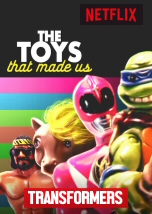






In 2007, the live-action Transformers film solidified Transformers' position as Hasbro's flagship toy line.