




Last Watched

"Rat"  Sort by

Libraries Gave Us Power

   2012    Art
The story of the British Library's Royal Manuscripts collection reaches its end with the last great flowering of illumination, in the magnificent courts of the Tudors. Dr Janina Ramirez investigates astrological texts created for Henry VII, and unwraps his will - still in its original, extravagantly-decorated velvet and gold cover. She hears music written for Henry VIII, which went unperformed for centuries; and reads love notes between the king and Anne Boleyn, written in the margins of a prayer book. Nina also visits Bruges, the source of many of the greatest manuscripts, where this medieval art form collided with the artistic innovations of the Renaissance.
Series: Illuminations: the private lives of medieval kings

Olive Oil: How is it Made Myths and Tips

   2021    Nature    HD
From a gift from the gods in ancient times to a fountain of health in modern times. The olive oil making process and history is explored in a journey plenty of humour and magic. The extra-virgin olive oil is the reason behind the Mediterranean diet benefits because is the unique vegetable oil that keeps its plethora of monounsaturated fats while cooking or frying. Discover how olive oil can change your life, its myths and tips.
FDA Review about the Oleic Acid: https://www.fda.gov/food/cfsan-constituent-updates/fda-completes-review-qualified-health-claim-petition-oleic-acid-and-risk-coronary-heart-disease

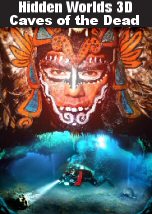
Hidden Worlds 3D Caves of the Dead

   2013    History    3D    HD
In the days of the Mayas, cenotes – deep, natural pits on the Yucatan peninsula - provided the only means of obtaining drinking water. But in the mythology of this advanced civilisation, these waterholes and caves were also the entrance to Xibalba – the underworld. All deceased were obliged to pass through Xibalba and wait there until they were called into heaven. It was a place in which one made sacrifices to the gods – objects of daily life, as well as bloody, human sacrifices. To this day, the relics of these acts are still in place preserved underwater for more than a thousand years. The entrance to the underworld begins at a dirty waterhole in the middle of the Mexican jungle overgrown and barely recognisable. But immediately after entry, a hall of breath-taking dimensions and beauty is revealed. As if they were sculptures, stalactites and stalagmites lend the underwater cave an almost sacred ambience. By now, one has succumbed to the fascination emanated by the world’s largest underwater cave system. We accompany four professional research divers to Yucatan – a team of specialists, able to squeeze their bodies through crevices and holes, barely larger than their bodies and who master dives that would push even the most experienced divers to their limits. With them, we penetrate worlds only a few people have ever ventured into. We encounter the remains of human victims, prehistoric fireplaces and primeval animal skeletons and undertake a dive, which takes us from the primeval forest to the open sea. We then enter Xibalba – the place of myths and the dead. In the days of the Mayas - a voyage of no return. Today, this is one of the greatest challenges one can face as a diver – the hidden world of the underwater caves of Yucatan – all filmed in 3D.

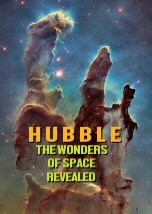
Hubble: The Wonders of Space Revealed

   2020    Science    HD
To celebrate the 30th anniversary of its launch, this film tells the remarkable story of how the Hubble Space Telescope revealed the awe and wonder of our universe and how a team of daring astronauts risked their lives to keep it working.
Additionally, a team led by Greg Bacon and Dr Frank Summers has transformed many of Hubble's most awe-inspiring images into visualisations - from the spectacular Orion Nebula to the fabulous Whirlpool Galaxy and ethereal Horsehead Nebula. One of the most mind-blowing of the visualizations takes the viewer on a remarkable journey, flying across the Universe to witness almost 13 billion years of cosmic evolution. It's called the 'Hubble Ultra Deep Field' and was created when Hubble stared at a small patch of sky for the equivalent of more than 11 days to see some of the most distant galaxies ever observed.

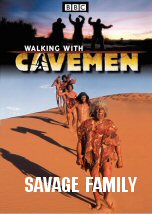
Walking with Cavemen: Savage Family

   2003    History
One and a half million years ago, a new breed of ape-man walks the land. In southern Africa, Homo Ergaster has taken the next step to becoming human. They have long, modern looking noses, which cool air as they breathe. Their hairless bodies, with millions of tiny sweat glands, mean they don't pant anymore to control their temperature - they sweat. And, above all, they have big brains - nearly two-thirds the size of ours.
Series: Walking with Cavemen

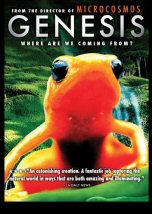
Genesis. Where Are We Coming From

   2005    Nature
The cycle of life of a handful of different animals is captured on film in a whole new way in this documentary. Using special motion-control photography equipment, Genesis allows filmgoers to view animal behaviors which are too small, too slow, or too difficult to normally be seen with the naked eye, including a chick hatching its way out from inside an egg, jellyfish drying into nothing under the heat of the sun, or a snake slowly swallowing prey bigger than itself. This footage is accompanied by narration from Sotigui Kouyate, who uses simple props and easily understandable analogies to explain the science behind what its shown on screen. Genesis was directed by Claude Nuridsany and Marie Perennou, who previously created another acclaimed scientific documentary, Microcosmos.
The Sky at Night

The Sky at Night

2024  Science
The Truth About

The Truth About

2018  Medicine
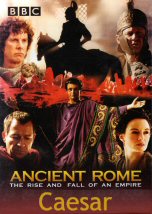
Ancient Rome

Ancient Rome

2006  History
Becoming Human

Becoming Human

2010  History
Atom

Atom

2007  Science
The Germanic Tribes

The Germanic Tribes

2007  History