

Last Watched

"CIA"  Sort by

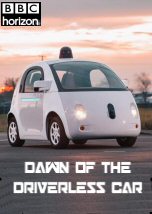
Dawn of the Driverless Car

   2017    Technology
The car has shrunk the world, increased personal freedom and in so many ways expanded our horizons, but there is a flipside. Fumes from car exhausts have helped to destroy our environment, poisoned the air we breathe and killed us in far more straightforward ways. But all that is going to change. Enter a world where cars can drive themselves, a world where we are simply passengers, ferried about by wholesome green compassionate technology which will never ever go wrong. And it is almost here. Explore the artificial intelligence required to replace human drivers for cars themselves, peers into the future driverless world and discovers that, despite the glossy driverless PR (and assuming that they really can be made to work reliably), the reality is that it might not be all good news. From the ethics of driverless car crashes to the impact on jobs, it might be that cars are about to rise up against us in ways that none of us are expecting.
Numbers as God

   2018    Science
Mathematician Dr Hannah Fry explores the mystery of maths. It underpins so much of our modern world that it's hard to imagine life without its technological advances, but where exactly does maths come from? Is it invented like a language or is it something discovered and part of the fabric of the universe? It's a question that some of the most eminent mathematical minds have been wrestling with. To investigate this question, Hannah goes head first down the fastest zip wire in the world to learn more about Newton's law of gravity, she paraglides to understand where the theory of maths and its practice application collide, and she travels to infinity and beyond to discover that some infinities are bigger than others.
In this episode, Hannah goes back to the time of the ancient Greeks to find out why they were so fascinated by the connection between beautiful music and maths. The patterns our ancestors found in music are all around us, from the way a sunflower stores its seeds to the number of petals in a flower. Even the shapes of some of the smallest structures in nature, such as viruses, seem to follow the rules of maths. All strong evidence for maths being discovered. But there are those who claim maths is all in our heads and something we invented. To find out if this is true, Hannah has her brain scanned. It turns out there is a place in all our brains where we do maths, but that doesn't prove its invented.
Experiments with infants, who have never had a maths lesson in their lives, suggests we all come hardwired to do maths. Far from being a creation of the human mind, this is evidence for maths being something we discover. Then along comes the invention of zero to help make counting more convenient and the creation of imaginary numbers, and the balance is tilted in the direction of maths being something we invented. The question of whether maths is invented or discovered just got a whole lot more difficult to answer
Series: Magic Numbers

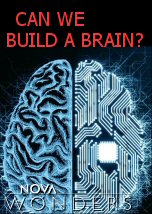
Can We Build a Brain

   2018    Technology    HD
Artificially intelligent machines are taking over. They’re influencing our everyday lives in profound and often invisible ways. They can read handwriting, interpret emotions, play games, and even act as personal assistants. They are in our phones, our cars, our doctors’ offices, our banks, our web searches... the list goes on and is rapidly growing ever longer. But how does today’s A.I. actually work—and is it truly intelligent? And for that matter, what is intelligence?
The world’s brightest computer programmers are trying to build brighter machines by reverse-engineering the brain and by inventing completely new kinds of computers, with exponentially greater speed and processing power. The documentary looks at how far we’ve come and where machines are headed as their software becomes ever more... cerebral. How close are we from a world in which computers take over—from diagnosing cancer to driving our cars to targeting weapons? If we place more and more of our lives under the control of these artificial brains, what are we putting at risk?
Series: Nova Wonders

Vice: Killer Kids

   2013    Culture
Follows Vice journalists Shane Smith, Ryan Duffy and Suroosh Alvi as they go to different parts of the world telling us surprising and shocking stories. In Afghanistan, the Taliban has ramped up its use of children in suicide bombing terrorist attacks. Ranging from teenagers to children as young as six years old, they are routinely manipulated and lied to as they are sent to blow up their targets. The Philippines are the most dangerous place in the world to run for office, as politicians are routinely killed by their rivals.
Series: Vice

The DNA Switch

   2019    Medicine    HD
Destiny is beyond our control, our fate already set, perhaps from the onset of disease or being born with a special ability. You may think our lives are determined by the genes we're born with, but that is not the case. In the non-coding 98% of our DNA, we have countless switches to promote or suppress the physiological reactions of our bodies. Interestingly, we can change the states of these switches through our own efforts and even can affect the DNA conditions of our offspring before their birth.
Explore the hottest area of bioscience, genomics with stunning live image, quality CGI, the forefront research, and real human stories.
Series: Dynamic Genomes Series

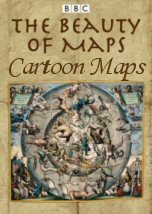
Cartoon Maps

   2010    Culture
The series concludes by delving into the world of satirical maps. How did maps take on a new form, not as geographical tools, but as devices for humour, satire or storytelling? Graphic Artist Fred Rose perfectly captured the public mood in 1880 with his General Election maps featuring Gladstone and Disraeli, using the maps to comment upon crucial election issues still familiar to us today. Technology was on the satirist's side with the advent of high-speed printing allowing for larger runs at lower cost. In 1877, when Rose produced his 'Serio Comic Map of Europe at War', maps began to take on a new direction and form, reflecting a changing world. Rose's map exploited these possibilities to the full using a combination of creatures and human figures to represent each European nation. The personification of Russia as a grotesque-looking octopus, extending its tentacles around the surrounding nations, perfectly symbolised the threat the country posed to its neighbours.
Series: The Beauty of Maps
History of the Eagles

History of the Eagles

2013  History
Leaving Neverland

Leaving Neverland

2019  Culture
Tiger

Tiger

2020  History
Top Gear

Top Gear

2012  Technology
The Man with 1000 Kids

The Man with 1000 Kids

2024  Culture