
Last Watched

"CIA"  Sort by

Pink Floyd: P. U. L. S. E. Live at Earls Court (II)

   2006    Art    HD
P.U.L.S.E is a Pink Floyd concert video taken from the 20 October 1994 concert at Earls Court, London. PULSE records the great psychedelic band Pink Floyd rocking out like only they can. Renowned for their hallucinatory special effects and lighting schemes, Pink Floyd goes all out at this spectacular (and very long) concert. Twenty-one of their classics are performed, including classic rock radio staples 'Dark Side of The Moon' and 'Wish You were Here". There was considerable delay in the release of the video edition of Pulse. The cause of the delays was reputed to be the continued modifications and additions to produce a high-quality release. The previous planned release date of 22 September 2005 for the two-disc DVD set was changed to 10 July 2006 for the UK and Europe, and 11 July 2006 everywhere else.
Series: P.U.L.S.E

Waiting for Immortality

   2016    Medicine
Eternal life is humanity’s oldest dream. It may be finally coming true. Today, at least in the West, the quest for immortality has shifted from the metaphysical to the technical and the scientific. In this film we will investigate the advancement of this research in laboratories around the world. With cryonics technology improving, human cloning now possible, mind uploading and digital brain simulation thriving, reversing the aging of cells and organs feasible, immortality may seem right around the corner. In some countries, such as the US, Russia and Europe, private companies are financing and promoting the promise of immortality or at least a longer life expectancy. Are they selling a reality or utopia? We will meet scientists, neurophysiologists, computer specialists, geneticists, and biologists, and also hopefuls of immortal life, futurists, sociologists and businessmen. We will film different research laboratories and cities built for the aging; we will interview the experts as well as the anonymous men and women who speak about their relationship with life and death and those who simply embody it.

Playful Creatures

   2015    Nature
Spy in the Huddle use innovative techniques to reveal the incredible secrets of your pets' behaviour in ways never seen before. As astonishing photography explores the wild side of our playful pets, find out why hamsters love to run in a wheel, how dogs pick up the rules of the pack and how kittens learn to be solitary hunters. Featuring incredible views of plunge-diving dogs, babysitting cats, acrobatic hamsters and a playful cat outwitted by his prey" - you'll never look at your favourite companions in quite the same way again. The latest science also reveals why budgies talk, how a cat scales a vertical wall with the help of a special claw, why hamsters stuff their faces with more food than they can eat and the real meaning behind a rabbit's hop. Our pets are also given a chance to explore their wild side as we join the free-roaming pet dogs of Cusco Peru, pet rabbits living in a natural warren and the wild-living inhabitants of Cat Island, Japan. A range of innovative techniques such as moving X-rays, thermal imagery, minicam-carrying dogs and revelatory slow-motion photography shows why our pets play and how their true wild nature is just a whisker away.
Series: Pets: Wild at Heart

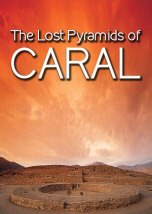
The Lost Pyramids of Caral

   2002    History
The magnificent ancient city of pyramids at Caral in Peru is a thousand years older than the earliest known civilisation in the Americas and, at 2,627 BC, is as old as the pyramids of Egypt. Many now believe it is the fabled missing link of archaeology - a 'mother city'. If so, then these extraordinary findings could finally answer one of the great questions of archaeology: why did humans become civilised?" For over a century, archaeologists have been searching for what they call a mother city. Civilisation began in only six areas of the world: Egypt, Mesopotamia, India, China, Peru and Central America. In each of these regions people moved from small family units to build cities of thousands of people. They crossed the historic divide, one of the great moments in human history. Why? To find the answer archaeologists needed to find a mother city - the first stage of city-building. Caral, is so much older than anything else in South America that it is a clear candidate to be the mother city. It also is in pristine condition. Nothing has been built on it at all. Instead laid out before the world is an elaborate complex of pyramids, temples, an amphitheatre and ordinary houses. Scientists developed a number of theories. Some said it was because of the development of trade, others that it was irrigation. Some even today believe it was all because of aliens. Gradually an uneasy consensus emerged. The key force common to all civilisations was warfare. Crucially, there is not the faintest trace of warfare at Caral; no battlements, no weapons, no mutilated bodies. Instead, Ruth's findings suggest it was a gentle society, built on commerce and pleasure. In one of the pyramids they uncovered beautiful flutes made from condor and pelican bones. They have also found evidence of a culture that took drugs and perhaps aphrodisiacs. Most stunning of all, they have found the remains of a baby, lovingly wrapped and buried with a precious necklace made of stone beads.

Michael Jackson: Chase the Truth

   2019    History
Acquitted in life, back on trial after death. The film takes an investigative look into the legal battles of the global superstar. Close friends, former staff and researchers paint an intimate portrait of Jackson's complicated world and put allegations of abuse under the microscope.
'Michael Jackson: Chase the Truth' defends the singer against allegations of child sexual abuse made by Wade Robson and James Safechuck in the 2019 documentary Leaving Neverland. It focuses on research from biographer and journalist Mike Smallcombe and statements by Jackson's former bodyguard Matt Fiddes and actor Mark Lester. Fiddes and Smallcombe assert that allegations made against Jackson always had a financial incentive.

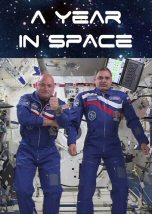
A Year in Space

   2016    Technology
Follow astronaut Scott Kelly’s record-breaking 12-month mission on the International Space Station, from launch to landing, as NASA charts the effects of long-duration spaceflight. A Russian Soyuz spacecraft carried Scott Kelly of NASA and Mikhail Kornienko of Roscosmos to the space station for the longest space mission ever assigned to a NASA astronaut". The expedition provided important insights into operational and scientific areas in human research in space and on Earth. Integrated scientific investigations between NASA and Roscosmos will combine resources to improve data sharing among space medical and human research communities, as well as help inform current assessments of crew performance and health and better determine and validate countermeasures to reduce the risks associated with future exploration as NASA plans for missions around the moon, to an asteroid and eventually to Mars.
Nature Great Events

Nature Great Events

2009  Nature
Walking with Dinosaurs

Walking with Dinosaurs

2025  Science
Hiroshima

Hiroshima

2005  History
The Life of Birds

The Life of Birds

1998  Nature
Ancient Greece

Ancient Greece

2013  History
Minimalism

Minimalism

2015  Culture