The Coronavirus disease 2019 (COVID-19) has spread globally since 2019, resulting in a pandemic. While the majority of cases result in mild symptoms, some progress to pneumonia and multi-organ failure. The deaths per number of diagnosed cases is estimated at between 1% and 5% but varies by age and other health conditions. In this special on the coronavirus, we're with health staff working on the front-line of the Covid-19 crisis - as well as the scientists, economists and virology experts who can answer the question... Coronavirus: Are We Doing Enough?
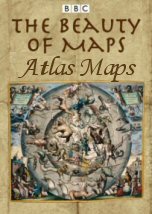
The Dutch Golden Age saw map-making reach a fever pitch of creative and commercial ambition. This was the era of the first ever Atlases - elaborate, lavish and beautiful. This was the great age of discovery and marked an unprecedented opportunity for mapmakers who sought to record and categorise the newly acquired knowledge of the world. Rising above the many mapmakers in this period was Gerard Mercator, inventor of the Mercator projection, who changed mapmaking forever when he published his collection of world maps in 1598 and coined the term 'Atlas'. The programme looks at some of the largest and most elaborate maps ever produced, from the vast maps on the floor of the Royal Palace in Amsterdam, to the 24 volume atlas covering just the Netherlands, to the largest Atlas in the world, The Klencke Atlas. It was made for Charles II to mark his restoration in 1660. But whilst being one of the British Libraries most important items, it is also one of its most fragile so hardly ever opened. This is a unique opportunity to see inside this enormous and lavish work, and see the world through the eyes of a King.
It is a nightmare that has stalked us for centuries: hordes of human beings transformed into mindless, cannibalistic monsters. Could this civilization-ending nightmare become reality? Scientists have discovered pathogens that turn insects into the walking dead. New strains of viruses are attacking humans every day. Mathematicians have calculated the likelihood of surviving a zombie virus outbreak: they’re not hopeful. Now neuroscientists are discovering how easy it is for us to lose conscious control of our bodies. Are we at risk of becoming puppets? If we were in the middle of a zombie apocalypse, would we even know it?
Diarmaid MacCulloch traces the growth of an exuberant expression of faith that has spread across the globe - Evangelical Protestantism. Today, it is associated with conservative politics, but the whole story is distinctly more unexpected. It is easily forgotten that the evangelical explosion has been driven by a concern for social justice and the claim that one could stand in a direct emotional relationship with God. It allowed the Protestant faith to burst its boundaries from its homeland in Europe. In America, its preachers marketed Christianity with all the flair and swashbuckling enterprise of American commerce. In Africa, it converted much of the continent by adapting to local traditions, and now it is expanding into Asia. But is Korean Pentecostalism and its message of prosperity in the here and now an adaptation too far?
The Sky at Night looks back at the last ten years of astronomy and ponders the most significant milestones and revelations. With the help of six distinguished astronomers, Chris and Maggie consider the state of astronomy in 2020 and wonder what new, exciting discoveries await us across the rest of the decade, as a host of new ground and space telescopes come online. Astronomer Royal Lord Martin Rees is among the guests to walk along the Astronomical Wall of Discovery in this one-hour special.
Jeffrey Epstein brokers a plea deal that's unprecedented in its leniency, and a survivor opens up about the horrors she endured on his private island. Epstein Jeffrey shared his island with a lot of powerful and well-known figures, both politically and financially.








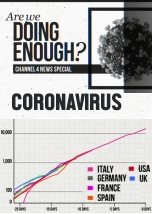





In this special on the coronavirus, we're with health staff working on the front-line of the Covid-19 crisis - as well as the scientists, economists and virology experts who can answer the question... Coronavirus: Are We Doing Enough?