
















Last Watched

"War"  Sort by

The Virus of Faith

   2006    Culture
Dawkins opines that the moral framework of religions is warped, and argues against the religious indoctrination of children. He discusses specifically the idea of religion seen as a virus in the sense of a meme. He begins by explaining how a child is genetically programmed to believe without questioning the word of authority figures, especially parents – the evolutionary imperative being that no child would survive by adopting a sceptical attitude towards everything their elders said. But this same imperative, he claims, leaves children open to infection by religion.
Series: The Root of All Evil


Rudolf Hess

       History
Episode three explores the mind of one of the most fanatical of all Nazis and the insight that gives into the psychology of dictatorship. Hess is brought to Nuremberg from the UK where he had flown 4 years earlier much to the bemusement of the British. Overy explains that they must have quickly realised he was not normal. In the intervening time Hess’s mental state has further deteriorated and when interviewed by Chief Interrogator Colonel John Amen proclaims amnesia. Chief Interpreter Richard Sonnenfeldt explains that they brought in Göring to confront Hess but that he too failed to make an impression.
Psychopathologist Prof. Edgar Jones proposes Hess’s behaviour patterns may be his way of escaping reality as he is forced to face the extent of the atrocities and choose between accepting his part of the blame or forsaking his Führer. However, as history Professor Robert Gellatel explains it is difficult to construct a case against Hess as he was imprisoned in England when the worst of the atrocities were carried out so British Prosecutor Mervyn Griffith-Jones must argue a conspiracy charge linking the pre-1939 persecutions to the post-1939 atrocities and a crimes against peace charge proving the flight to Scotland was merely a ruse.
Series: Nuremberg: Nazis on Trial

The Crimes

   2007    History
Soldiers and officers continually came into conflict with their consciences. How much freedom did individuals have? Were they executing Hitler's criminal plans, or was it the Wehrmacht's war? There were crimes against humanity, against civilians, prisoners of war, and there was the Holocaust itself. The Trent Park records discovered and analysed by historian Sönke Neitzel, author of Tapping Hitler's Generals, show that the 84 German generals who were interned at Trent Park were aware of the severity of the war crimes they had been involved in and that some discussed them almost compulsively. They included the Commissar Order, to kill any Soviet commissar, and Rathenau's order to kill the Jews, including children.
Series: The Wehrmacht

Hiroshima

   2020    History
The final hours of WW2 changed the course of history. As the Americans inch closer to Japan the Japanese fight with greater intensity. The question now is how to end the conflict. Starve them into capitulation? Many in US command believe the Japanese will never surrender. The alternative is to stage a massive invasion that would dwarf D-Day? The massacre of millions would be inevitable. But then a third and far darker option becomes available: the atom bomb.
Series: Greatest Events of WWII in Colour

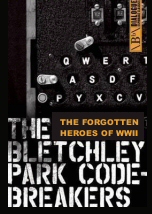
The Bletchley Park Code Breakers

       History
The film reveals the secret story behind one of the greatest intellectual feats of World War II, a feat that gave birth to the digital age.
In 1943 Bill Tutte, a 24-year-old maths student and a GPO engineer called Tommy Flowers combined to hack into Hitler's personal super code machine - not Enigma but an even tougher system, which he called his 'secrets writer'. Their break turned the Battle of Kursk, powered the D-day landings and orchestrated the end of the conflict in Europe. But it was also to be used during the Cold War - which meant both men's achievements were hushed up and never officially recognised.

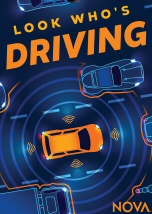
Look Who is Driving

   2019    Technology
After years of anticipation, autonomous vehicles are now being tested on public roads around the world. As ambitious innovators race to develop what they see as the next high-tech pot of gold, some experts warn there are still daunting challenges ahead, including how to train artificial intelligence to be better than humans at making life-and-death decisions.
How do self-driving cars work? How close are we to large-scale deployment of them? And will we ever be able to trust AI with our lives?