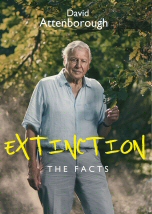



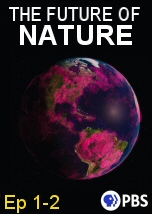
With a million species at risk of extinction, Sir David Attenborough explores how this crisis of biodiversity has consequences for us all, threatening food and water security, undermining our ability to control our climate and even putting us at greater risk of pandemic diseases. Everything in the natural world is connected in networks that support the whole of life on earth, and we are losing many of the benefits that nature provides to us. The loss of insects is threatening the pollination of crops, while the loss of biodiversity in the soil also threatens plants growth. Last year, a UN report identified the key drivers of biodiversity loss, including overfishing, climate change and pollution. But the single biggest driver of biodiversity loss is the destruction of natural habitats. Seventy-five per cent of Earth's land surface (where not covered by ice) has been changed by humans, much of it for agriculture, and as consumers we may unwittingly be contributing towards the loss of species through what we buy in the supermarket. Human activities like the trade in animals and the destruction of habitats drive the emergence of diseases. Disease ecologists believe that if we continue on this pathway, this year’s pandemic will not be a one-off event.
Are we in fact living in a simulation? This is the question postulated, wrestled with, and ultimately argued for in the latest provocation from acclaimed documentary stylist Rodney Ascher (Room 237, The Nightmare) through archival footage, compelling interviews with real people shrouded in digital avatars, and a collection of cases from some of our most iconoclastic figures in contemporary culture.
Our wheat has changed dramatically, it doesn't even resemble what it used to look like. Not only are we seeing more wheat and gluten sensitivity, there is also a strong connection between gluten and autoimmune diseases. Tens of thousands of people are suffering with ill health and don't realise it's a result of the food choices they are making. Some assume it is part of their genetic make-up or the body changing as they get older. People need to become educated, knowledgeable and aware. They need to start making changes to improve the health of their children and future generations.
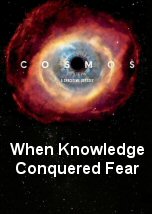
The episode begins with Tyson describing how pattern recognition manifested in early civilization as using astronomy and astrology to predict the passing of the seasons, including how the passage of a comet was often taken as an omen. Tyson continues to explain that the origin of comets only became known in the 20th century due to the work of Jan Oort and his hypothesis of the Oort cloud. Tyson then continues to relate the collaboration between Edmond Halley and Isaac Newton in the last part of the 17th century in Cambridge. The collaboration would result in the publication of Philosophiæ Naturalis Principia Mathematica, the first major work to describe the laws of physics in mathematical terms, despite objections and claims of plagiarism from Robert Hooke and financial difficulties of the Royal Society of London. Tyson explains how this work challenged the prevailing notion that God had planned out the heavens, but would end up influencing many factors of modern life, including space flight. Tyson further describes Halley's contributions including determining Earth's distance to the sun, the motion of stars and predicting the orbit of then-unnamed Halley's Comet using Newton's laws. Tyson contrasts these scientific approaches to understanding the galaxy compared to what earlier civilizations had done, and considers this advancement as mankind's first steps into exploring the universe. The episode ends with an animation of the Milky Way and Andromeda galaxies' merging based on the principles of Newton's laws.
Honey has the greatest cachet in the marketplace, of all food items. A sweetener so natural, so exalted, that its value has held up for millennia. But honey is also perfect for savvy profiteers who are secretly cutting the world's honey with cheap substitutes. With demand for honey soaring just as bees are dying off in record numbers, hidden additives, hive thefts and other shady tactics are on the rise.
The Beatles continue recording as the deadline for completing the project, caused by Ringo Starr's filming schedule for The Magic Christian, approaches. McCartney continues to hope that the band will perform live for an audience and Lennon meets American businessman Allen Klein for the first time. On the penultimate day, the Beatles perform an unannounced concert on the roof of the Apple Corps building, attracting crowds of passers-by as well as the attention of the Metropolitan Police.
Everything in the natural world is connected in networks that support the whole of life on earth, and we are losing many of the benefits that nature provides to us. The loss of insects is threatening the pollination of crops, while the loss of biodiversity in the soil also threatens plants growth.
Last year, a UN report identified the key drivers of biodiversity loss, including overfishing, climate change and pollution. But the single biggest driver of biodiversity loss is the destruction of natural habitats. Seventy-five per cent of Earth's land surface (where not covered by ice) has been changed by humans, much of it for agriculture, and as consumers we may unwittingly be contributing towards the loss of species through what we buy in the supermarket. Human activities like the trade in animals and the destruction of habitats drive the emergence of diseases. Disease ecologists believe that if we continue on this pathway, this year’s pandemic will not be a one-off event.