




Last Watched

"Rowing"  Sort by

Vegan 2020

   2020    Culture
The film covers the ever growing vegan movement and how it's best for the animals, human health, and the planet. Every year Plant Based News puts together a highlight reel of vegan related events and developments. This has served as a great way to look back on the events of the year as we take a closer look at the effectiveness of the film as a whole.
Series: Vegan
Trainwreck: The Astroworld Tragedy

   2025    History
A night of music turned into a nightmare. Told through the harrowing memories of survivors, medics, and crew members, this gripping documentary pulls you into the chaos of a festival gone fatally wrong. With never-before-seen footage and raw personal testimonies, it exposes the systemic failures, emotional scars, and unanswered questions that still haunt those who were there. A chilling deep dive into one of the most shocking live music tragedies in recent history.
Series: Trainwreck

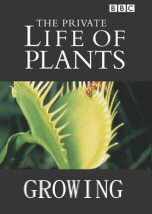
Growing

   1994    Nature
The second episode is about how plants gain their sustenance. Sunlight is one of the essential requirements if a seed is to germinate, and Attenborough highlights the cheese plant as an example whose young shoots head for the nearest tree trunk and then climb to the top of the forest canopy, developing its leaves en route. Using sunshine, air, water and a few minerals, the leaves are, in effect, the "factories" that produce food. However, some, such as the begonia, can thrive without much light. To gain moisture, plants typically use their roots to probe underground. Trees pump water up pipes that run inside their trunks, and Attenborough observes that a sycamore can do this at the rate of 450 litres an hour — in total silence. Too much rainfall can clog up a leaf's pores, and many have specially designed 'gutters' to cope with it. However, their biggest threat is from animals, and some require extreme methods of defence, such as spines, camouflage, or poison. Some can move quickly to deter predators: the mimosa can fold its leaves instantly when touched, and the Venus flytrap eats insects by closing its leaves around its prey when triggered. Another carnivorous plant is the trumpet pitcher that snares insects when they fall into its tubular leaves. Attenborough visits Borneo to see the largest pitcher of them all, Nepenthes rajah, whose traps contain up to two litres of water and have been known to kill small rodents.
Series: The Private Life of Plants

Strange Relations

   2022    Nature
Witness the secret powers of extraordinary animals, experience the world as they do and see the SUPER/NATURAL side of nature as never before. Executive produced by James Cameron and narrated by Benedict Cumberbatch, this series uses the scientific innovations and leading-edge filmmaking technology to reveal the secret powers and super-senses of the world’s extraordinary animals. See flowers in bee-vision to eavesdropping on conversations between elephant seals to soaring the length of a football field with glow-in-the-dark squirrels.
They say in nature that only the strongest survive. But when cooperation and communication bring animals and plants together and superpowers combine even the most vulnerable can become unstoppable. If you think you know nature, think again.
Series: Super/Natural

The Private Life of Plants Living Together

   1995    Nature
The fifth programme explores the alliances formed between the animal and plant worlds. Attenborough dives into Australia's Great Barrier Reef and contrasts the nocturnal feeding of coral, on microscopic creatures, with its daytime diet of algae. Some acacias are protected by ants, which will defend their refuge from any predator. Besides accommodation, the guards are rewarded with nectar and, from certain species, protein for their larvae as well. Fungi feed on plants but can also provide essential nutriment to saplings (Mycorrhiza). The connection is never broken throughout a tree's life and a quarter of the sugars and starches produced in its leaves is channelled back to its fungal partners. Meanwhile, fungi that feed on dead wood leave a hollow trunk, which also benefits the tree. Orchids enjoy a similar affiliation. Lichens are the product of a relationship between fungi and a photosynthetic associate, usually algae. They are extremely slow-growing, and a graveyard is the perfect location to discover their exact longevity. Mistletoe is a hemiparasite that obtains its moisture from a host tree, while using own leaves to manufacture food. Its seeds are deposited on another by the mistletoe tyrannulet, following digestion of the fruit. The dodder (Cuscuta) is also parasitic, generally favouring nettles, and siphons its nourishment through periodic 'plugs' along its stem. The rafflesia has no stem or leaves and only emerges from its host in order to bloom — and it produces the largest single flower: one metre across.
Series: The Private Life of Plants

Survivors Guide to Prison 1of2

   2018    Culture
Following the stories of Bruce Lisker and Reggie Cole who spent year after year in prison for murders they didn't commit - audiences get a harrowing look at how barbaric the US justice system is. The film ultimately asks how we can survive the prison model at all, and looks at better solutions for conflict resolution, harm reduction, crime and more. Hosted by filmmaker Matthew Cooke and guest hosting representatives from the massive range of Americans joining forces to change this broken system.
Series: Survivors Guide to Prison
Asia

Asia

2024  Nature
Planet Earth

Planet Earth

2007  Nature
The Story of God

The Story of God

2016  Culture
Prehistoric Planet

Prehistoric Planet

2022  Science
The Making of the Mob

The Making of the Mob

2016  History
Rotten

Rotten

2018  Nature
Minimalism

Minimalism

2015  Culture