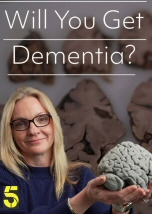
Dementia is one of the fastest-growing health conditions in the UK, yet its earliest warning signs can be difficult to recognise. NHS GP Dr Claire Taylor meets people living with Alzheimer’s and other forms of dementia, explores how the disease changes the brain, and puts herself through innovative tests designed to detect subtle problems with memory, hearing and cognition before more obvious symptoms appear. Along the way, she investigates why some people develop dementia at a younger age, how lifestyle and social isolation may influence risk, and what the latest research says about prevention and treatment. With moving personal stories and access to scientists working at the cutting edge of dementia research, the documentary asks a question that concerns millions: how much can we really know about our own future brain health?
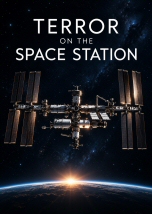
Orbiting Earth at around 27.000 km/h, the International Space Station is one of humanity’s greatest engineering achievements, but also one of the most unforgiving places ever built. Astronauts and mission controllers recount moments when routine work suddenly became a fight for survival: a spacesuit filling with water, toxic ammonia spraying across a spacewalker, dangerous temperature extremes, radiation, fire, contamination and the constant threat of collision. The series reveals how every mission depends on training, improvisation and split-second decisions in an environment where even a small failure can become fatal. Across the two episodes, presented here together in a single uninterrupted video, the danger escalates from the hazardous construction and maintenance of the station to the growing risks of life aboard it. Astronauts face micrometeoroids and space debris travelling at lethal speeds, docking emergencies and system failures, culminating in the extraordinary 2021 incident when the newly arrived Nauka module unexpectedly fired its thrusters and sent the entire ISS rotating out of control. With communications at risk and the structure under immense strain, crews in orbit and controllers on Earth must work together to regain control. The result is a gripping story of courage, science and survival inside a machine that has kept humans continuously living in space for more than two decades.
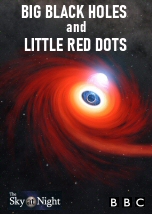
Professor Brian Cox joins Chris Lintott and the team to investigate one of the most intriguing new mysteries in modern astronomy. Observations from the James Webb Space Telescope have revealed hundreds of compact, extraordinarily bright objects known as “little red dots”, appearing less than a billion years after the Big Bang. Many may hide rapidly growing supermassive black holes, raising a profound question: how could such enormous objects have formed so early in cosmic history? The journey begins with the strange physics of black holes themselves, from event horizons and singularities to the supermassive black hole at the centre of the Milky Way and the gigantic black hole in the galaxy M87. With cosmologist Emma Chapman and Professor Sadegh Khochfar, the programme explores radical explanations for these ancient monsters, including primordial black holes born soon after the Big Bang and massive black holes formed directly from collapsing clouds of gas, bypassing stars altogether. Cutting-edge computer simulations recreate the first billion years of the universe and reveal how the earliest galaxies and black holes may have emerged within the cosmic web. These discoveries are forcing astronomers to reconsider not only how supermassive black holes grow, but how galaxies and the early universe itself evolved.
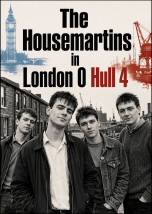
The Housemartins return to Hull during their breakthrough year of 1986 and revisit the places where the band began. Paul Heaton, Stan Cullimore, Norman Cook and Hugh Whitaker talk about forming the group, their sudden success and their determination to remain rooted in ordinary life despite growing fame. The film follows them through Hull, mixes informal conversations with rehearsals and performances, and includes songs such as Happy Hour, Sheep, Think for a Minute and Caravan of Love. The members also speak openly about their socialist views, religion, money and their distrust of the music industry, revealing the ideas behind their deliberately unglamorous image and sharply observant lyrics. Ending with a concert for their home audience, this documentary captures The Housemartins at the moment they were becoming nationally famous while still maintaining the humour, friendship and political convictions that defined the band.
For years, reports of unidentified aerial phenomena have remained hidden behind secrecy, speculation, and official denials. This gripping documentary follows investigative journalist and filmmaker Jeremy Corbell as he gains extraordinary access to witnesses, classified information, and sources connected to one of the most controversial mysteries of modern times. As new evidence emerges and long-held assumptions are challenged, the search for answers begins to reveal a story far more complex than many imagined. What starts as an investigation into unexplained sightings soon becomes a high-stakes journey into a world of government secrecy, whistleblowers, intelligence networks, and hidden information. With rare footage, firsthand testimony, and exclusive access to key figures at the center of the debate, the documentary explores the growing effort to uncover what may be one of the most significant discoveries of the modern era—and why some people believe the truth has remained hidden for so long.
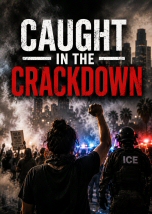
A powerful investigative documentary that follows the growing wave of protests, arrests, and confrontations triggered by federal immigration raids across the United States. Through tense firsthand footage, courtroom revelations, and testimonies from protesters, lawyers, journalists, and federal officials, the film traces how demonstrations in cities like Los Angeles, Chicago, and Minneapolis spiraled into violent clashes, sweeping arrests, and accusations of extremism. As cases begin collapsing under legal scrutiny, disturbing questions emerge about the methods used during the crackdown, the reliability of official narratives, and the true cost of suppressing dissent. Blending investigative journalism with chaotic street-level reality, the documentary creates an atmosphere of mounting tension and uncertainty as ordinary citizens suddenly find themselves caught between protest movements, aggressive law enforcement tactics, and a deeply divided political climate. What begins as a story about immigration enforcement gradually becomes a gripping portrait of fear, resistance, civil liberties, and the fragile line separating public order from political intimidation.







Along the way, she investigates why some people develop dementia at a younger age, how lifestyle and social isolation may influence risk, and what the latest research says about prevention and treatment. With moving personal stories and access to scientists working at the cutting edge of dementia research, the documentary asks a question that concerns millions: how much can we really know about our own future brain health?