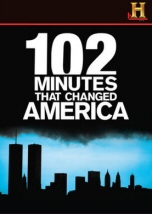
New York City, September 11, 2001. The morning everything changed.102 minutes passed between the first plane's impact into One World Trade Center, the second plane's attack on Two World Trade Center, and the eventual collapse of both buildings. In that time, people around New York experienced a range of emotions. Despite the horror and the incomprehensibility of what was happening, many knew, somehow, that they had a unique responsibility to record what they saw. They reached for their cameras. This unprecedented documentary special joins hundreds of pieces of their footage and audiotape into a single, seamless historical record. It is an intensely personal perspective of the tragedy, communicating for the first time that morning s events, as they were experienced by people around New York. It is an evocative, authentic and reverential memorial to one of the most cataclysmic events in world history.
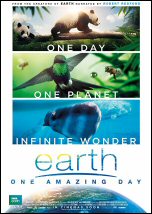
An astonishing journey revealing the awesome power of the natural world. Over the course of one single day, we track the sun from the highest mountains to the remotest islands, from exotic jungles to urban jungles. Breakthroughs in filmmaking technology bring you up close with a cast of unforgettable characters: a baby zebra desperate to cross a swollen river, a penguin who heroically undertakes a death-defying daily commute to feed his family, a family of sperm whales who like to snooze vertically, and a sloth on the hunt for love. Told with humour, intimacy and a jaw-dropping sense of cinematic splendour, Earth: One Amazing Day highlights how every day is filled with more wonders than you can possibly imagine- until now.
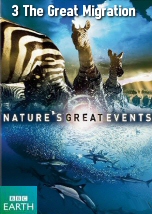
Each year more than one million wildebeest and zebra invade the Serengeti grasslands, making it a paradise for the predators that live there. But what happens when the herds move off again? We follow the moving story of one lion family's struggle to survive until the return of the great migration. Nature's Great Events tells the story of the epic trek of herds that follow the rains to fresh pastures, and the tale of the predators they leave behind. The crew captures the desperate plight of a single pride of lions, revealing a different side to the Serengeti. Rather than being a predators' paradise, it is a land in constant change, with wildebeest following the rains and leaving the lions to tough it out. The Ntudu pride has seven cubs, and is already suffering as the wildebeest leave to find fresh pastures. The four pride females struggle to find enough food for their hungry offspring. As weeks turn to months, the pride members become more emaciated and frailer, and the number of cubs dwindles to just two. As the herds begin to return, the plains reveal one final secret. For the first time since 1967 the Serengeti's only active volcano, Ol Doinyo Lengai, begins to billow ash and smoke. Filmed from the air, the team captures the exciting action. Fertilised by the volcanic ash over millions of years, these short grass plains are among the most productive grasslands in the world. After months of hardship, the pride's tragic story, through sickness, drought and fire, is over as the herds return, providing plentiful food.
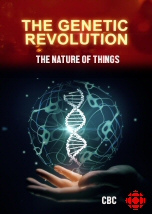
Trailblazing scientists are making ground-breaking discoveries in the rapidly evolving world of genetic engineering. Technologies like CRISPR are making it possible to quickly and cheaply change the DNA of all living things, including humans. Today, genes can be edited almost as easily as words on a computer screen. This new ability to alter our DNA holds the promise of curing disease , saving threatened species, solving the problem of world hunger and maybe even obtaining human perfection. But will the promise be fulfilled and at what cost? The ability to gain control of our DNA is ground-breaking and revolutionary but there are varying opinions among scientists as to how the technology should be used responsibly. This documentary follows the science as it progresses at a breakneck speed.
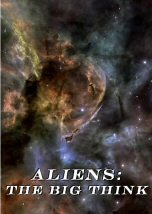
The hunt for aliens is on! After a distinguished career in cosmology Professor Martin Rees, the astronomer royal, has taken up the search for extra-terrestrials. Looking for aliens is no longer science fiction - it is a question that's engaging some of the greatest minds in science." As our knowledge of the universe has increased, we're getting closer to answers. Many scientists now think we live in galaxy with a billion Earth-like planets, many of which may be teeming with life. But what kind of life? Has anything evolved into beings we could communicate with? This film gets inside the minds of the scientists considering one of the most exciting and profound questions we can ask - are we alone in the universe? Professor Rees thinks we may have our idea of what an alien is like all wrong. If he's right, it's not organic extra-terrestrials we should look for, it's machines.
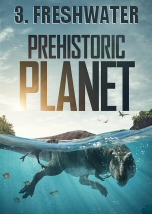
In the third episode, a Velociraptor hunts pterosaurs on a cliffside by a waterfall. A battle-scarred Tyrannosaurus nurses his wounds and encounters a newcomer. With its feathered body and duck bill, the eight-ton Deinocheirus wades through an Asian wetland in search of relief from pesky biting flies. A female Quetzalcoatlus builds and guards her nest. A mother Masiakasaurus and her family hunt crabs. Elasmosaurs enter an estuary in search of fish.







This unprecedented documentary special joins hundreds of pieces of their footage and audiotape into a single, seamless historical record. It is an intensely personal perspective of the tragedy, communicating for the first time that morning s events, as they were experienced by people around New York. It is an evocative, authentic and reverential memorial to one of the most cataclysmic events in world history.