In the Youtube video galaxy a new star has been born: the ASMR videos. It stands for Autonomous Sensory Meridian Response, and refers to the pleasant feeling that users associate with this type of digital content. The physical reaction also changes significantly from individual to individual and people reportedly experience a pleasant feeling of tingling in the scalp, which can spread to the shoulders and back, and usually be accompanied by a feeling of relaxation and generalised well-being. The intensity of the response can also be very strong, so much so that some have used the word 'braingasm', literally 'brain orgasm' to express the feeling. It's likely that you've already heard about it, but if not, this is the perfect opportunity to learn more about it. Especially because, for the first time, it seems that the benefits of ASMR videos have been scientifically proven.
The global cyberwar is heating up and the stakes are no longer limited to the virtual world of computers. Now, thanks in part to secret documents released by Edward Snowden, the true scale of the National Security Agency's scope and power is coming to light. Besides spending billions of dollars to ingest and analyze the worlds' electronic communications, the NSA has set out to dominate a new battlefield—cyberspace. We examine the science and technology behind cyber warfare and asks if we are already in the midst of a deadly new arms race". Already, highly sophisticated, stealthy computer programs such as the notorious Stuxnet worm can take over and even destroy the control systems that regulate everything from food factories to gas pipelines, power plants, and chemical facilities—even our cars. While the destruction of Iranian centrifuges may have delayed Iran’s bomb program and forestalled an Israeli attack, the attack has opened a Pandora's Box, and now America's own critical infrastructure is vulnerable to retaliation and attack. With leading defense experts and investigative journalists who have probed the murky realm of criminal and strategic hacking, NOVA examines the chilling new reality of cyberwar in which no nation or individual is safe from attack.
'Deliver Us from Drought' - Over the past years, Texas has experienced the worst drought in its recorded history. 97% of the scientific community agrees that human activity has contributed to extreme weather patterns around the world. But many Texans--legislators, community leaders and citizens--don't attribute their drought to humans, and have taken few if any initiatives to limit the state's CO2 emissions, currently the highest in the country. "The Resource Curse" - As humanity's appetite for energy grows exponentially, the extraction industry scrambles to the most remote regions on Earth. In the undeveloped Melanesian country of Papua New Guinea, America's Exxon Mobil has staked its claim to a $19 billion liquid natural-gas project. While some see Exxon's mammoth presence as the catalyst that will usher the underdeveloped country into the 21st Century, others predict the initiative could plunge its people into civil war.
Dr Iain Stewart investigates the counter-attack that was launched by the global warming sceptics in the 1990s. At the start of the 1990s it seemed the world was united. At the Rio Earth summit the world signed up to a programme of action to start tackling climate change. Even George Bush was there. But the consensus didn't last. Iain examines the scientific arguments that developed as the global warming sceptics took on the climate change consensus. The sceptics attacked almost everything that scientists held to be true. They argued that the planet wasn't warming up, that even if it was it was nothing unusual, and certainly whatever was happening to the climate was nothing to do with human emissions of greenhouse gases. Iain interviews some of the key global warming sceptics, and discovers how their positions have changed over time.
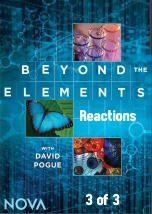
Just about every solid, liquid, or gas in the world as we know it begins with reactions between individual atoms and molecules. Host David Pogue dives into the transformative world of chemical reactions, from the complex formula that produces cement to the single reaction that’s allowed farmers to feed a global population by the billions.
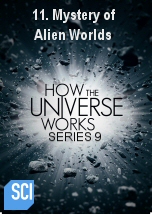
20 years ago, two astronomers made a remarkable discovery, one which would change the way we view the universe for ever. A planet outside our solar system, orbiting a distant star - an exoplanet. Since then, we have found worlds where it rains diamonds, ones that boil at 3,000 degrees centigrade
and even a world with four suns in its sky. But the big question is -
will we ever find another Earth? As we close in on the discovery of the 2,000th planet outside our solar system, or exoplanet, we investigates the techniques that are revealing so much about these alien worlds. The documentary asks if we are really any closer to finding another world like our own - a second Earth.



























It's likely that you've already heard about it, but if not, this is the perfect opportunity to learn more about it. Especially because, for the first time, it seems that the benefits of ASMR videos have been scientifically proven.