Seven years have passed since Antony's departure from Rome, and the former commander, dissipated and debauched - held in thrall by the charms and sexual prowess of his new bride, Cleopatra, withholds precious shipments of grain from Rome, where people die in the streets from hunger. Unable to incite a war with Antony and Egypt without committing political suicide, Octavian sends Atia and Octavia to Alexandria to mediate and reason with Antony; a strategy which proves predictably unsuccessful.
Invertebrates don't always operate alone. True society was the last feature to evolve in invertebrates, as recently as the time of Tyrannosaurus. In the last programme see the tensions below the surface in some of the great social structures built by insects, and witness the carnage when an ant colony and a termite colony wage war.
Vorenus and Pullo return to the Collegium in Rome with Vorenus' family, but some of the 'changes' that Pullo had warned him about regarding his two daughters Vorena both the Elder and Younger, as well as his wife's son, begin to manifest themselves into hostility and resentment. But Vorenus is completely oblivious to this, and is too blissfully happy to return to the role of 'father'. Meanwhile, Octavian finally returns and manages to negotiate the Senate Consul's seat from a scheming Cicero.
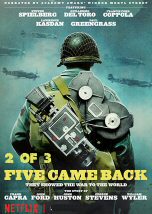
In the second episode, the directors learn their vision for the films is not always permissible by the U.S. government. Wyler is shocked by the racism he encounters against African American soldiers and refused to make a film recruiting black soldiers. Meanwhile, the films' racist depiction of the Japanese versus human depiction of the Germans causes worry for the War Department, which at that time planned to redistribute the Japanese-American population from internment camps into towns across the United States.
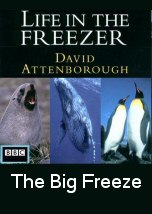
As almost all animal inhabitants of Antarctica are forced to migrate north, the sea underneath the frozen ice still provides a home to many specially adapted fish whose cells are protected from freezing through an 'antifreeze' liquid. Many of them feed on the faeces of other animals. The most notable larger animal that does not migrate north is perhaps the Weddell Seal, which can be found as close as 1300 kilometres to the pole. Groups of seals tear holes into the ice to dive for food and come up to breathe. The females come back to the ice to give birth. This episode also describes primitive plant life such as lichen, which can still be found on the continent in winter, even in the extremely dry and permanently frozen valleys conditions under which dead animals can lie frozen for many centuries without decomposing. It details the life of the Emperor Penguin, 'the only birds to lay their eggs directly on ice'. While other animals retreat, Emperors migrate not just to the ice, but into the Antarctic continent. The females lay eggs which are incubated by the males under the harshest conditions on Earth (huddling closely together for warmth), while the females return to the sea.
It's this moment where now both sides realize that no quarter will be asked, and no quarter will be given. Surrender is no longer even an option. You're in this to the end. You either die or you triumph, and there is no other alternative. Amid a spiral of brutality and low morale, Mehmed makes Giustiniani an enticing offer. The grand vizier urges Mehmed to seek a truce with his rival.












Unable to incite a war with Antony and Egypt without committing political suicide, Octavian sends Atia and Octavia to Alexandria to mediate and reason with Antony; a strategy which proves predictably unsuccessful.