In the first three episodes of Season 2, the uneasy peace after Rome’s defeat begins to unravel. Arminius suspects the Romans are rebuilding their strength and turns to Marbod, the powerful leader of the Marcomanni, hoping to forge a broader Germanic alliance before Rome can strike again. At the same time, his brother Flavus returns to Germania in Roman service, reopening old wounds and forcing Arminius to confront the family he left behind. Thusnelda takes dangerous risks of her own, infiltrating the Roman camp as tensions rise on both sides. The situation becomes even more explosive when Marbod secretly meets Tiberius in an attempt to secure peace with Rome, while Germanicus questions Flavus’s loyalty and the Romans exploit every division among the tribes. Arminius brings his son Gaius into the village, then turns against Marbod when he discovers the depth of his dealings with Rome, while Thusnelda reacts furiously to the secrets Arminius has kept from her. These opening episodes turn the struggle into a dangerous web of betrayal, family conflict and political ambition, where every alliance could decide the future of Germania.
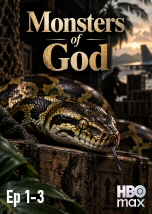
What begins as a fascination with rare and dangerous reptiles grows into a lucrative global underground built on smuggling, obsession and rivalry. From the eccentric dealers who helped create the exotic animal trade to the investigators determined to stop it, the series exposes a hidden world where protected species, major zoos, criminal networks and enormous sums of money collide. At its center are men such as Tommy Crutchfield and Hank Molt, whose bitter feud reveals how quickly passion for reptiles can turn into betrayal, trafficking and environmental damage. The documentary also shows how this trade helped reshape ecosystems and drove entire species closer to extinction. In the first three episodes, the story traces the rise of the reptile-smuggling world from the 1970s onward. The obsession with owning animals no one else could obtain fuels a booming illegal market, while authorities begin taking notice of dealers operating across borders. In Florida, Ray Van Nostrand enters the business and becomes entangled with Miami’s darker underworld of drug trafficking and gun-running, drawing the attention of the DEA. Later, his son Mike attempts to transform the family operation into a legitimate international import-export empire, only for old criminal connections and his father’s return to threaten everything he has built.
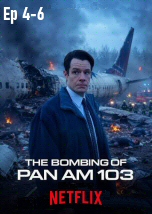
In the final three episodes, the investigation takes a decisive turn when the Frankfurt luggage records and bomb-damaged clothing recovered from the wreckage lead Scottish detectives to Malta. A small clothes shop and the memory of a mysterious customer begin to connect the bomb to a wider international network, while cooperation between Scottish police, the FBI and the CIA becomes increasingly strained. As investigators follow the trail toward Libya, a secret CIA source and similarities with another aircraft bombing appear to offer the breakthrough they have been searching for. More than a decade after Pan Am Flight 103 was destroyed, the case finally reaches the courtroom. Following years of political negotiation, two Libyan suspects stand trial under Scottish law at Camp Zeist in the Netherlands. But the prosecution still depends on fragile witness testimony and painstaking forensic evidence assembled across several countries. As key witnesses are challenged and doubts emerge, the series builds toward a tense question that has haunted the victims’ families since 1988: will the investigation finally deliver justice?
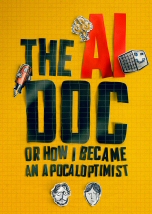
As artificial intelligence accelerates at a breathtaking pace, filmmaker Daniel Roher sets out to understand whether humanity is approaching an extraordinary new era or a catastrophe of its own making. What begins as a personal investigation becomes far more urgent when he and his wife learn they are expecting a child. Faced with predictions ranging from revolutionary medical breakthroughs and powerful new tools for creativity to mass unemployment, deepfakes, autonomous systems and even existential risk, he asks some of the world’s leading AI thinkers a deceptively simple question: should we be excited about the future, or terrified of it? The film explores how generative AI works, why its capabilities are advancing so quickly and what could happen if increasingly powerful systems become difficult to control. Experts debate AI safety and alignment, the race between competing companies, the possibility of machines seeking greater power, and the social consequences of automation and concentrated wealth. At the same time, the documentary confronts the technology’s remarkable promise, from personalized education to scientific discovery and potential cancer treatments. Moving between anxiety and hope, Roher ultimately searches for a way to face an uncertain future not as a pessimist or a blind optimist, but as something in between: an “Apocaloptimist.”
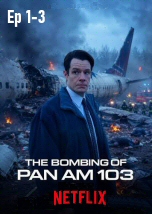
On 21 December 1988, Pan Am Flight 103 explodes over Lockerbie, Scotland, killing all 259 people on board and 11 residents on the ground. What follows is one of the largest and most complex terrorism investigations ever undertaken in Britain, forcing Scottish detectives and the FBI to work across borders, sift through an enormous debris field and reconstruct how a bomb was placed aboard the aircraft. Based on real events, the series follows both the painstaking search for those responsible and the devastating impact of the attack on the town of Lockerbie and on families on both sides of the Atlantic. In the first three episodes, the investigation begins amid chaos as police recover bodies and fragments of the aircraft while international pressure mounts for answers. Early clues lead investigators toward possible suspects and networks connected to the bombing, but every breakthrough raises new questions. When Scottish officers travel to the United States with potentially crucial evidence, tensions emerge between agencies, particularly over intelligence the CIA may be withholding about a possible bomb maker. The result is a gripping reconstruction of an inquiry in which forensic evidence, international politics and competing intelligence interests collide, while the families of the victims wait for the truth.
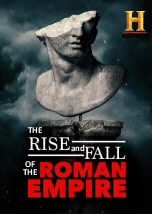
From a small and aggressive republic fighting for survival in the ancient Mediterranean to an empire that dominated much of the known world, Rome’s story is one of extraordinary ambition, conquest and transformation. The documentary follows the decisive struggles that shaped its rise, from the wars with Carthage and Hannibal to the upheavals of Spartacus, Julius Caesar and the collapse of the Republic, before Augustus establishes a new imperial order. Military power, political rivalry, engineering, law, spectacle and ruthless violence combine to reveal how Rome created a civilization of unprecedented scale, but also planted the seeds of its own destruction. At its height, the empire reaches astonishing levels of wealth and power under rulers such as Trajan and Marcus Aurelius, yet the system becomes increasingly difficult to control. Plague, civil conflict, destructive emperors such as Commodus, religious transformation and mounting pressure from Germanic peoples, Goths, Vandals and other invaders gradually weaken the foundations of Roman authority. From the Colosseum and the grandeur of imperial Rome to Attila and the invasions that accelerate its collapse, the two-part series shows how one of history’s greatest superpowers ultimately became a warning about the dangers of unchecked power and overextension. Presented here with both episodes combined into a single video, viewers can follow the complete rise and fall of Rome without interruption.












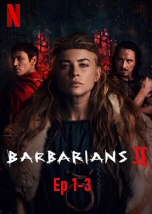


The situation becomes even more explosive when Marbod secretly meets Tiberius in an attempt to secure peace with Rome, while Germanicus questions Flavus’s loyalty and the Romans exploit every division among the tribes. Arminius brings his son Gaius into the village, then turns against Marbod when he discovers the depth of his dealings with Rome, while Thusnelda reacts furiously to the secrets Arminius has kept from her. These opening episodes turn the struggle into a dangerous web of betrayal, family conflict and political ambition, where every alliance could decide the future of Germania.