Last Watched

"Cosmos"  Sort by

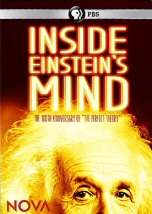
Inside Einstein Mind

   2015    Science
On November 25th, 1915, Einstein published his greatest work: General Relativity. The theory transformed our understanding of nature’s laws and the entire history of the cosmos, reaching back to the origin of time itself. Now, in celebration of the 100th anniversary of Einstein’s achievement, discover the inside story of Einstein’s masterpiece". The story begins with the intuitive thought experiments that set Einstein off on his quest and traces the revolution in cosmology that is still playing out in today’s labs and observatories. Discover the simple but powerful ideas at the heart of relativity, illuminating the theory—and Einstein’s brilliance—as never before. From the first spark of an idea to the discovery of the expanding universe, the Big Bang, black holes, and dark energy, NOVA uncovers the inspired insights and brilliant breakthroughs of “the perfect theory.”
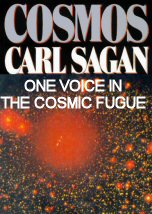
One Voice in the Cosmic Fugue

   1980    Science
Sagan discusses the story of the Heike crab and artificial selection of crabs resembling samurai warriors, as an opening into a larger discussion of evolution through natural selection (and the pitfalls of intelligent design). Among the topics are the development of life on the Cosmic Calendar and the Cambrian explosion; the function of DNA in growth; genetic replication, repairs, and mutation; the common biochemistry of terrestrial organisms; the creation of the molecules of life in the Miller-Urey experiment; and speculation on alien life (such as life in Jupiter's clouds). In the Cosmos Update ten years later, Sagan remarks on RNA also controlling chemical reactions and reproducing itself and the different roles of comets (potentially carrying organic molecules or causing the Cretaceous–Paleogene extinction event).
Series: Cosmos

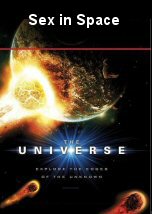
Sex in Space

   2008    Technology
As man moves to colonize the cosmos, the realities of sexual relationships and reproduction need to be addressed. Probe the physiological, psychological and cultural challenges of sex in space.
Series: The Universe

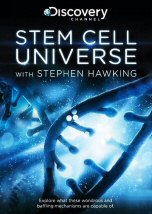
Stem Cell Universe with Stephen Hawking

   2014    Medicine
The use of embryonic stem cells has ignited fierce debate across the spiritual and political spectrum. But what if we could create manmade stem cells - or find super cells in adults that could forever replace embryonic cells and remove the controversy? Today, we are on the brink of a new era - an age where we may be able to cure our bodies of any illness. Stephen Hawking has spent his life exploring the mysteries of the cosmos, now there is another universe that fascinates him - the one hidden inside our bodies - our own personal galaxies of cells." Hawking takes us on a fascinating journey exploring what these wondrous and baffling mechanisms are capable of. He is joined by the scientists who are on the front lines of discovery in this field including Dr. Doris Taylor who is customizing a donor's heart with the recipient's stem cells - her goal is to revolutionize heart transplants, Dr. Paul Lu and Dr. Mark Tuszynski may have created a breakthrough that could cure paralysis, and Dr. Vincent Giampapa who believes that stem cells can be used to stem the tide of aging and create a fountain of youth.

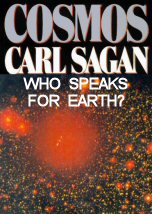
Who Speaks for Earth

   1980    Culture
Sagan reflects on the future of humanity and the question of 'who speaks for Earth?' when meeting extraterrestrials. He discusses the very different meetings of the Tlingit people and explorer Jean-François de La Perouse with the destruction of the Aztecs by Spanish conquistadors, the looming threat of nuclear warfare, and the threats shown by destruction of the Library of Alexandria and the murder of Hypatia. The episode ends with an overview of the beginning of the universe, the evolution of life, and the accomplishments of humanity and makes a plea to mankind to cherish life and continue its journey in the cosmos. The Cosmos Update notes the preliminary reconnaissance of planets with spacecraft, the fall of the Berlin Wall and the end of apartheid in South Africa, and measures towards the reduction of nuclear weapons.
Series: Cosmos

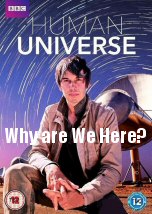
Why are We Here

   2014    Science
In episode two, Professor Brian Cox is off to India, where he assesses arguably the first evidence of rational thought in literature, the poetry of the Vedic monks. They pondered mankind's origins, realising there must have been a day with no yesterday - a day of creation - prompting the age-old question of where did the universe come from? Brian marvels that the universe seems to follow a set of rules, the laws of physics, allowing space to be considered on the grandest scale, travelling to the most distant, farthest reaches of the cosmos just by using our minds. Brian also visits Japan, and offers viewers the idea that man lives in just one of an infinite number of universes that are being made all the time.
Series: Human Universe