









Last Watched

"Engineering"  Sort by

Man on Mars Mission to the Red Planet

   2014    Technology
Let's go behind the scenes at NASA to discover how it is preparing for its most ambitious and daring mission: to land men - and possibly women - on the surface of Mars. It's over 40 years since Neil Armstrong made the first human footprint on the moon. But getting to the red planet would involve a journey of at least three years. Meet the scientists and engineers who are designing new rockets, new space suits and finding ways to help astronauts survive the perils of this long voyage. And it turns out that having the 'right stuff' for a mission to mars might not be quite what you expect.
Unlocking the Great Pyramid

   2008    History
When ancient architects completed construction on the Great Pyramid at Giza, they left behind the greatest riddle of the engineering world—how did builders lift limestone blocks weighing an average of two and a half tons 480 feet up onto the top of the Pyramid? For centuries, adventurers and Egyptologists have crawled through every passageway and chamber of the Pyramid, measuring and collecting data in an attempt to determine how it was built. For the first time, a revolutionary theory argues that the answer may be inside the Pyramid. Architect Jean-Pierre Houdin and Egyptologist Bob Brier use 3-D software to unlock the secret.

Space Station

       Technology    3D    HD
Space Station depicts the history of greatest engineering happening since a man landed on the Moon in 1969. Amongst these is the on-orbit assembly of the International Space Station as it travels 220 miles above the Earth at the speed of 17500 mph. The film also has included sequences that portray the force of a rocket launch, as well as a look into the depths of space. You will experience life in zero gravity, and accompany the astronauts on a space walk. It was the first 3D live-action film to be shot in space, using advanced 3D-technology. Written, produced, edited, and directed by Toni Myers.

Out of Sight

   2012    Science
The human eye is a remarkable piece of precision engineering, but it is also extremely limited. Beyond the narrow range of light that makes up the familiar colours of the rainbow is a vast spectrum of light, entirely unseen. Richard Hammond does just that, using ground-breaking new imaging technologies to take the viewer on a breath-taking journey of discovery beyond the visible spectrum, seeing the world, quite literally, in a whole new light. From death-defying aerial repairmen in the United States using ultraviolet cameras to seek out an invisible force that lurks unseen on power lines, to German scientists unlocking the secrets of animal locomotion with the world's most powerful moving x-ray camera, to infrared cameras that can finally reveal the secrets within a humble beehive, he shows how new technologies are letting us see our world anew.
Series: Invisible Worlds

Rise of the Drones

   2013    Technology
These unmanned flying robots–some as large as jumbo jets, others as small as birds–do things straight out of science fiction. Much of what it takes to get these robotic airplanes to fly, sense, and kill has remained secret. But now, with rare access to drone engineers and those who fly them for the U.S. military, we reveal the amazing technologies that make drones so powerful". From cameras that can capture every detail of an entire city at a glance to swarming robots that can make decisions on their own to giant air frames that can stay aloft for days on end, drones are changing our relationship to war, surveillance, and each other. And it's just the beginning. Discover the cutting edge technologies that are propelling us toward a new chapter in aviation history

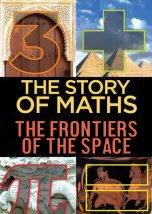
The Story of Maths The Frontiers of Space

   2008    Science
In the third episode we will see Europe by the 17th century taking over from the Middle East as the powerhouse of mathematical ideas. Great strides had been made in understanding the geometry of objects fixed in time and space. The race was on to discover the mathematics to describe objects in motion. This programme explores the work of Rene Descartes, Pierre Fermat, Isaac Newton, Leonard Euler and Carl Friedrich Gauss. Du Sautoy proceeds to describes René Descartes realisation that it was possible to describe curved lines as equations and thus link algebra and geometry. He talks with Henk J. M. Bos about Descartes. He shows how one of Pierre de Fermat’s theorems is now the basis for the codes that protect credit card transactions on the internet. He describes Isaac Newton’s development of math and physics crucial to understanding the behaviour of moving objects in engineering. He covers the Leibniz and Newton calculus controversy and the Bernoulli family. He further covers Leonhard Euler, the father of topology, and Gauss' invention of a new way of handling equations, modular arithmetic. The further contribution of Gauss to our understanding of how prime numbers are distributed is covered thus providing the platform for Bernhard Riemann's theories on prime numbers. In addition Riemann worked on the properties of objects, which he saw as manifolds that could exist in multi-dimensional space.
Series: The Story of Maths
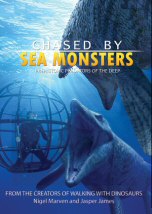
Chased by Sea Monsters

Chased by Sea Monsters

2003  Nature
In Search of

In Search of

2018  Technology
The Normans

The Normans

2010  History
Clarkson Farm Season 2

Clarkson Farm Season 2

2023  Nature
Hiroshima

Hiroshima

2005  History
The Jinx

The Jinx

2015  History