Last Watched

"Research"  Sort by

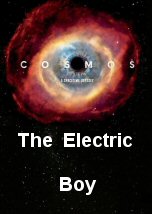
The Electric Boy

   2014    Science
This episode provides an overview of the nature of electromagnetism, as discovered through the work of Michael Faraday. Tyson explains how the idea of another force of nature, similar to gravitational forces, had been postulated by Isaac Newton before. Tyson continues on Faraday, coming from poor beginnings, would end up becoming interested in studying electricity after reading books and seeing lectures by Humphry Davy at the Royal Institution. Davy would hire Faraday after seeing extensive notes he had taken to act as his secretary and lab assistant. After Davy and chemist William Hyde Wollaston unsuccessfully tried to build on Hans Christian Ørsted's discovery of the electromagnetic phenomena to harness the ability to create motion from electricity, Faraday was able to create his own device to create the first electric motor by applying electricity aligned along a magnet. Davy, bitter over Faraday's breakthrough, put Faraday on the task of improving the quality of high-quality optical glass, preventing Faraday from continuing his research. Faraday, undeterred, continued to work in the Royal Institution, and created the Christmas Lectures designed to teach science to children. Following Davy's death, Faraday returned to full time efforts studying electromagnetism, creating the first electrical generator by inserting a magnet in a coil of wires. Tyson continues to note that despite losing some of his mental capacity, Faraday concluded that electricity and magnetism were connected by unseen fields, and postulated that light may also be tied to these forces. Using a sample of the optical glass that Davy had him make, Faraday discovered that an applied magnetic field could affect the polarization of light passing through the glass sample (a dielectric material), leading to what is called the Faraday effect and connecting these three forces. Faraday postulated that these fields existed across the planet, which would later by called Earth's magnetic field generated by the rotating molten iron inner core, as well as the phenomena that caused the planets to rotate around the sun. Faraday's work was initially rejected by the scientific community due to his lack of mathematical support, but James Clerk Maxwell would later come to rework Faraday's theories into the Maxwell's equations that validated Faraday's theories. Their combined efforts created the basis of science that drives the principles of modern communications today.
Series: Cosmos: A Spacetime Odyssey
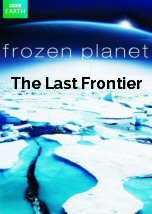
Frozen Planet: The Last Frontier

   2011    Culture
The documentary series reveals the extraordinary riches and wonders of the Polar Regions that have kept people visiting them for thousands of years. Today, their survival relies on a combination of ancient wisdom and cutting-edge science. Most Arctic people live in Siberia, either in cities like Norilsk - the coldest city on earth - or out on the tundra, where tribes like the Dogan survive by herding reindeer, using them to drag their homes behind them. On the coast, traditional people still hunt walrus from open boats - it is dangerous work, but one big walrus will feed a family for weeks. Settlers are drawn to the Arctic by its abundant minerals; the Danish Armed Forces maintain their claim to Greenland's mineral wealth with an epic dog sled patrol, covering 2,000 miles through the winter. Above, the spectacular northern lights can disrupt power supplies so scientists monitor it constantly, firing rockets into it to release a cloud of glowing smoke 100 kilometres high. In contrast, Antarctica is so remote and cold that it was only a century ago that the first people explored the continent. Captain Scott's hut still stands as a memorial to these men. Science is now the only significant human activity allowed; robot submarines are sent deep beneath the ice in search of new life-forms, which may also be found in a labyrinth of ice caves high up on an active volcano. Above, colossal balloons are launched into the purest air on earth to detect cosmic rays. At the South Pole there is a research base designed to withstand the world's most extreme winters. Cut off from the outside world for six months, the base is totally self-sufficient, even boasting a greenhouse.
Series: Frozen Planet

Why Do Viruses Kill

   2010    Medicine
The world stood in fear of an emerging new disease that threatened to kill millions. A new flu variant H1N1 had arrived. If this latest pandemic has taught anything, it is just how little is understood about the invisible world of viruses. But that has not stopped scientists trying. Horizon follows the leading researchers from across the world, who are attempting to unravel the many secrets of viruses to understand when and why they kill.

The Age of Aging

   2015    Medicine
In recent years, close study of the aging process has opened up new ways that could help us all live healthier for longer. Can we move beyond treating individual diseases, and instead treat the aging process itself? But would a longer life necessarily be a better life? A loose-knit group of researchers believe the real breakthrough is extending our health span - the period of life spent free of disease". Hear from Laura Deming, who dropped out of M.I.T. at the age of 14 and committed herself to finding and funding projects that can expand the human health span, and Dr. Brian Kennedy, whose work in the basic biology of aging has been crucial to the development of countless other researchers' work.

Memory Hackers

   2016    Medicine
Memory is the glue that binds our mental lives. Without it, we’d be prisoners of the present, unable to use the lessons of the past to change our future. From our first kiss to where we put our keys, memory represents who we are and how we learn and navigate the world. But how does it work? Neuroscientists using cutting-edge techniques are exploring the precise molecular mechanisms of memory". By studying a range of individuals ranging —from an 11-year-old whiz-kid who remembers every detail of his life to a woman who had memories implanted— scientists have uncovered a provocative idea. For much of human history, memory has been seen as a tape recorder that faithfully registers information and replays intact. But now, researchers are discovering that memory is far more malleable, always being written and rewritten, not just by us but by others. We are discovering the precise mechanisms that can explain and even control our memories. The question is— are we ready?

Journeys in Space and Time

   1980    Science
Ideas about time and space are explored in the changes that constellations undergo over time, the redshift and blue shift measured in interstellar objects, time dilation in Albert Einstein's theory of relativity, the designs of both Leonardo da Vinci and spacecraft that could travel near light speed, time travel and its hypothetical effects on human history, the origins of the Solar System, the history of life, and the immensity of space. In Cosmos Update, the idea of faster-than-light travel by wormholes (researched by Kip Thorne and shown in Sagan’s novel Contact) is discussed.
Series: Cosmos
Rome

Rome

  History
Universe

Universe

2021  Science
Ancient Rome

Ancient Rome

2006  History
Untold

Untold

2021  Culture