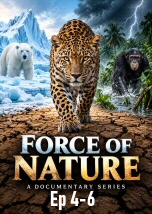
In the final two episodes, the documentary investigates the immense geological forces that continue to reshape our planet. Scientists and adventurers travel to Guatemala's Volcán de Fuego, one of the most active volcanoes on Earth, capturing spectacular eruptions, rivers of lava, and towering ash clouds from astonishingly close range. Along the way, the series reveals how volcanoes are formed, how tectonic plates trigger earthquakes and tsunamis, and how volcanic activity can even create entirely new islands in the middle of the ocean. The journey then turns to one of nature's most breathtaking displays: the Aurora Borealis. In the frozen landscapes of northern Sweden, scientists uncover how powerful storms on the Sun send streams of charged particles towards Earth, illuminating the night sky with vast curtains of color. Combining stunning footage with cutting-edge research, the documentary explores solar activity, space weather, eclipses, and the remarkable connection between our planet and the forces that originate far beyond its atmosphere.
This documentary dives into the rapidly expanding world of anti-ageing science and longevity research, following a determined journey to separate bold promises from real breakthroughs. Guided by a curious and questioning approach, it explores cutting-edge laboratories, emerging therapies and the scientists who are challenging one of humanity’s oldest limitations. From biological age reversal to experimental treatments, the film reveals both the excitement and the uncertainty surrounding a field that could redefine how we understand life itself. As the investigation unfolds, it raises compelling questions about what it truly means to live longer—and at what cost. By confronting the hype, ethical dilemmas and scientific realities, the story offers a balanced and thought-provoking look at a future where ageing might no longer be inevitable. It’s an eye-opening exploration that invites viewers to reconsider the boundaries of human lifespan and the possibilities that lie ahead.
Physicist Bob Lazar claims he was recruited in the late 1980s to work at a secret facility known as S4, near Area 51, where his task was to study and reverse-engineer advanced craft of unknown origin. With a background linked to Los Alamos, he describes in detail the technology he encountered, including propulsion systems unlike anything publicly known and materials that seem to defy conventional physics. Through his testimony, archival footage and interviews, the film reconstructs what he says happened inside one of the most secretive programs ever alleged. As his story unfolds, it raises concrete questions about classified research, government secrecy and whether some technological breakthroughs may already exist beyond public reach.
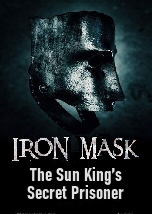
France, 17th Century. For more than three decades, a mysterious prisoner was moved from fortress to fortress under extraordinary secrecy, his identity concealed behind a mask and known only to a handful of powerful men. Ordered into confinement by the minister of Louis XIV in 1669, he would remain locked away until his death in 1703 — alive, but erased. Why was he hidden so carefully? What secret was so dangerous that it demanded absolute silence? Drawing on archival research, expert analysis, and the turbulent politics of the Sun King’s reign, this gripping historical investigation revisits one of France’s greatest unsolved enigmas. From theories of royal bloodlines and forbidden romances to diplomatic conspiracies and mistaken identities, the film explores the many faces behind the mask and the fragile power structures of absolutist France. A tale of intrigue, paranoia, and state secrecy that continues to fascinate more than 350 years later.
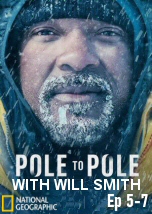
In the final three episodes, the journey deepens into a powerful exploration of culture, survival, and science at the planet’s edges. On a remote Pacific island threatened by rising seas, Will Smith joins Dr. Walworth and John Aini to document a dying language spoken by only five people, turning marine research into an intimate race against time to preserve human memory. The mission reveals how climate change erodes not just coastlines, but identities. The adventure then shifts to extremes of land and ice. In the Kalahari Desert, Will learns survival from the San people, confronting the limits of his endurance during a traditional hunt with guide Kane Motswana. The odyssey culminates beneath the ice of the North Pole, where, alongside polar ecologist Allison Fong, a daring dive to collect critical samples is jeopardized by a sudden storm and equipment failure. What follows is a gripping test of courage and teamwork that redefines heroism at the end of a 100-day quest.
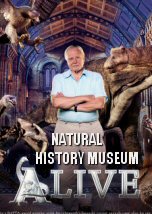
In this ground-breaking film, Sir David Attenborough takes us on a journey through the world-famous Natural History Museum in London in a captivating tale of discovery, adventure, and magic, where state-of-the-art CGI, science, and research combine to bring the museum's now long-extinct inhabitants to life to discover how these animals once roamed the planet. As the doors are locked and night falls, Attenborough stays behind and meets some of the most fascinating extinct creatures which come alive in front of his eyes; dinosaurs, ice age beasts, and giant reptiles. The film fulfils a lifelong dream of him, who said: 'I have been coming to the Natural History Museum since I was a boy. It's one of the great places to come to learn about natural history. In this film we have the technology to bring back to life some of the most romantic and extraordinary extinct creatures that can be conceived; some are relatively recent animals like the dodo, others older like the dinosaurs, and some we only know through fossil evidence. Using our current scientific knowledge, this film brings these creatures alive, allowing me to look at some of the biggest questions surrounding them.'
















The journey then turns to one of nature's most breathtaking displays: the Aurora Borealis. In the frozen landscapes of northern Sweden, scientists uncover how powerful storms on the Sun send streams of charged particles towards Earth, illuminating the night sky with vast curtains of color. Combining stunning footage with cutting-edge research, the documentary explores solar activity, space weather, eclipses, and the remarkable connection between our planet and the forces that originate far beyond its atmosphere.