








Last Watched

"Energy"  Sort by

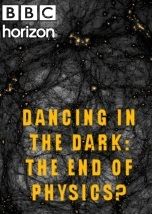
Dancing in the Dark

   2015    Science
Scientists genuinely don't know what most of our universe is made of. The atoms we're made from only make up four per cent. The rest is dark matter and dark energy (for 'dark', read 'don't know'). The Large Hadron Collider at CERN has been upgraded. When it's switched on in March 2015, its collisions will have twice the energy they did before. The hope is that scientists will discover the identity of dark matter in the debris. The stakes are high - because if dark matter fails to show itself, it might mean that physics itself needs a rethink.
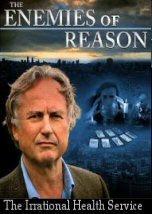
The Irrational Health Service

       Medicine
Richard Dawkins examines the growing suspicion the public has for science-based medicine, despite its track record of successes like the germ theory of disease, vaccines, antibiotics and increased lifespan. He notes a fifth of British children are currently not immunised against measles, mumps and rubella, attributing it to fears arising from a highly controversial report linking the vaccine with autism. Dawkins criticizes the growing field of alternative medicine which does not pass the same objective and statistical rigour as scientifically derived treatments using controlled double-blind studies. Without verifiable evidence, alternative therapies must rely on biased anecdotes and word of mouth to perpetuate. Dawkins observes these treatments have fanciful rationales and rituals behind them, with many alternative treatments employing pseudoscientific jargon such as "energy", "vibration" or "quantum theory" to give themselves greater credence to patients.
Series: Enemies of Reason

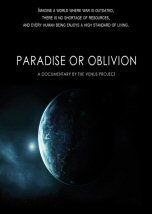
The Venus Project: Paradise or Oblivion

   2012    Technology
This documentary details the root causes of the systemic value disorders and detrimental symptoms caused by our current established system. This video presentation advocates a new socio-economic system, which is updated to present-day knowledge, featuring the life-long work of Social Engineer, Futurist, Inventor and Industrial Designer Jacque Fresco, which he calls a Resource-Based Economics.

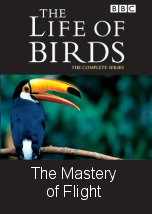
The Mastery of Flight

   1998    Nature
The second programme deals with the mechanics of flight. Getting into the air is by far the most exhausting of a bird's activities, and Sir Attenborough observes shearwaters in Japan that have taken to climbing trees to give them a good jumping-off point. The albatross is so large that it can only launch itself after a run-up to create a flow of air over its wings. A combination of aerodynamics and upward air currents (or thermals), together with the act of flapping or gliding is what keeps a bird aloft. Landing requires less energy but a greater degree of skill, particularly for a big bird, such as a swan. Weight is kept to a minimum by having a beak made of keratin instead of bone, a light frame, and a coat of feathers, which is maintained fastidiously. The peregrine falcon holds the record for being fastest in the air, diving at speeds of over 300 km/h. Conversely, the barn owl owes its predatory success to flying slowly, while the kestrel spots its quarry by hovering. However, the true specialists in this regard are the hummingbirds, whose wings beat at the rate of 25 times a second. The habits of migratory birds are explored. After stocking up with food during the brief summer of the north, such species will set off on huge journeys southwards. Some, such as snow geese, travel continuously, using both the stars and the sun for navigation. They are contrasted with hawks and vultures, which glide overland on warm air, and therefore have to stop overnight.
Series: The Life of Birds

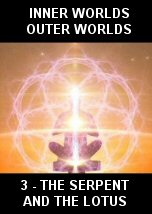
The Serpent and the Lotus

   2012    Culture
In ancient Greece the Asclepian healing temples recognized the power of the primordial spiral which is symbolized by the rod of Asclepius. To this day, this symbol of our evolutionary energy remains as the logo of the American Medical Association and other medical organizations worldwide. The snake, the downward direction, is the manifested spiral, the evolutionary energy of the world.
Series: Inner Worlds Outer Worlds

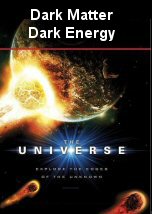
Dark Matter and Dark Energy

   2008    Science
Scientists have no idea what it is, but Dark Matter and Dark Energy make up 96% of the Universe. Dark Matter is everywhere. It passes through everything we know on earth at billions of particles every second, yet no one has ever gotten a direct detection of this mysterious dark substance. An even more bewildering force is Dark Energy, which is rapidly pushing apart our Universe. Discovered only ten years ago, scientists are struggling to comprehend its unusual characteristics and answer the ultimate question; what is the fate of our Universe? Using cutting-edge computer graphics watch as the universe is brought down to earth.
Series: The Universe
Prehistoric Planet

Prehistoric Planet

2022  Science
Clarkson Farm Season 2

Clarkson Farm Season 2

2023  Nature
Meet the Romans

Meet the Romans

2012  History
The Art of Germany

The Art of Germany

2010  Art
Tiger

Tiger

2020  History
The Putin Interviews

The Putin Interviews

2017  Culture
In the Age of AI

In the Age of AI

2019  Technology