








Last Watched

"Lion"  Sort by

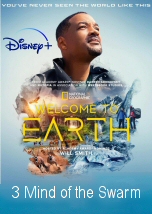
Mind of the Swarm

   2021    Nature
In the third episode, Will Smith crosses the Serengeti to catch one of the greatest events of nature. "An image, one and a half million wildebeests on the plains of Africa in the most dramatic migration on Earth, has stayed with me since around thirty years ago I picked up a National Geographic Magazine and saw it. And finally, I'm here to see it."
Series: Welcome to Earth
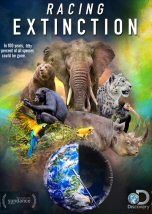
Racing Extinction

   2015    Nature
A team of artists and activists exposes the hidden world of extinction with never-before-seen images that will change the way we see the planet. Two worlds drive extinction across the globe, potentially resulting in the loss of half of all species. The international wildlife black market at the expense of creatures that have survived on this planet for millions of years. And the other surrounds us, hiding in plain sight — a world that the oil and gas companies don’t want the rest of us to see. Using covert tactics and state-of-the-art technology, the Racing Extinction team exposes these two worlds in an inspiring affirmation to preserve life as we know it.

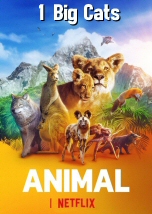
Big Cats

   2021    Nature
This immersive series follows the world's most magnificent creatures, capturing never before seen moments from the heartwarming to the outrageous.
In the first episode, majestic, powerful and deadly, big cats were once thought to be solitary creatures. But we're now realizing just how collaborative they can be.
Series: Animal

The Big Bang: Before the Dawn

   2021    Science
How did the universe come to be? Thanks to a series of discoveries, our most powerful space missions have unravelled 13.8 billion years of cosmic evolution and revealed the story of our universe from its birth all the way to the arrival of our nascent civilization. Our guide on this odyssey back to the dawn of time is light. Telescopes are time machines - by looking out into the distant universe, they open a window to the past. One telescope more than any other has helped us journey through the history of the universe: NASA’s Hubble Space Telescope. Remarkably, Hubble has even found one of the first galaxies ever to exist in the universe, which was born some 13.4 billion years ago. It's a discovery that hints at the beginnings of our own Milky Way. Vivid CGI brings this ancient galaxy to life, allowing us to witness for ourselves the first dawn. It was the beginning of a relationship between stars and planets that would, on a faraway world, lead to the origin of life - and ultimately to us.
Hubble’s incredible discoveries have allowed scientists to piece together much of our cosmic story, but it cannot take us back to the most important moment in history: the Big Bang. For decades, the moment the universe began was the subject of pure speculation, but by combining astronomy and cosmology, scientists have finally found a way to put their theories to the test and study the momentous events that took place during the Big Bang. They can do this because the European Space Agency’s Planck space telescope has seen the afterglow of the Big Bang itself – something we call the Cosmic Microwave Background. The unparalleled detail Planck gave us has helped confirm something remarkable: the Big Bang may not be the beginning. There was a time before the dawn – a place beyond anything we can comprehend. Professor Brian Cox transports us back to the fraction of a second before the Big Bang, when the seeds of our universe were planted.
Series: Universe

Black Holes: Heart of Darkness

   2021    Science
The centre of our galaxy is home to an invisible monster of unimaginable power – a supermassive black hole named Sagittarius A star, with four million times the mass of the Sun. Recent astronomical breakthroughs have confirmed not only that black holes like Sagittarius A star exist, but that these bizarre invisible objects may be the ultimate galactic protagonists.
Stunning CGI takes us back to witness the fiery origins of our galaxy’s black hole 13.6 billion years ago, when the early universe was home to colossal blue stars, and when they ran out of fuel, they collapsed under their own enormous mass, crushing down into an object so small and so dense it punched a hole in the fabric of the universe. Over billions of years, Sagittarius A star feasted on nearby gas, stars, and through cataclysmic mergers with other black holes. A breakthrough discovery by Nasa’s Fermi gamma-ray telescope has shown that our black hole had the power to sculpt the entire galaxy, creating vast bubbles of gas above and below our galaxy and even protecting stars systems as ours.
In a mind-bending conclusion, Brian Cox reveals how our modern understanding of black holes is challenging our concepts of reality to the breaking point. In trying to understand the fate of objects that fall into Sagittarius A star, scientists have come to a stunning conclusion: space and time, concepts so foundational to how we experience the world around us, are not as fundamental as we once thought.
Series: Universe

The Milky Way: Island of Light

   2021    Science
Professor Brian Cox continues his epic exploration of the cosmos by looking at the faint band of light that sweeps across the night sky - our own galaxy, the Milky Way. The Sun is just one of almost 400 billion stars that form this vast, majestic disk of light, our own home in the universe. Thanks to a cutting-edge space we’re finally able to reveal the Milky Way’s dramatic history and predict its cataclysmic future.
Our galaxy started out a fraction of the size it is today, and Gaia telescope has revealed how it grew over the eons. Beautifully rendered VFX based on the very latest Gaia data has uncovered the remarkable story of our galaxy’s evolution. As our young galaxy encountered rival galaxies, it experienced a series of violent growth spurts and intense periods of cataclysmic change while battling to survive. Each time our galaxy feeds, a new era of star formation begins, fuelled by incoming torrents of fresh gas and energy. And there is another collision to come. Another, larger galaxy is coming our way. Andromeda is heading straight for us at a quarter of a million miles per hour. The Milky Way’s long-term fate is in the balance.
Series: Universe
One Strange Rock

One Strange Rock

2018  Science
Alien Worlds

Alien Worlds

2020  Science
Leaving Neverland

Leaving Neverland

2019  Culture
Chemistry

Chemistry

2010  Science
Top Gear

Top Gear

2012  Technology
The Story of India

The Story of India

2007  History
Rome Second Season

Rome Second Season

  History
Cosmos

Cosmos

1980  Science