










Last Watched

"Research"  Sort by

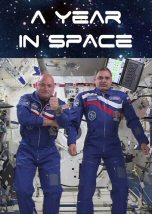
A Year in Space

   2016    Technology
Follow astronaut Scott Kelly’s record-breaking 12-month mission on the International Space Station, from launch to landing, as NASA charts the effects of long-duration spaceflight. A Russian Soyuz spacecraft carried Scott Kelly of NASA and Mikhail Kornienko of Roscosmos to the space station for the longest space mission ever assigned to a NASA astronaut". The expedition provided important insights into operational and scientific areas in human research in space and on Earth. Integrated scientific investigations between NASA and Roscosmos will combine resources to improve data sharing among space medical and human research communities, as well as help inform current assessments of crew performance and health and better determine and validate countermeasures to reduce the risks associated with future exploration as NASA plans for missions around the moon, to an asteroid and eventually to Mars.

Is Alcohol Worse than Ecstasy

   2008    Medicine
The drug policies have remained unchanged over the last 40 years so should they be reformed in the light of new research? Recent research has analysed the link between the harmful effects of drugs relative to their current classification by law with some startling conclusions. Perhaps most startling of all is that alcohol, solvents and tobacco (all unclassified drugs) are rated more dangerous than ecstasy, 4-MTA and LSD (all class A drugs).

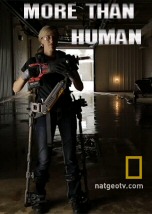
More Than Human

   2015    Technology
Scientific advancements are challenging the concept of what it means to be human. Technology embedded in our bodies is fairly common: artificial limbs, pacemakers. But new research is taking us beyond replacement parts and into a new realm that is changing the nature of the human body and the human mind. Will the fusion of biology and technology change how we think, how we feel, how we experience the world?

Are We Still Evolving

   2011    Science
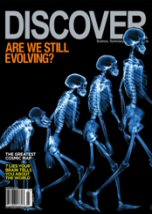
Dr Alice Roberts asks one of the great questions about our species: are we still evolving? There's no doubt that we're a product of millions of years of evolution. But thanks to modern technology and medicine, did we escape Darwin's law of the survival of the fittest? Alice follows a trail of clues from ancient human bones to studies of remarkable people living in the most inhospitable parts of the planet and the frontiers of genetic research, to discover if we are still evolving - and where we might be heading.

How Big is the Universe

   2012    Science
It is one of the most baffling questions that scientists can ask: how big is the Universe that we live in? Follow the cosmologists who are creating the most ambitious map in history - a map of everything in existence. And it is stranger than anyone had imagined - a Universe without end that stretches far beyond what the eye can ever see. And, if the latest research proves true, our Universe may just be the start of something even bigger. Much bigger.

The Wehrmacht The Blitzkrieg

   2007    History
What was the Wehrmacht? A group of obedient yeasayers? A murdering band of thugs? An army of millions of abused young men? This series in 5 parts provides differentiated and conclusive answers based on the latest historical and comprehensive investigative research, bringing many new facts to light – among them documents proving for the first time ever, what many among the officers actually thought. Blitzkrieg, the lightning war, in German incorporate modern weapons and vehicles as a method to help avoid the stalemate of trench warfare and linear warfare in future conflicts. The first practical implementations of these concepts coupled with modern technology were instituted by the Wehrmacht in the opening theatres of World War II. The strategy was particularly effective to Germany in the invasions of Western Europe and initial operations in the Soviet Union. These operations were dependent on surprise penetrations, general enemy unpreparedness and an inability to react swiftly enough to German offensive operations.
Series: The Wehrmacht