For all of human history, the Sun, our home star, has measured our days and our seasons while fueling all life on Earth. Yet it remains an enigma. NASA's Parker Probe Plus is on a mission to change that, flying through dangerous radiation to become the closest spaceship to orbit our Sun. It's a journey to the center of our solar system, a mission to gather information about the most critical celestial body in the sky, our star.
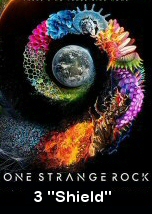
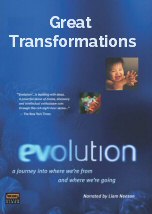
What makes us human is the squishy triple-pounder inside our heads. It lets us build skyscrapers, and lift a special few of us into space. We are the only species on this planet that can construct realities in our mind and then go actually build it. The story of how our mind evolved on this one strange rock is one of chance, coincidence and impossible odds. This episode is an investigation into the mystery of the human brain and the chain of events that produced the anomaly of human intelligence.
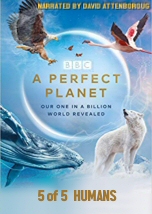
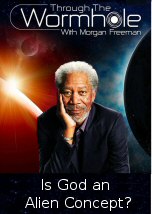
Every day Astronomers are finding a new planetary system that looks pretty similar to Earth. The possibilities of life somewhere else other than Earth I think are very high. If there is life out there what would it be like? Could we talk to it? Is there anything out there like you and me? To find out, we can't just look into space, we also need to look down here. The story of how a miraculous event transformed life on Earth into a complex interconnected food web; Astronauts and experts question other intelligent life in the universe.
Huge asteroids have smashed into the earth, and turned it into an enveloped fire, uninhabitable to almost all life on the surface. The world will get hit again. It's just a matter of when. So, what should we do as a species? Should we just, like the dinosaurs, look up and die? The reasons the dinosaurs are extinct is they didn't have a space program. We do. We have the capability to perhaps escape the Earth. Astronaut Chris Hadfield believes the only chance for human survival is to escape from Earth and build a space colony, but there are real barriers.
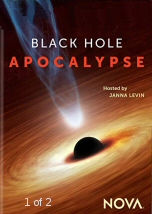
Black holes are the most enigmatic and exotic objects in the universe. They’re also the most powerful; with gravity so strong it can trap light. And they’re destructive, swallowing entire planets, even giant stars. Anything that falls into them vanishes... gone forever. Now, astrophysicists are realizing that black holes may be essential to how our universe evolved—their influence possibly leading to life on Earth and, ultimately, us. In this series, astrophysicist and author Janna Levin takes viewers on a journey to the frontiers of black hole science. Along the way, we meet leading astronomers and physicists on the verge of finding new answers to provocative questions about these shadowy monsters: Where do they come from? What’s inside? What happens if you fall into one? And what can they tell us about the nature of space, time, and gravity?
The sun gives us warmth and light. It is the fuel of life. Without the energy of the sun almost nothing grows, thrives or lives. But the sun was not put there for our benefit. It is not this big jolly ball of nice smiling down on us, wishing us all a good day. It is not our friend. The sun is a monster. A planet killer. And we don't see that side of the sun down here. But eight astronauts, with over 1,000 days in space between them, can show us how being up there helped them understand the suns bright fury.










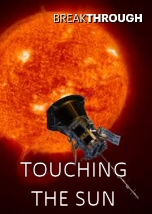





It's a journey to the center of our solar system, a mission to gather information about the most critical celestial body in the sky, our star.