From steamy jungles to dry deserts, amphibians have taken their first footsteps onto land using their bizarre life histories to break their ties with the water and invade the earth. This episode delves into the extraordinary and intimate lives of the soft skinned amphibians. This includes the marsupial frogs, a peculiar species where the father carries his young in pouches and then gives birth. It also features warring giant salamanders over a metre long and show-off newts that offer displays just like underwater birds of paradise.
This documentary journeys with the scientists into the heart of a giant. Juno is the Nasa mission designed to peer through Jupiter's swirling clouds and reveal the wonders within. By projecting a 70-foot-wide, life-size Juno on a Houston rooftop, Scott Bolton, head of Juno, shows us how its fragile electronics are encased in 200kg of titanium. As Scott puts it, 'we had to build an armoured tank to go there.' Professor Andrew Ingersoll, Juno's space weatherman, reveals they have seen lightning inside Jupiter, perhaps a thousand times more powerful than Earth's lightning. This might be evidence for huge quantities of water inside Jupiter. Under the extreme conditions of Jupiter thousands of miles under the surface, hydrogen becomes a liquid metal. Juno is finding out how much liquid metallic hydrogen is inside Jupiter, and scientists hope to better understand how this flowing metal produces the most powerful aurora in the Solar System. But what is at Jupiter's heart? In Nice, Prof Tristan Guillot explains how Juno uses gravity to map the planet's centre. This can take scientists back to the earliest days of the solar system, because Jupiter is the oldest planet and it should contain clues to its own creation. By chalking out an outline of the Jupiter, Tristan reveals there is a huge rocky core - perhaps ten times the mass of Earth.
Fifty years after Britain's foremost underground band released their debut album Piper at the Gates of Dawn, Pink Floyd remain one of the biggest brand names and best-loved bands in the world. This film features extended archive footage, some of it rarely or never seen, alongside original interviews with the four surviving members of Pink Floyd - David Gilmour, Roger Waters, Richard Wright and Nick Mason - and traces the journey of a band that has only ever had five members, three of whom have lead the band at different stages of its evolution.
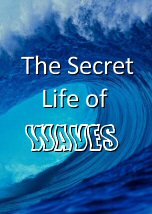
Documentary-maker David Malone delves into the secrets of ocean waves. In an elegant and original film he finds that waves are not made of water, that some waves travel sideways and that the sound of the ocean comes not from water but from bubbles. Waves are not only beautiful but also profoundly important, and there is a surprising connection between the life cycle of waves and the life of human beings.
Africa's wildest river is home to the most spectacular wildlife. Hippos fight for territory while herds of elephant, water buffalo and zebra depend on it for life. In the wet season the rains burst the riverbanks and everyone, including people, must move whilst fish swim through the villages. In the dry season the creatures fight over the few pools of water while predators prowl. At its heart it plunges over Victoria Falls and into wild ravines before draining into the Indian Ocean, where storm clouds cycle the water back into the heart of Africa.
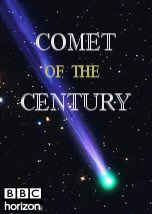
Comet ISON can well be the brightest and most spectacular comet for a generation. It appeared above the eastern horizon from December 2013 as a glorious streak across the sky. ISON has been travelling towards the sun for ten thousand years and will make only one orbit through its corona before disappearing off into the outer solar system. But as well as providing a great spectacle, ISON's tail of vaporised gas and water, hundreds of millions of kilometres long, will give insights into some of the greatest mysteries of science; it will help explain the origins of the solar system, whether earth's water was delivered on comets and even whether we are alone in the universe.




















This episode delves into the extraordinary and intimate lives of the soft skinned amphibians. This includes the marsupial frogs, a peculiar species where the father carries his young in pouches and then gives birth. It also features warring giant salamanders over a metre long and show-off newts that offer displays just like underwater birds of paradise.