In a provocative documentary, environmental campaigner George Monbiot examines the disastrous impact that farming animals for meat has had on the planet. He argues that the biggest problem driving us towards global disaster is how we feed ourselves, particularly on meat George looks at alternative food sources, including synthetic meat, and a process that produces protein from just bacteria and air, and also explores revolutionary ideas that could change agriculture as we know it.
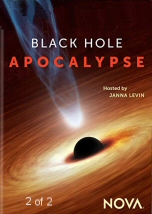
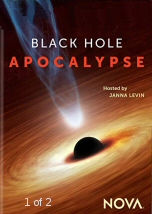
Of all the objects in the cosmos, planets, stars, galaxies, none are as strange, mysterious, or powerful as black holes. Black holes are the most mind-blowing things in the universe. They can swallow a star completely intact. Black holes have these powerful jets that just spew matter out. First discovered on paper, on the back of an envelope, some squiggles of the pen. The bizarre solution to a seemingly unsolvable equation, a mathematical enigma. Einstein himself could not accept black holes as real. People didn't even believe for many years that they existed. Nature doesn't work that way. Yet slowly, as scientists investigate black holes by observing the effect they have on their surroundings, evidence begins to mount.
Black holes are the most enigmatic and exotic objects in the universe. They’re also the most powerful; with gravity so strong it can trap light. And they’re destructive, swallowing entire planets, even giant stars. Anything that falls into them vanishes... gone forever. Now, astrophysicists are realizing that black holes may be essential to how our universe evolved—their influence possibly leading to life on Earth and, ultimately, us. In this series, astrophysicist and author Janna Levin takes viewers on a journey to the frontiers of black hole science. Along the way, we meet leading astronomers and physicists on the verge of finding new answers to provocative questions about these shadowy monsters: Where do they come from? What’s inside? What happens if you fall into one? And what can they tell us about the nature of space, time, and gravity?
In the second episode of the series, Morgan Freeman looks into prophecies of violent cataclysms, and the strife of ages past, in an attempt to determine how the world will end.
All seems lost for the Allies. The Italians are defeated at Caporette, and a Bolshevik Russia pulls out of the war. But the American reinforcements are decisive, and the Allies emerge victorious. The Allies are unable to negotiate an honourable peace agreement, and the Treaty of Versailles, 20 years later, will have disastrous
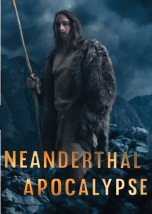
40,000 years ago the steppes of Eurasia were home to our closest human relative, the Neanderthals. Recent genetic and archaeological discoveries have proven that they were not the dim-witted cave dwellers we long thought they were. In fact, they were cultured, technologically savvy and more like us than we ever imagined! So why did they disappear? We accompany scientists on an exciting search for an answer to this question and come to a startling conclusion... A climate change due to a cataclysmic event.








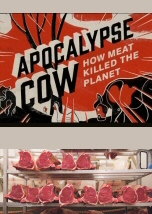







George looks at alternative food sources, including synthetic meat, and a process that produces protein from just bacteria and air, and also explores revolutionary ideas that could change agriculture as we know it.