



Last Watched

"Libra"  Sort by

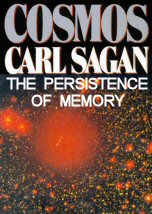
The Persistence of Memory

   1980    Science
The idea of intelligence is explored in the concepts of computers (using bits as their basic units of information), whales (in their songs and their disruptions by human activities), DNA, the human brain (the evolution of the brain stem, frontal lobes, neurons, cerebral hemispheres, and corpus callosum under the Triune Brain Model), and man-made structures for collective intelligence (cities, libraries, books, computers, and satellites). The episode ends with speculation on alien intelligence and the information conveyed on the Voyager Golden Record.
Series: Cosmos
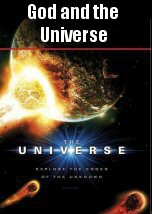
God and the Universe

   2011    Science    3D    HD
Since the dawn of civilization, humans have wondered who or what created the universe. Religion offers a spiritual answer, but do the latest discoveries in physics show evidence of a transcendent intelligence, or simply that the laws of physics by themselves could have led to the universe in which we live? This episode embarks on a mind-bending scientific search for God, asking physicists and theologians if the seemingly miraculous way the universe has been calibrated to support life is evidence of a creator...whether string theory will eventually be able to rule out the existence of God...why Stephen Hawking says the universe could have been created spontaneously...and how an advanced civilization in another universe could have conceivably created our own.
Series: The Universe

Atlas Maps

   2010    History
The Dutch Golden Age saw map-making reach a fever pitch of creative and commercial ambition. This was the era of the first ever Atlases - elaborate, lavish and beautiful. This was the great age of discovery and marked an unprecedented opportunity for mapmakers who sought to record and categorise the newly acquired knowledge of the world. Rising above the many mapmakers in this period was Gerard Mercator, inventor of the Mercator projection, who changed mapmaking forever when he published his collection of world maps in 1598 and coined the term 'Atlas'. The programme looks at some of the largest and most elaborate maps ever produced, from the vast maps on the floor of the Royal Palace in Amsterdam, to the 24 volume atlas covering just the Netherlands, to the largest Atlas in the world, The Klencke Atlas. It was made for Charles II to mark his restoration in 1660. But whilst being one of the British Libraries most important items, it is also one of its most fragile so hardly ever opened. This is a unique opportunity to see inside this enormous and lavish work, and see the world through the eyes of a King.
Series: The Beauty of Maps
The Planets

The Planets

2000  Science
P.U.L.S.E

P.U.L.S.E

2006  Art
Future of Work

Future of Work

2021  Technology
Ancient Aliens

Ancient Aliens

  History
Nature Great Events

Nature Great Events

2009  Nature
Clarkson Farm Season 2

Clarkson Farm Season 2

2023  Nature