

Last Watched

"Man"  Sort by

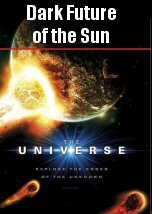
Dark Future of the Sun

   2010    Science
Our Sun has served Earth well for almost five billion years. It's bathed us with heat and energy. But like humans, our home star is mortal. In five billion years, it will stop nurturing its planetary offspring. The aging star will bloat out beyond the orbit of our planet incinerating all living things--including humans if we're still around.
Series: The Universe
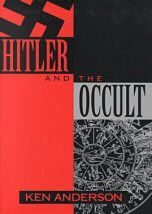
Hitler and the Occult

   2007    History
How did Hitler decide he was a messiah and persuade a whole nation to follow him to damnation? This is a subject that has been mined many times in fiction - Raiders Of The Lost Ark, Constantine, Hellboy, Bulletproof Monk and English horror writer James Herbert's book The Spear - as well as documentary. Based on Ken Anderson's 1995 book of the same name, this aims to show how the Nazi party was originally made up of several occult groups that believed a messiah was on the way to save Germany.

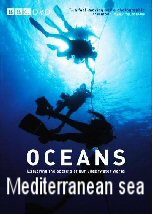
The Mediterranean Sea

   2009    Nature
The sparkling blue waters of the Mediterranean Sea are home to over 700 varieties of fish and almost 10 per cent of the world's marine species. Its coastline is one of the most densely populated in the world and the human pressure on this sea is magnified each summer with the influx of holiday makers. Western civilisation developed around these shores but now human activity is having a profound effect on this endangered sea.
Series: Oceans

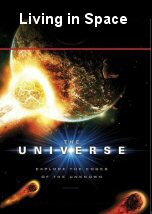
Living in Space

   2009    Technology
When mankind eventually leaves the cradle of Earth and ventures forth into the uncharted territories of the cosmos, where, and what form, will our new homes take?
Series: The Universe

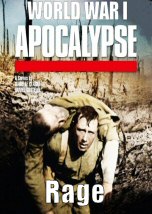
Rage

   2014    History
1917. People have had enough of the war. Behind the scenes, uprisings are brewing, like the one that toppled the Tsar in Russia; on the front soldiers begin to mutiny as they did at Chemin des Dames in France. German submarine attacks in the Atlantic will finally pull the Americans into the war, but they arrive too late to help prevent the carnage of the Battle of Passchendaele.
Series: Apocalypse: World War 1

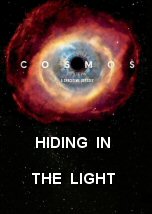
Hiding in the Light

   2014    Science
This episode explores the wave theory of light as studied by mankind, noting that light has played an important role in scientific progress, with such early experiments from over 2000 years ago involving the camera obscura by the Chinese philosopher Mozi. Tyson describes the work of the 11th century Arabic scientist Ibn al-Haytham, considered to be one of the first to postulate on the nature of light and optics leading to the concept of the telescope, as well as one of the first researchers to use the scientific method. Tyson proceeds to discuss the nature of light as discovered by mankind. Work by Isaac Newton using diffraction through prisms demonstrated that light was composed of the visible spectrum, while findings of William Herschel in the 19th century showed that light also consisted of infrared rays. Joseph von Fraunhofer would later come to discover that by magnifying the spectrum of visible light, gaps in the spectrum would be observed. These Fraunhofer lines would later be determined to be caused by the absorption of light by electrons in moving between atomic orbitals when it passed through atoms, with each atom having a characteristic signature due to the quantum nature of these orbitals. This since has led to the core of astronomical spectroscopy, allowing astronomers to make observations about the composition of stars, planets, and other stellar features through the spectral lines, as well as observing the motion and expansion of the universe, and the existence of dark matter.
Series: Cosmos: A Spacetime Odyssey
Natural World

Natural World

2009  Nature
Animal

Animal

2021  Nature
Leaving Neverland

Leaving Neverland

2019  Culture
Top Gear

Top Gear

2012  Technology
The Man with 1000 Kids

The Man with 1000 Kids

2024  Culture
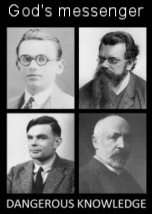
Dangerous knowledge

Dangerous knowledge

2007  Science