Buddhists, Hindus, and hundreds of thousands of travellers from around the globe flock to Cambodia every year to experience the grandeur of Angkor. Its famous temples were built over the span of five centuries by the rulers of the Khmer Empire, and endure today as one of Earth's greatest archaeological wonders. Join us as we shed light on one of the most enigmatic, mesmerizing civilizations in the history of mankind. We peel away the myth and legend to uncover the hidden story behind the creation of this ancient city. Angkor Wat is the largest temple on the face of the Earth and is a symbol of one of the greatest empires in the history of Southeast Asia. And yet, for centuries, the sacred structure remained lost within the tropical forests of Cambodia, along with the history of the young king who built the temple. Discover the story of Suryavarman II and how he ushered in the golden age of the Khmer Empire. See how Angkor Wat was constructed over four backbreaking decades, and witness the monument in its true glory and splendour, as it appeared 900 years ago.
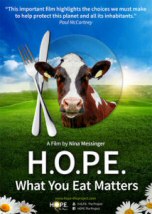
Half of the population in Western society suffers from being overweight. Cardio-vascular diseases, diabetes and cancer are epidemic. Our meat consumption has quintupled over the past 50 years. 65 billion land animals are being slaughtered every year for food consumption. One third of the global grain production is fed to animals for fattening while 1.8 billion people worldwide suffer from hunger and starvation. Can there really be a solution to all these problems? H.O.P.E. is a life-changing documentary uncovering and revealing the effects of our typical Western diet high in animal-based foods. It contrasts the limited interests of the pharmaceutical and agricultural industry with the all-encompassing interests of living beings on this planet and with the power of responsible consumer action. H.O.P.E. is an urgent call to action to all of us to commit to a change towards sustainability and safeguarding our living environment.
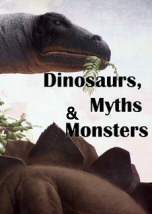
From dinosaurs to mammoths, when our ancient ancestors encountered the fossil bones of extinct prehistoric creatures, what did they think they were? Just like us, ancient peoples were fascinated by the giant bones they found in the ground. Historian Tom Holland goes on a journey of discovery to explore the fascinating ways in which our ancestors sought to explain the remains of dinosaurs and other giant prehistoric creatures, and how bones and fossils have shaped and affected human culture. In Classical Greece, petrified bones were exhibited in temples as the remains of a long-lost race of colossal heroes. Chinese tales of dragons may well have had their origins in the great fossil beds of the Gobi desert. In the Middle Ages, Christians believed that mysterious bones found in rock were the remains of giants drowned in Noah's Flood. Tom encounters a medieval sculpture that is the first known reconstruction of a monster from a fossil, and learns about the Native Americans stories, told for generations, which contained clues that led bone hunters to some of the greatest dinosaur finds of the nineteenth century.
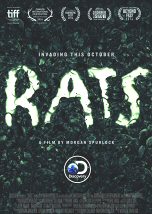
The film goes deep beneath the surface to explore the lives of man's greatest parasite. Morgan Spurlock unveils a new form of documentary horror storytelling, journeying around the world to bring viewers face to face with rats while delving into our complicated relationship with these creepy creatures. Taking us into the rats nests in ways never before captured on film, RATS dives deep into New York City's parks, subway tunnels, and sewers; venture to rice paddies in Cambodia and Vietnam where rats are caught and sold as food, cross worldly streets in India paroled by the revered Night Rat Killers, journey to English countryside where packs of terriers kill hundreds of rats per day, and look inside a New Orleans lab, where scientists are studying how flooding and abandoned neighbourhoods are making rats more invasive than ever.
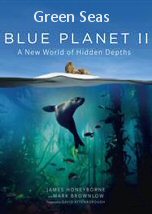
This episode includes footage of wildlife inhabiting underwater kelp forests, thousands of giant cuttlefish spawning along a restricted area of rocky reef off the south coast of Australia. Males outnumber females 11 to one, which leads to fierce competition. Larger males use brute force to drive off competition, while their smaller rivals use deception by mimicking the appearance of females. The programme also features tiger sharks hunting for green turtles in fields of seagrass and spider crabs trying to avoid predators while they shed their shells.
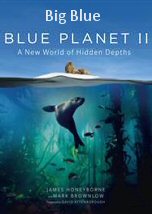
The big blue is the world's greatest wilderness, far from shore and many kilometres deep. It's a vast marine desert where there is little to eat and nowhere to hide. Yet it's home to some of the biggest and most spectacular creatures on earth. This episode reveals what it takes to survive in this savage and forbidding world. We witness feats of incredible endurance, moments of high drama and extraordinary acts of heart-wrenching self-sacrifice. Every animal in the big blue must find their own unique way to survive. Sperm whales have the largest brains in the world. They live for 80 years, and we are only now beginning to learn the extraordinary complexity of their language of clicks - thought to coordinate the whole family in everything from childcare to hunting. With special pressure-proof cameras, we witness record-breaking feats of endurance as they hunt for squid a kilometre down into the abyss. Only recently have we begun to solve the mystery of where baby turtles disappear to in their early years. They leave the crowded waters of the coast and head to the open ocean, where they use floating debris like logs as life rafts. Here they remain until adulthood, adrift on the high seas in relative safety away from coastal predators. Over half of all animals in the open ocean drift in currents. Jellyfish cross entire oceans feeding on whatever happens to tangle with their tentacles. The jelly-like Portuguese man-of-war can harness sail power to fish with its deadly tentacles. Sometimes there is a brief explosion of food in this marine desert, but ocean hunters must be fast to make the best of this bonanza. We witness super pods of up to 5,000 spinner dolphins racing to herd vast shoals of lanternfish, briefly caught at the surface where it is thought they spawn. New aerial footage reveals, for the first time, the truth to a centuries-old sailors' legend of the 'boiling seas' - the spectacular feeding frenzy of 90kg tuna and dolphins smashing through the lantern fish shoals turning the sea white with foam.






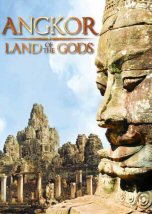



Angkor Wat is the largest temple on the face of the Earth and is a symbol of one of the greatest empires in the history of Southeast Asia. And yet, for centuries, the sacred structure remained lost within the tropical forests of Cambodia, along with the history of the young king who built the temple. Discover the story of Suryavarman II and how he ushered in the golden age of the Khmer Empire. See how Angkor Wat was constructed over four backbreaking decades, and witness the monument in its true glory and splendour, as it appeared 900 years ago.