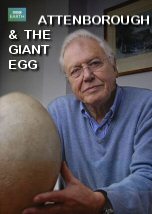
David Attenborough returns to the island of Madagascar on a very personal quest. In 1960, he visited the island to film one of his first ever wildlife series - Zoo Quest. Whilst he was there, he acquired a giant egg belonging to an extinct bird known as the 'elephant bird' - the largest bird that ever lived. It has been one of his most treasured possessions ever since. Fifty years older, he now returns to the island to find out more about this amazing creature and to see how the island has changed. Could the elephant bird's fate provide lessons that may help protect Madagascar's remaining wildlife? Using Zoo Quest archive and specially shot location footage, this film follows David as he revisits scenes from his youth and meets people at the front line of wildlife protection. On his return, scientists at Oxford University are able to reveal for the first time how old David's egg actually is, and what that might tell us about the legendary elephant bird.
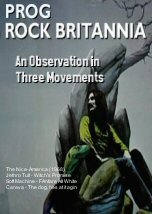
Documentary about progressive music and the generation of bands that were involved, from the international success stories of Yes, Genesis, ELP, King Crimson and Jethro Tull to the trials and tribulations of lesser-known bands such as Caravan and Egg. The film is structured in three parts, charting the birth, rise and decline of a movement famed for complex musical structures, weird time signatures, technical virtuosity and strange, and quintessentially English, literary influences. It looks at the psychedelic pop scene that gave birth to progressive rock in the late 1960s, the golden age of progressive music in the early 1970s, complete with drum solos and gatefold record sleeves, and the over-ambition, commercialisation and eventual fall from grace of this rarefied musical experiment at the hands of punk in 1977. Contributors include Robert Wyatt, Mike Oldfield, Pete Sinfield, Rick Wakeman, Phil Collins, Arthur Brown, Carl Palmer and Ian Anderson.
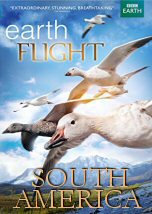
The documentary series gives a bird's-eye view of South America, as condors soar along the Andes, scarlet macaws explore the heart of the Amazon and hummingbirds and vultures see the continent's greatest sights. It is a journey that includes Machu Picchu, the Nasca Lines and the cities of Rio de Janeiro and Santiago. In Patagonia, giant petrels shadow killer whales as they hunt seals by stranding their huge bodies on the beach. At Iguassu Falls, dusky swifts dive through the cascades to huddle in communal roosts while hummingbirds bathe below. In a secret Andean location, condors soar in flocks over 40-strong and scavenge on casualties from herds of fighting guanacos. Elsewhere, a mother condor gently pushes her youngster to the edge of a 200-metre cliff, as flight school begins. Deep in the Amazon, macaws seek medicinal clay. They are joined by a host of secretive jungle animals, including spider monkeys and tapirs, all after the same remedy. In Peru, condors soar over fighting sea lions waiting for causalities and on a mass exodus north, birds converge on the Panama Canal. In Costa Rica, black vultures descend on turtles as they lay their eggs in the sand and pick off the eggs that ping-pong through the air.
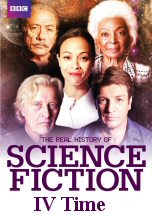
What if we could travel not just through space, but through time itself? If you could travel through time, would you change the past or the future? What if you found it couldn’t be changed? What price does the time traveller -- and the people they are closest to -- pay? This is a journey from H. G. Wells' The Time Machine through ideas like The Grandfather Paradox and The Butterfly Effect to the professional time traveller that is the ever popular Doctor Who. Steven Moffat, David Tennant, Karen Gillan, and Neil Gaiman offer a unique perspective on the Doctor. Edward James Olmos reveals the hidden meaning of the language he created for the vision of the future that is Blade Runner. Bob Gale and Christopher Lloyd take us behind the scenes of Back to the Future, while Ed Solomon describes the joy of solving a time travel conundrum for Bill & Ted’s Excellent Adventure. But what would be the physical and emotional cost to the time traveller? Audrey Niffenegger explains what inspired her novel The Time Traveller’s Wife. And what if someone from the future tried to travel back in time to warn us? Would we believe them? From the apocalyptic tones of 12 Monkeys to the drama of Quantum Leap and the comedy of Groundhog Day, time travel is a subject that has been irresistible to the creators of every type of science fiction.
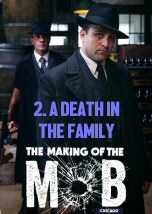
In less than two years, Al Capone has risen from a humble bookkeeper to second-in-command of Johnny Torrio's criminal empire in Chicago. The empire is worth the modern-day equivalent of $35 million. Capone purchases a home for his family and moves them from New York to Chicago. Torrio and Capone expand their empire from Chicago's South Side to the North Side, which is controlled by Chicago's second largest gang, the Irish. Violence erupts as ruthless Irish gang leader Dean O'Banion protects his territory and bootlegging business from Torrio and Capone.
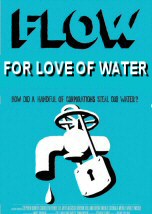
Irena Salina's award-winning documentary investigation into what experts label the most important political and environmental issue of the 21st Century - The World Water Crisis. Salina builds a case against the growing privatization of the world's dwindling fresh water supply with an unflinching focus on politics, pollution, human rights, and the emergence of a domineering world water cartel. Interviews with scientists and activists intelligently reveal the rapidly building crisis, at both the global and human scale, and the film introduces many of the governmental and corporate culprits behind the water grab, while begging the question "CAN ANYONE REALLY OWN WATER?" Beyond identifying the problem, FLOW also gives viewers a look at the people and institutions providing practical solutions to the water crisis and those developing new technologies, which are fast becoming blueprints for a successful global and economic turnaround.





Using Zoo Quest archive and specially shot location footage, this film follows David as he revisits scenes from his youth and meets people at the front line of wildlife protection. On his return, scientists at Oxford University are able to reveal for the first time how old David's egg actually is, and what that might tell us about the legendary elephant bird.