






Last Watched

"Ape"  Sort by

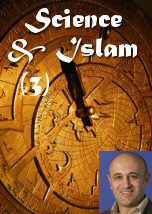
The Power of Doubt

   2017    History
In the last episode, Al-Khalili turns detective, hunting for clues that show how the scientific revolution that took place in the 16th and 17th centuries in Europe had its roots in the earlier world of medieval Islam. He travels across Iran, Syria and Egypt to discover the huge astronomical advances made by Islamic scholars through their obsession with accurate measurement and coherent and rigorous mathematics.He then visits Italy to see how those Islamic ideas permeated into the west and ultimately helped shape the works of the great European astronomer Copernicus, and investigates why science in the Islamic world appeared to go into decline after the 16th and 17th centuries, only for it to re-emerge in the present day. Al-Khalili ends his journey in the Royan Institute in the Iranian capital Tehran, looking at how science is now regarded in the Islamic world
Series: Science and Islam
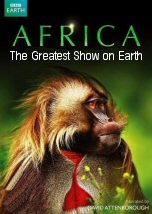
Africa the Greatest Show on Earth

   2013    Nature
Sir David Attenborough takes a breath-taking journey through the vast and diverse continent of Africa as it's never been seen before. From the richness of the Cape of Good Hope to blizzards in the high Atlas Mountains, from the brooding jungles of the Congo to the steaming swamps and misty savannahs, Africa explores the whole continent. An astonishing array of previously unknown places are revealed along with bizarre new creatures and extraordinary behaviours. Using the latest in filming technology including remote HD cameras, BBC One takes an animal's eye view of the action. The journey begins in the Kalahari, Africa's ancient southwest corner, where two extraordinary deserts sit side by side and even the most familiar of its creatures have developed ingenious survival techniques. Black rhinos reveal a lighter side to their character as they gather around a secret waterhole. Springbok celebrate the arrival of rains with a display of 'pronking'. Bull desert giraffes endure ferocious battles for territory in a dry river bed.
Series: Africa with David Attenborough

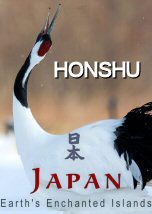
Honshu

   2017    Nature
Japan's landscapes range from snowy mountains to subtropical warmth. They are full of wildlife - and animals' and people's lives often cross as they adapt to these extremes. The central island of Honshu is home to over 100 million people, and its biggest city, Tokyo, is one of the largest urban metropolises on earth. But it has a wild heart - most of Honshu is mountainous. This wilderness is home to an astonishing range of wildlife - black bears, monkeys, exquisite fireflies and even cow demons. But all across this island, from the mountains to the edge of the sea, people and nature are drawn together in the most unexpected ways.
Series: Japan Earth Enchanted Islands

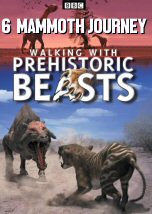
Mammoth Journey

       Science
Travelling forward in time to 30,000 years ago, it's the middle of an ice age. The landscape is dominated by mighty mammoths, living side-by-side with woolly rhinos, giant deer and two separate species of human. The programme follows the fate of a herd of mammoths in their annual struggle against the harsh ice-age conditions. Every summer they spend on the grassy plains of what will one day become the bottom of the North Sea, but every winter they are forced to head for the less exposed valleys further south. It is a journey fraught with danger: mammoths can get trapped in frozen bogs, and the herd must run the gauntlet of hunters like cave lions and the deadly Neanderthals.
Series: Walking with Prehistoric Beast

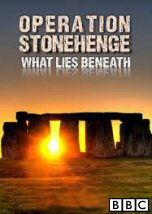
Operation Stonehenge

   2017    History
Stonehenge is an icon of prehistoric British culture, an enigma that has seduced archaeologists and tourists for centuries. Why is it here? What is its significance? And which forces inspired its creators? Now a group of international archaeologists led by the University of Birmingham and the Ludwig Boltzman Institute in Vienna believe that a new state-of-the-art approach is the key to unlocking Stonehenge's secrets. For four years the team have surveyed and mapped every monument, both visible and invisible, across ten square kilometres of the sacred landscape to create the most complete digital picture of Stonehenge and the surrounding area over millennia. Known monuments have yielded more data than ever before, revealing hidden structures within, and new finds are revolutionising the very timeline of Stonehenge. The film takes the viewer on a prehistoric journey from 8000 BC to 2500 BC as the scientists uncover the very origins of Stonehenge, learning why this landscape is sacred, preserved and has been revered by following generations. Evidence of war and conflict, as well as the cultivation of ideas and industry, is explored to reveal complex communities with international trade links as far-reaching as Spain and central Europe.

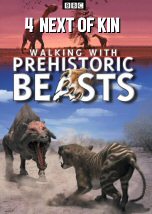
Next of Kin

       Science
Moving on to Ethiopia 3.2 million years ago, we witness the beginnings of mankind via a group of australopithecus - a type of ape which, like us, walks upright on two legs. But unlike us, these early members of the human family weren't predators, they were prey. Things get worse for the group as they are hunted by a sabre-tooth cat called dinofelis and fall victim to other dangers such as malaria, rival australopithecus and a rampaging 14-tonne deinotherium.
Series: Walking with Prehistoric Beast
Meet the Romans

Meet the Romans

2012  History
Leaving Neverland

Leaving Neverland

2019  Culture
How the Universe Works

How the Universe Works

2014  Science
Wild Russia

Wild Russia

2009  Nature
Atom

Atom

2007  Science
The Jinx Part 2

The Jinx Part 2

2024  History
Walking with Dinosaurs

Walking with Dinosaurs

2025  Science