

Last Watched

"AGI"  Sort by

How Big is the Universe

   2012    Science
It is one of the most baffling questions that scientists can ask: how big is the Universe that we live in? Follow the cosmologists who are creating the most ambitious map in history - a map of everything in existence. And it is stranger than anyone had imagined - a Universe without end that stretches far beyond what the eye can ever see. And, if the latest research proves true, our Universe may just be the start of something even bigger. Much bigger.
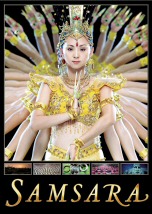
Samsara

   2011    Culture    3D    HD
Prepare yourself for an unparalleled sensory experience. Samsara reunites director Ron Fricke and producer Mark Magidson, whose award-winning films Baraka and Chronos were acclaimed for combining visual and musical artistry. Samsara explores the wonders of our world from the mundane to the miraculous, looking into the unfathomable reaches of humanity's spirituality and the human experience. Neither a traditional documentary nor a travelogue, Samsara takes the form of a nonverbal, guided meditation.

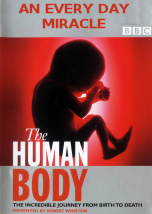
An Everyday Miracle

   1998    Medicine
This series, presented by Robert Winston, takes us on a journey from birth to death using time-lapse photography, computer graphics and various state-of-the-art imaging techniques to explore every aspect, every nook and crevice of the human body in its various stages of growth, maturity and eventual decay. Though heart-warming in that it shows the commonality of human experience, The Human Body is also a potentially depressing reminder of our frail physicality and mortality." In this episode, follow Jeff and Phillippa from conception to the birth of their first child Bob in An Everyday Miracle. Learn why conception is the most dangerous part of your life, and the struggles that you must go through to even reach the first step. The couple openly discuss their concerns and joy throughout their entire pregnancy and this episode in particular would be well worth viewing by those who are expecting their first child. From experience, this tasteful and informative section captures aspects of pregnancy that the hospital-run Maternity Classes don't explain as well. You even get to see the birth of their child which makes for a great lead into the next section. And in case you were wondering, every day there are around 100 million acts of sexual intercourse taking place in the world resulting in around 910,000 conceptions.
Series: The Human Body

A Sky Full of Ghosts

   2014    Science
Tyson begins the episode by explaining the nature of the speed of light and how much of what is seen of the observable universe is from light emanated from billions of years in the past. Tyson further explains how modern astronomy has used such analyzes via deep time to identify the Big Bang event and the age of the universe. Tyson proceeds to describe how the work of Isaac Newton, William Herschel, and James Clerk Maxwell contributed to understanding the nature of electromagnetic waves and gravitational force, and how this work led towards Albert Einstein's Theory of Relativity, that the speed of light is a fundamental constant of the universe and gravity can be seen as distortion of the fabric of space-time. Tyson describes the concept of dark stars as postulated by John Michell which are not visible but detectable by tracking other stars trapped within their gravity wells, an idea Herschel used to discover binary stars. Tyson then describes the nature of black holes, their enormous gravitational forces that can even capture light, and their discovery via X-ray sources such as Cygnus X-1. Tyson uses the Ship of Imagination to provide a postulate of the warping of spacetime and time dilation as one enters the event horizon of the black hole, and the possibility that these may lead to other points within our universe or others, or even time travel. Tyson ends on noting that Herschel's son, John would be inspired by his father to continue to document the known stars as well as contributions towards photography that play on the same nature of deep time used by astronomers.
Series: Cosmos: A Spacetime Odyssey

Frozen Planet: Spring

   2011    Nature
Spring arrives in the polar regions, and the sun appears after an absence of five months; warmth and life return to these magical ice worlds - the greatest seasonal transformation on our planet is underway. Male Adelie penguins arrive in Antarctica to build their nests - it takes a good property to attract the best mates and the males will stop at nothing to better their rivals! But these early birds face the fiercest storms on the planet. In the Arctic, a polar bear mother is hunting with her cubs. Inland, the frozen rivers start to break up and billions of tons of ice are swept downstream in the greatest of polar spectacles. This melt-water fertilizes the Arctic Ocean, feeding vast shoals of Arctic cod and narwhal. The influx of freshwater accelerates the breakup of the sea-ice - an area of ice the size of Australia will soon vanish from the Arctic. On land, a woolly bear caterpillar emerges from the snow having spent the winter frozen solid. Caterpillars normally become moths within months of hatching, but life is so harsh here that the woolly bear takes 14 years to reach adulthood. Once mature it has only days to find a mate before it dies! Alongside the caterpillars white Arctic wolves race to raise their adorable cubs before the cold returns.
Series: Frozen Planet

The Cell: The Hidden Kingdom

       Science
Dr Adam Rutherford tells the extraordinary story of the scientific quest to discover the secrets of the cell and of life itself. Every living thing is made of cells, microscopic building blocks of almost unimaginable power and complexity. The first part explores how centuries of scientific and religious dogma were overturned by the earliest discoveries of the existence of cells, and how scientists came to realize that there was, literally, more to life than meets the eye.
Series: The Cell
Planet Dinosaur

Planet Dinosaur

2011  Science
Science and Islam

Science and Islam

2017  History
The Keepers

The Keepers

2017  Culture
The Human Body

The Human Body

1998  Medicine
Through the Wormhole

Through the Wormhole

2011  Science